To show your support, publicly, for any one party in Ghana can be a very dangerous game. Right now, as Ghanaians again prepare to go to the polls, I want to speak out.
I was only 10 years old when I left Ghana to attend boarding school in the United Kingdom so knew nothing about politics. Fifteen years later, now in my mid twenties, I returned still not knowing much about politics in Ghana. But I did know one thing. John Jerry Rawlings was the President. And Ghana was not a “democratic” society. People actually lived in fear. There was so much that could not be done or said, even in private.
A few years after my return, “democracy” was introduced in Ghana and President Rawlings peacefully handed over to the newly elected President Kufour. Private television and radio stations were not only licensed to operate, but actually began doing so. The “Gentle Giant” Kufour and his “democracy” introduced a certain sense of freedom into Ghana. Now all of a sudden having an opinion and freely expressing it was welcomed. Or so we were told. From now on, we were told, Ghanaians could do and say anything we wanted. Nobody would be arrested for having or more importantly expressing an opinion that the government of the day did not agree with. Finally, Ghanaians were told freedom of speech was to be our new way of living. Yeah, Ghana had joined the “developed” world.
From the outside at least, that was the perception. But having lived and worked in Ghana for 17 years, I have no choice but to accept this for the myth it has turned out to be. And as Ghanaians go to the polls on 7 December I am rather worried about this, for two main reasons:
Firstly, I feel because Ghanaians were so restricted under Rawlings, you can almost say they are abusing this sense of freedom brought on by “democracy”. Because today “democracy” in Ghana has been understood to mean the freedom to go on air and insult politicians. Turn on the TV or radio, especially in the morning, and you will regret it, because all you will hear are insults and shouting. All the stations spend their morning shows talking politics. If they were talking political issues and problem-solving, it would not be so bad. But all that is happening is people call in, make accusations against politicians they do not like and heap insult upon insult upon them. This does not stop there. Even the politicians are at it.
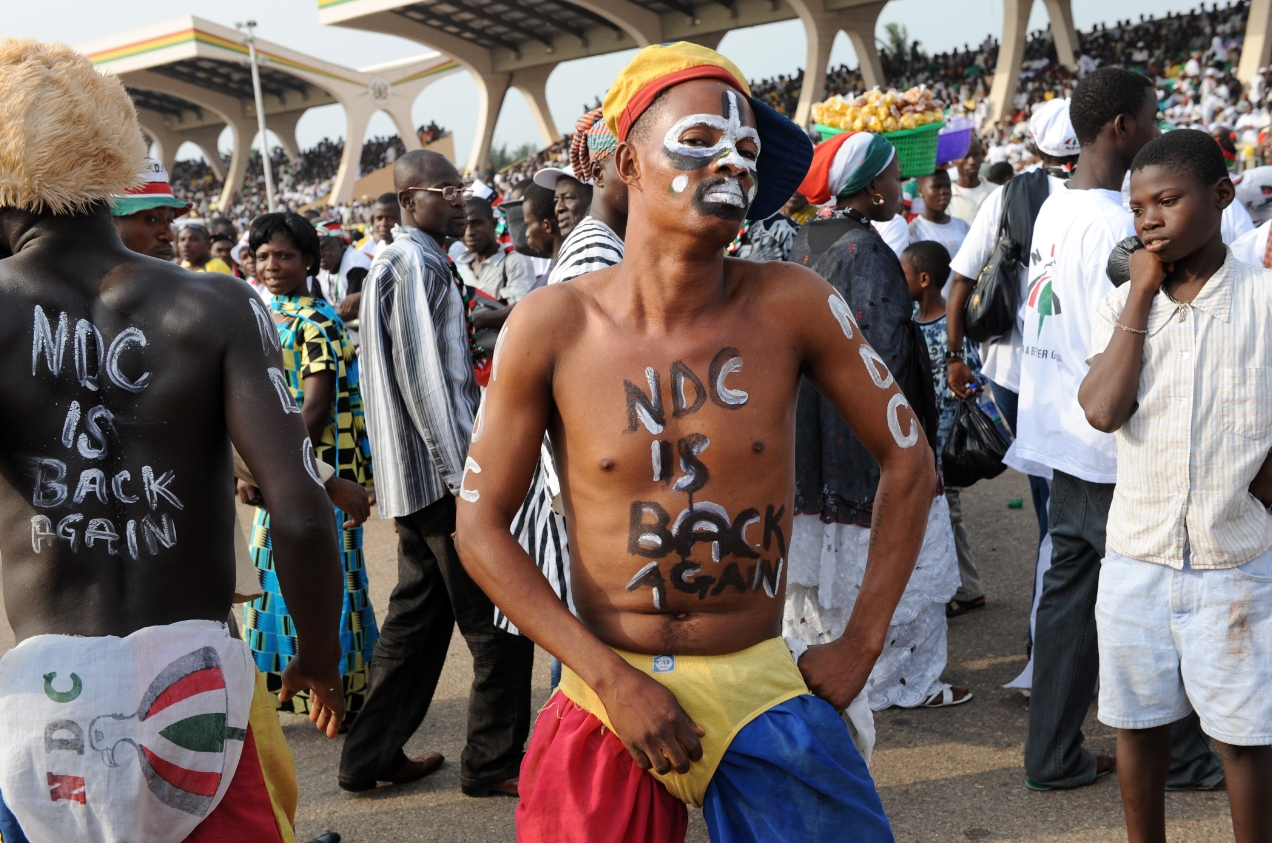
Can you imagine the situation where two high-profile personalities from Ghana’s two main leading parties (National Democratic Congress (NDC) and New Patriotic Party (NPP)), go on live TV or radio to trade insults at each other? It actually happened. On 27 March this year, the women’s organiser of the NDC, Anita de Souza and Frances Essiem of the NPP, almost got into a physical fight on “Good Morning Ghana”, broadcast on Metro TV. With both women wagging their fingers in each other’s faces, Anita called Frances “a traitor” and “betrayer’’ to which Frances responded by calling Anita a “prostitute”. All this, on live TV. Being done by not only mature women who are probably married with children but by people who we are supposed to vote for to lead us!
This issue of using disgusting and unnecessary terms to insult political opponents also happened with John Abdalai Jinapor (NDC) and Ursula Owusu (NPP), where in a live broadcast the former called the latter “a whore, slut and prostitute”. How can this be allowed to happen? When they are supposed to be discussing the real political issues such as each party’s agenda on education, unemployment, developing Ghana etc.
Is this really “democracy”? This is not the first time such an incident has occurred. I wish I could say it would be the last, but knowing how people now understand “democracy” and knowing we are so close to the general elections, I doubt it very much. How does trading disgusting insults between grown men and women, mean Ghana is “democratic”?
Yes, we now have freedom of speech but if this means high profile personalities who should know better insulting each other, then surely it is better we go back to the days of severe military rule? Now I am not for one moment saying I am a fan of John Jerry Rawlings, but at least under his leadership, there was a sense of right and wrong, there was a sense of law and order in society. And at least back in those days, nobody would dare speak out against the president, his government, or family, because we knew the repercussions. I would rather we went back to those days because we all knew where we stood. Because right now we are being deceived into thinking we have freedom of speech. Which neatly takes me onto the second thing that worries me about “democracy” as practised in Ghana today.
Freedom of thought and speech. And what actually happens when you express yourself. Although Ghanaians are now free to express ourselves, the reality of the situation is, if you do express yourself, be prepared to pay for it. Let me expand on that. Everything in Ghana is politicised. Everything. So if you speak out against the government, they will hold it against you as a personal attack. And you will be branded a member of the opposition. Now if you follow my column or me elsewhere, you will know my views on African “politricians”.
By now I would like to think everybody knows I do not support any political party, but rather prefer to hold the sitting government to task. So when the NPP were in power and I saw things that were not right, I spoke out against it. And I have paid the price. During Ghana’s 50th independence anniversary celebrations, I suggested that instead of consuming copious amounts of champagne to quench their greedy thirsts (although I did not say it this way at the time!), the government should use the $50million allocated for partying to renovate our maternity wards.
This was taken by the powers that be to mean I was anti-NPP and pro-NDC. And what was my punishment for exercising my “democratic” right? Apart from losing my contract as a freelance field reporter with a popular TV station, word was also put out to Ghanaians to the effect of: “Don’t work with Blakofe if you know what is good for you.” Oh yes, as far as the then government was concerned, I was public enemy number one and they would show me pepper. Yet all I was doing was exercising my “democratic” right. This was not a personal attack on the president or his men. I was merely saying government should do the right thing. If it had been an NDC-led government I still would have said the same thing because it does not make sense wasting money meant for all the people of Ghana on champagne for the select few chosen to govern.
But you see, “democracy” in Ghana does not actually mean you are allowed to voice your views. I have heard so many stories of people who have had their businesses destroyed because they were seen by the government of the day to be anti them!
And although personally I will not be voting, I still have opinions on who out of the current crop of potential aspirants I would like to see as my president. But people are telling me, “Blakofe, keep quite.” “Blakofe, you will suffer if your man does not win ooohhhhh.” And my response is, why should this be the case? Are we not democratic? In America, are there not commercials featuring celebrities such as Samuel L Jackson and Alicia Keys supporting President Obama and the living doll Nicky Minaj supporting Mitt Romney? If President Obama does not win, I am sure both Samuel L Jackson and Alicia Keys will still have careers. And if Romney does not win, sadly for us, Nicky Minaj will also still have a career! But in Ghana if I show a commitment to candidate A and candidate B wins, I will surely see pepper. None of my projects will be allowed to happen. All the radio and TV stations will be cautioned against working with me. And as happened in 2007, my so-called “friends” would leave me high and dry because nobody wants to be associated with being the friend of the anti-government person.
Yet if we are saying that Ghana is now truly democratic, then I think it’s time we showed some maturity in our political thinking and expressions. Punishing people for not being a cardholding member of your party is wrong. Punishing people for speaking out against your government when you are in power, on legitimate grounds such as failing to fulfil an election pledge is wrong. Every day I see and hear people criticise the British Prime Minister. Does he go out to seek personal vengeance? Because that is the reality of “democracy” as practised in Ghana. Now like I said earlier, I would rather go back to the days of harsh military rule because then, we knew exactly where we stood. We knew we were not allowed to have thoughts. And even if we did have thoughts, we knew what would happen if we expressed them. Oh yes, I would much rather go back to those days than live under a “democracy” in which I really do not have the freedom of expression. But hey, these are just the reflections of an ordinary African woman.