On 6 March, Ghana commemorated its 58th independence anniversary. Officials organised the celebrations with all the bells, whistles, and usual self-congratulatory messages. However, many Africans, including New African’s Femi Akomolafe, wondered if their country had any reason to celebrate, as the government has announced a new IMF bailout programme.
All is not well in Ghana. Once a promising star in the African firmament, the country is experiencing economic problems not seen in some time.
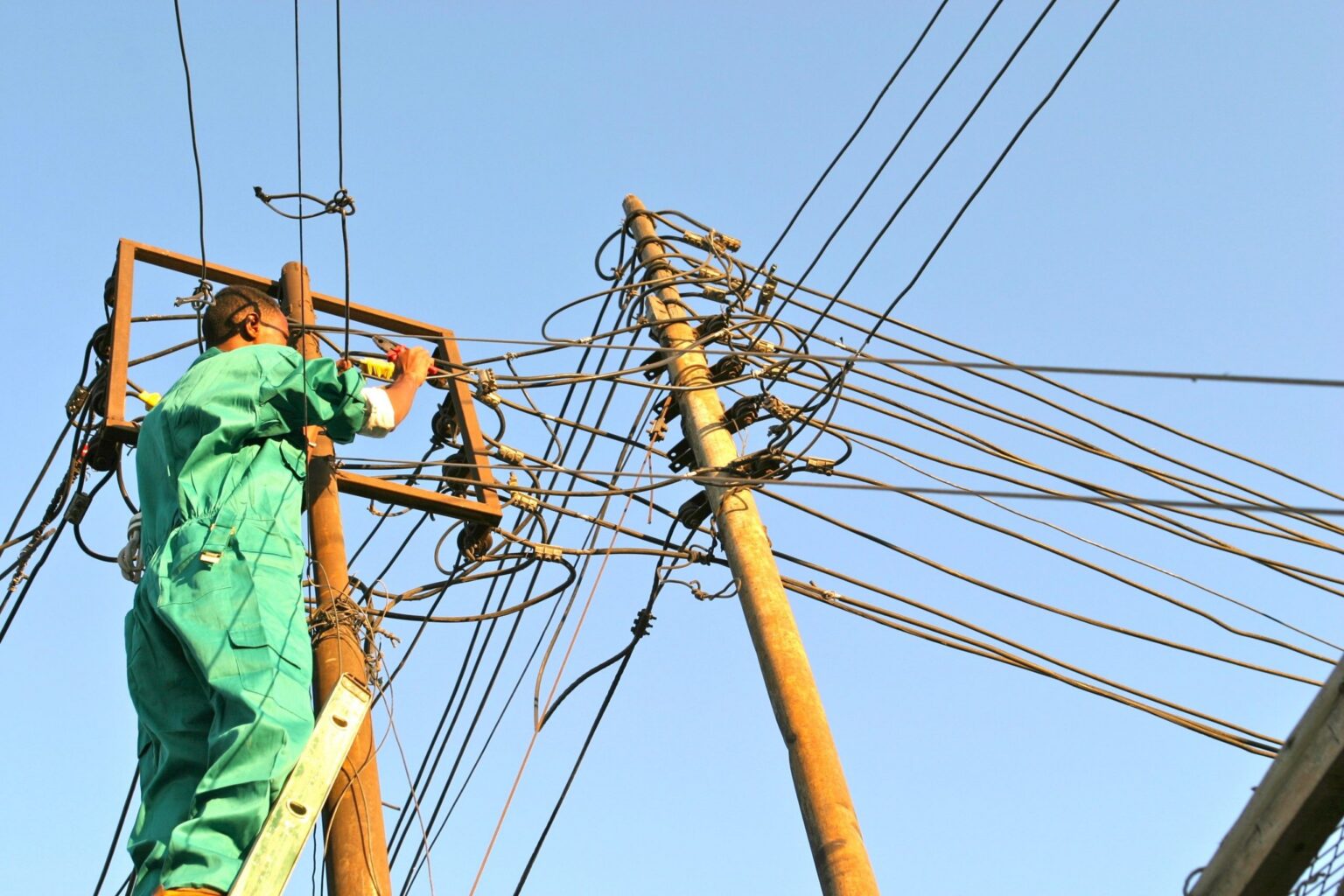
Several problems beset the land of Kwame Nkrumah, but none is as devastating as the current erratic supply of electricity, known in local parlance as dumsor dumsor (meaning literally “turn off, turn on”).
Citizens feel affronted that almost sixty years on from independence, their country still cannot generate and distribute enough electricity. They also cannot understand why their well-endowed country cannot give its 25 million citizens potable water. They ask why a nation only three degrees away from the Equator, with its abundant, all-year round energy, cannot get enough electricity to light homes.
Back to the IMF
In the middle of last year, whispers began to emerge that the government was contemplating asking the International Monetary Fund (IMF) for a loan to help manage the country’s budget deficit and falling currency. IMF lending is typically accompanied by extremely fiscally conservative policies that the debtor country must pursue as a condition of the loan.
Officials initially denied it. Deputy Minister of Finance, Mona Helen Quartey, told Bloomberg that “we’re not considering an IMF loan at this time”. Later, Senior Economic Advisor to the President Nii Moi Thompson told Accra-based Joy FM that the government sought only “technical expertise” from the IMF.
Even President John Mahama himself initially denied that his government was going to foist an IMF programme on the country. He told the Economic Forum held at Senchi that: “I wish to take this opportunity to state, with great emphasis, that as President, I have not taken any decision to enter our country into an IMF programme.”
He appeared to U-turn during a trip to the US for the US-Africa Leaders’ Summit in Washington DC, where he explained that his government took the decision “because there was the need for policy credibility and confidence from the international financial institutions to restore economic stability and growth.”
A few weeks later, it was made public that Ghana and the IMF had reached an agreement for the country to receive support from the Fund.
Citizen concern
Ghana has plenty of experience with lending from the IMF. It has previously been extremely unpopular and has not stimulated substantial economic development for the majority of the population. It does not seem that the current government has learned these lessons. Although the IMF Managing Director, Christine Lagarde, assured Ghanaians that the Fund has changed its approach to the implementation of its programmes, and claimed that it now focuses on partnerships, events in Greece demonstrate that a leopard can’t change its spots. Many Ghanaians ask why the IMF, which so far has shown no sympathy for the Greeks, will look at them with more compassion.
The Secretary-General of Ghana’s umbrella Trade Union Congress (TUC) warned the government in his last May Day speech: “Your Excellency, times are hard; the prognosis on the economy is not good either, but we must at this point resist the temptation to seek an IMF bailout. As we have stated, it is the IMF-sponsored policies that have brought us almost to the brink. No country has developed following the advice of the IMF. Resorting to the IMF for financial support was a mistake we made in the past. We must
take responsibility for this mistake and find a solution to our
problem.”
The CEO of Dalex Finance, Kenneth Kwamina Thompson, acknowledged that an IMF prescription might help to stabilise the currency, the Ghanaian cedi. He, however, cautions that such a bailout would come with conditionalities that would negatively impact the country’s socio-economic growth.
Mahamudu Bawumia, a former Deputy Governor of the Bank of Ghana and leading member of the opposition New Patriotic Party (NPP), condemned the government for trying to borrow its way out of bankruptcy. He said: “With Ghana’s debt levels at almost 60% of GDP and interest payments in 2014 amounting to more than four times Ghana’s oil revenue for the year, it is not clear how adding to the debt burden is going to get us out of the current crisis.”
In 2001, then World Bank Country Director in Ghana, Peter Harrold, admitted to the 250 delegates at the second forum of the Structural Adjustment Participatory Review Initiative (SAPRI) held in Accra, that it made mistakes in its reform policies on Structural Adjustment Programmes (SAP) adopted by some African countries because it failed to factor in the economic and social impact of the Bank’s policies. He acknowledged that, after almost two decades of implementation, SAPs did not bring the necessary benefits to the people and communities who bore the brunt of the harsh prescriptions.
At the same forum, then-President John Kufuor, in a speech read by his Minister of Economic Planning and Regional Integration, Dr Paa Kwesi Nduom, said:
“After 20 long years of implementing structural adjustment programmes, our economy has remained weak and vulnerable and not sufficiently transformed to sustain accelerated growth and development. Poverty has become rather widespread, unemployment very high, manufacturing and agriculture are in decline, and our external and domestic debts much too heavy a burden to bear.”
Finance Minister Seth Terkper, however, maintains that the help being sought from the Fund is the only way to revive the weak cedi and struggling economy. He stated: “The ultimate objective is to stabilise the cedi in order that domestic prices…will be brought under control. When you stabilise the cedi, you are also looking at a situation where investors do see a more predictable economy as they bring investments into it. So there are benefits in this for both the consumer and the business community.”
Although the president, his officials and the IMF want Ghanaians to believe that the new programmes will solve the country’s economic woes, their optimistic views are not shared by the populace. The announced IMF support has not yet stemmed the continuing depreciation of the cedi or curbed rising inflation.
It appears that some of Africa’s macroeconomic managers are working from the wrong textbook. What passes as economic orthodoxy is often diametrically opposed to the policies used by countries that have successfully industrialised and advanced economically.
Terkper should have listened to Susan George, who in A Fate Worse Than Debt wrote: “The IMF cannot seem to understand that investing in … [a] healthy, well-fed, literate population … is the most intelligent economic choice a country can make.”
Ha-Joon Chang, the Cambridge university economist, should be required reading for African economic policy makers, starting with his 23 Things They Don’t Teach You About Capitalism.