
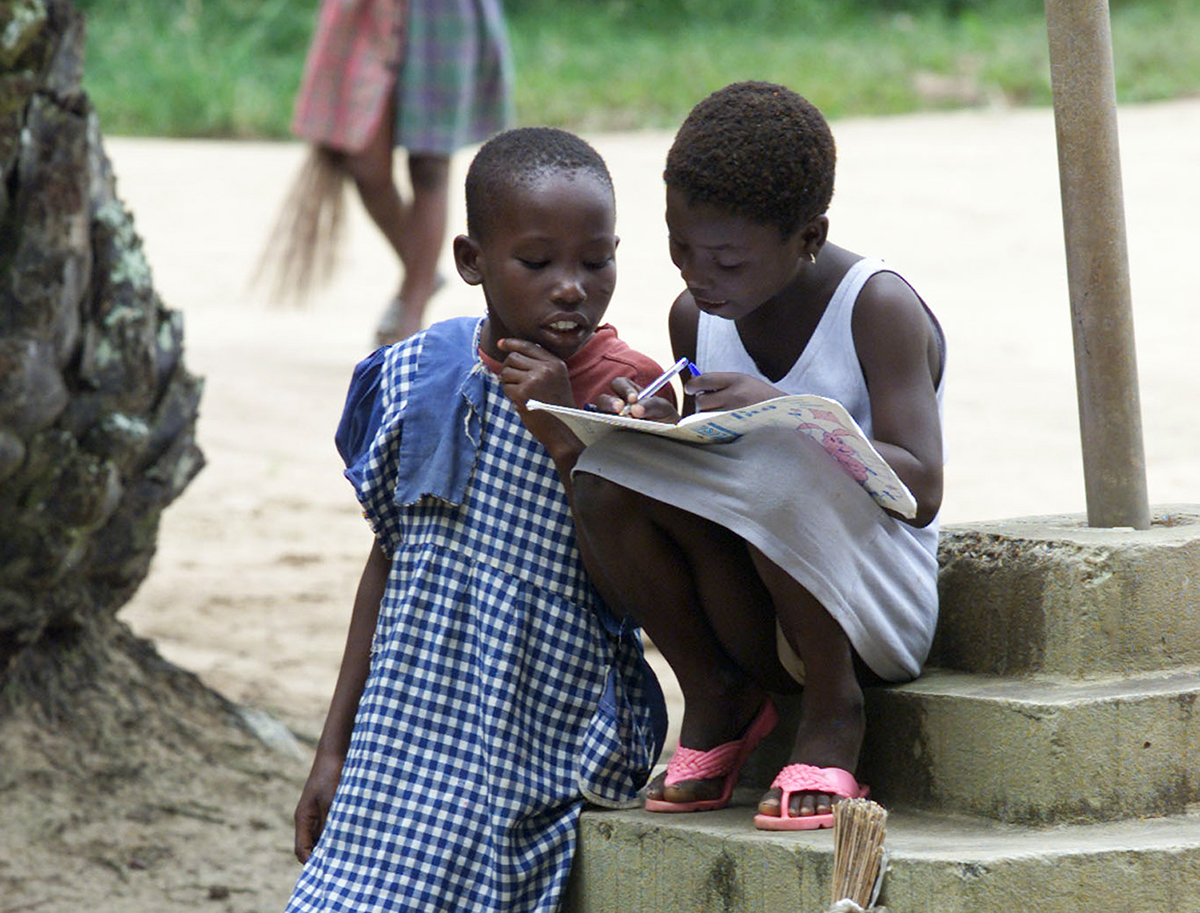
Our guest columnists this issue argue that education and infrastructure are the most important sectors for governments to direct their resources towards, even if this means that other sectors, such as health, lose out. By Nana Adowaa Boateng* and Michael Edem Akafia**
It is generally accepted that the role of the state is to mobilise resources, protect and provide citizens with quality social services. What is often contested – most visibly in the US – is the size of the state. A big state (or ‘big government’ as some might say) would be one where governments take on a strong regulatory role and is the lead provider of social goods and services. A small state is one that allows for the market and private sector to deliver most social goods and services while intervening where markets fail.
Many African countries have experimented with the various models. The former has been more prominent in the 1960s and the latter more prominent in the 1990s. What appears to exist now is a highly dysfunctional hybrid: medium-sized states incapable of providing the most basic services to their citizens and a fairly weak market dominated by a private sector that largely retails imported consumer goods rather than playing a transformational role. The continent needs a paradigm shift that is suited to its realities. Real transformation comes at a price. It is not always equitable or democratic but real gains can be made and realised within the space of a generation – several East Asian and South-East Asian countries are cases in point.
The proposal we present here may appear simplistic but it is really that simple. Governments need to scale up investments on just two sectors – education and infrastructure – in order to break the cycle of poverty and fast-track economic transformation.
This does not absolve governments from their responsibilities in providing basic health services, water and sanitation, agricultural support, safety and security, etc. It’s a question of scale. The state should directly, or through the private sector, provide these services at the minimum levels required and at the acceptable quality. A simplistic approach is to maintain current per capita level expenditures in all the non-education and infrastructure sectors for a period of time. This would channel all additional resources towards education and infrastructure. We firmly believe that these two sectors are game changers. Investments in these sectors, even at the expense of other sectoral investments, will place the continent firmly on the path to a structural transformation and a better quality of life.
Let’s reflect some more on the two game changers and why the state needs to take the lead. We will later explain why health is not essential (in relative terms) – as controversial as that might be.
The opportunity gap
Let’s start with education. It is fruitless to emphasise the importance of human capital for growth and development because there is really no debate here.
It is worth bringing up some examples like Cape Verde, Mauritius and Japan, who realised that with no natural resources, they had no option but to invest in their people. Having the best and the brightest remains their story of development.
Africa needs to focus on a qualitative improvement in education and not just a quantitative one. We need to produce a critical mass of the best and brightest, with relevant skills suited to needs of the economy and be able to retain them on the continent.
The transformative nature of education is also evident at the micro-level. There are several anecdotal examples and empirical research findings (including by Day & Newberger, 2002), which confirm a direct relationship between household income levels and the level of education. Indeed, a person’s opportunity for advancement increases by several folds through formal or vocational schooling. The education gap is an opportunity gap.
Here is the problem with education: households will simply not invest in education if they are struggling to feed themselves. In that context, education is not perceived by the poor as essential. Understandably, investments in education come with high opportunity costs if children are needed to contribute to income-generating activities rather than going to school.
Also, the gains of education are not always guaranteed or immediate (e.g. high earnings and absorption in a skilled labour force) for various reasons. It is easy to see why governments often have to step in and ‘force’ education down the throats of citizens for example by legislating free and compulsory primary education.
Health is different. No matter how poor, health is hardly ever perceived by households as non-essential. It’s understood to be a matter of life or death and results can be instantaneous. In fact, the poor often spend a considerable amount on healthcare from their own resources.
It does not mean they should be exploited by not providing affordable services. We are making a point about the inelasticity of healthcare and the elasticity of education and what this means for a strategic use of public funds to achieve long term development goals.
We believe that an educated population generally makes better preventative health decisions; adopts better family planning practices without the need for separate family planning support services and is able to pay for quality services including healthcare by virtue of higher incomes.
An educated population also creates the space for an entrepreneurial wave who can partner with governments to provide services; fosters a strong civil society that can demand accountability from all levels of leadership; creates a middle-class with higher disposable incomes who help to expand the market as seen in the property boom in Ghana and beyond; contributes more to the fiscus and thereby additional welfare services; leads to higher personal savings and investments which benefits both individuals and financial intermediaries and creates a modern ICT-based economy rather than a cash based one, among several other benefits.
Poor infrastructure is costing Africa billions of dollars. Unreliable power and power outages reduce productivity and output and raises the cost of doing business.
Infrastructure development has countless multiple benefits. Good roads means that a pregnant woman in labour can get to the hospital on time; it means produce can reach the groceries stores in good condition; it means urban cities can be decongested with development spreading into the outskirts; etc.
Infrastructure development does not only refer to new investments. It also includes operations and maintenance, which are often lacking in Africa. We build highways and power plants but fail to maintain them. Infrastructure (rural and urban) is without a doubt a game changer and what is most attractive is that its benefits can be realised in the short to medium term.
Nonetheless, it is cost-intensive and we know that public resources are scarce and donor aid is not always reliable or desirable. Scaling up on infrastructure and education means that some difficult trade-offs need to be made. For example, countries trying to embark on universal health coverage (a tremendous expense) and new social welfare programmes may want to put that on the back burner and focus on the essential sectors until we reach a turning point in our development trajectory.
Taking a realistic view
Going forward, we need to be cautious of the global policy space and the plethora of development models, which only confuses our governments. The millennium development goals (MDGs) is a case in point. We need to manage our expectations about the capability of governments, when we encourage them to sign global agreements that eradicate poverty, ensure that all children go to school even if they don’t learn anything, etc.
Let us be realistic in what we absolutely need from the state and what we can provide for ourselves. We should also be realistic when we romanticise Scandinavian countries and others who are able to provide good quality social services freely to its population. We often conveniently forget the astronomical taxes that their citizens pay to have these services, even as high as 40 to 50%. Equally important to their success is low levels of corruption which ensures an equitable and effective social service delivery.
The point is, let us be realistic in terms of our present circumstances, however tainted, and start making some difficult but pragmatic choices that will move us forward.
The paradigm shift we are proposing requires good political leadership (visionaries) but also a discerning population who understand the trade-offs and are willing to make sacrifices.
It would be difficult for a politician to run a campaign focusing on education and infrastructure while his or her opponent promises everything and more. If we are united and realistic in our thinking about development and are willing to make sacrifices in the present if assured of greater future rewards, we can elect the right leaders who may promise less but achieve more.
* Nana Adowaa Boateng is a Ghanaian national and a South African-based economist with more than 10 years of experience in economic policy analysis and public finance management in Africa. She has a PhD in Economics from the University of Witwatersrand (South Africa) and a MSc in Local Economic Development from the London School of Economics (UK).
** Michael Edem Akafia (Ghanaian) has a multi-disciplinary background in law (LLB, BL), economics (BA) and finance (MBA-Finance). He has extensive experience in private legal practice and has represented clients at all levels of Ghana’s court system. He currently advises Ghana’s leading gold producer and is an adjunct business law and jurisprudence lecturer.








