By Kuda Bwititi
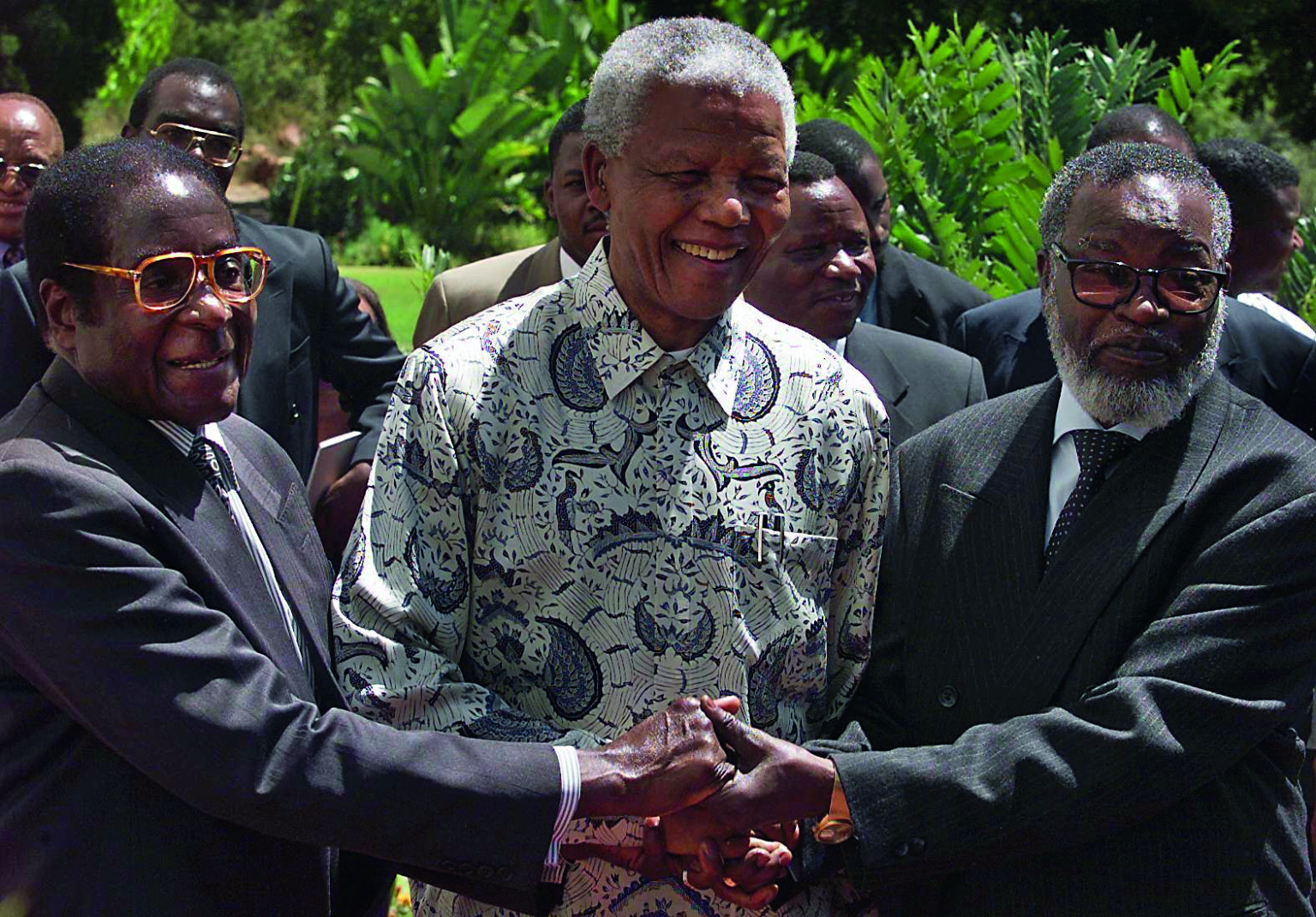
An oft-made claim by Robert Mugabe’s critics is that the former Zimbabwean leader and fellow freedom fighter, hated Nelson Mandela because Madiba had turned out to be the “darling of the West”.
To the contrary, Mugabe always spoke of his respect and admiration for Mandela. But he also memorably referred to Mandela as “soft” and “too much of a saint”, because South Africa’s first democratically elected President had not been radical enough in changing land tenure systems and empowering indigenes.
Madiba, too, had a few sharp things to say about his fellow comrade – using one interview to make a barb about Mugabe’s Presidential motorcade. But whether or not Mandela and Mugabe ‘hated’ each other will remain a largely academic debate. What is certain is that the two were not bosom buddies.
An unfortunate consequence of this was that Mandela’s legacy was never publicly spoken off in Zimbabwe for many years, but Mugabe’s departure early this year has opened up room for ordinary people and senior government officials, alike, to start expressing themselves more on the ‘Madiba dividend’.
In an interview in Harare, Zimbabwe’s Information, Media and Broadcasting Services Minister, Ambassador Simon Khaya Moyo, describes Mandela as a man of immense courage and principle.
“His courage and determination are a legacy that we must all emulate. His determination to free his people from colonial bondage and the vicious apartheid is legendary. He will be remembered for the 27 years he spent in prison without compromise and without betraying his people. He led from the front and he was indeed a man of selfless sacrifice to his people. His departure from the world cannot be seen as an end to his deeds but should inspire us to take on more responsibility,” he said.
Moyo, who is also the ruling Zanu-PF party national spokesperson and Zimbabwe’s former Ambassador to South Africa, speaks of young people emulating Mandela.
“Humankind misses him but his service to his country and to the continent of Africa and indeed to all progressive mankind have been imprinted in gold in our hearts. But it is the youths who must take big lessons from the attributes of this great colossus.”
Fond memories
In Zimbabwe, many war veterans who fought in the trenches against colonialism and apartheid remember Madiba with fondness. Jane Ngwenya, for example – one of the first women to undergo military training at the start of Zimbabwe’s liberation struggle – relates her encounter with Mandela almost 60 years ago.
“I vividly remember in 1961 when we attended the All-African People’s Conference in Cairo. I was one of the leaders of ZAPU and he was from the ANC. At one point, we were detained at the Cairo airport and on the verge of being deported because we did not have vaccination for yellow fever. He was one of the leaders who negotiated with the customs officials to let us pass through.
She continues fondly: “After that he joked about the incident and with his warm smile, he reassured us on the important task that lay ahead of us to liberate our people. That moment will always be imprinted in my mind. More importantly, I will remember him for his legacy to sacrifice his personal freedom so that his fellow Africans could be freed from colonialism.”
Another Zimbabwean liberation hero, Victor Matemadanda, leader of a war veterans’ association, says remembering Mandela should be all about legacy building.
“Mandela showed us that the most important thing that a leader should do is to leave behind a positive legacy. Despite his legendary status and great contribution to the apartheid struggle and South Africa’s political freedom, Mandela knew that no one could be a President forever. I will always be inspired by one of Mandela’s statements: ‘I am not a saint unless you say a saint is a sinner who keeps trying to do well’.”
Historian Raymond Mazorodze says Mandela offers leadership lessons to current and future public office holders.
“Mandela was cut from a different cloth. He never spoke bad words, unlike other politicians. He remains one of the African politicians who left office when the people still loved him. He was people-centred because he put other people first, ahead of his own self. Zimbabwe’s new political dispensation under President (Emmerson) Mnangagwa can learn a lot from him and so should other future leaders of Zimbabwe.”
Retired Colonel Tshinga Dube relates how Mandela touched him: “He was one of the people who inspired me to join the liberation struggle because I could relate to his vision to free the black people from segregation.
“When I was a schoolboy, my teacher was a white South African who tried to convince me that apartheid was good, but when I read about Mandela, I realised the brutality of the apartheid regime and the extent to which they were prepared to go to brainwash the people. Mandela inspired back then and he still inspires me even today.”
So, do all these glowing words mean Mandela was perfect, that he did everything right and never put a foot wrong? Of course not. He had his many falls and failings. But the reason why many Zimbabweans mainly eulogise Madiba is because on the balance of things, the legacy he bestowed inspires hope above all else. NA