
The humiliation of Africa with the help of Africans, and the plunder of Africa by Africans sometimes compels me to wonder – “who will save Africa from outside forces when we cannot save it from ourselves”?
The African continent is as diverse and amazing as the contradictions it survives. On 19 March 2011 for instance, I woke up to the usual spins of morning newsreels but this time, with a whim. Libya had been subjected to repeated air strikes by French aircraft in a new and quickly named “coalition action”, but this time with direct involvement of French, British and US (effectively NATO) forces for the first time on the continent.
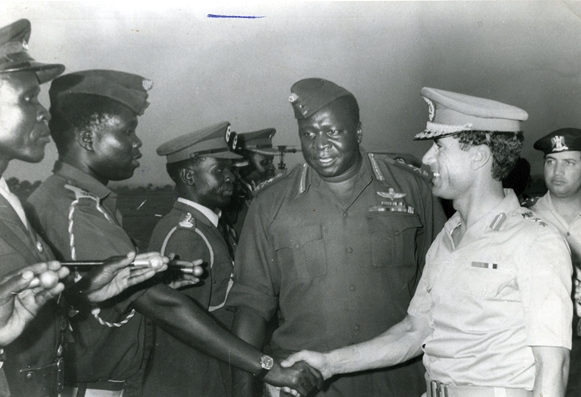
On 21 March 2012, a year almost to the day, I was contacted by a major international media house seeking my comment on a developing story – an apparent coup in the making in Mali. Soldiers claiming “dissatisfaction” with the way President Amadou Toumani Toure had handled a Taureg rebellion north of the country had mutinied and were moving to overthrow his government. Unlike in Libya, Mali was, until then, one of the few African countries considered true pillars of democracy. In Libya, the NATO countries claimed their attack was a swift response to state brutality against ordinary citizens by the Muammar Al Gathafi government, as if the same would have applied had it been in Tel Aviv. But that is Israel, so it was a silly thought of mine. After all, the African Union was, as usual, yet to pronounce itself. Without prejudice, my thoughts were against a background of a very Libyan experience in East Africa. Idi Amin led a military coup in Uganda in January 1971, backed by Britain and Israel. At a stroke, the East African Community (EAC) was compromised and later demised. Gathafi actively backed, equipped and bankrolled Amin, as “Africa’s last King of Scotland” reigned havoc on “his” fellow citizens.
By 1978, Gathafi’s Libya had the most powerful army in Africa outside apartheid South Africa. His friend, Amin of Uganda, had the second largest army. Yet, in an attempt to annex Tanzania’s Kagera salient later that year (claiming it was part of Greater Uganda), he sparked off war with Tanzania.
While Tanzania was backed by Uganda’s exiled “liberators”, mainly with Russian BM Katyusha rocket launchers, Gathafi sent 3,000 troops equipped with T-54 and T-55 tanks, BTR APCs, BM-21, Katyusha MRLs, artillery, MiG-21s, and a TU-22 bomber to assist his friend in Uganda. But within months, the Tanzanian/Liberation forces had captured nearly 400 Libyan prisoners of war, and with it, ended that phase of Gathafi. Defeated, Amin ran very fast to Libya and later into a long exile in Saudi Arabia from where he was to meet his maker.
Gathafi went on to support Yoweri Museveni’s rebellion against the democratically elected government of Milton Obote. In one of his last visits to Uganda and amid tense national debate on constitutional and presidential term limits, Gathafi told Museveni that “revolutionaries do not retire”. It is not surprising that by the time of his death, he had a mosque named after him in Uganda’s capital, Kampala, and enjoyed known social and commercial interests in the country.
I wanted Gathafi retired after 42 years in power, but not with the help of NATO! I am certainly not one of those still waiting for China, the West or the UN to save Africa. Interestingly, the UN secretary general, Ban Ki-moon, on 8 August 2012 appealed to the Security Council to impose sanctions on those fanning conflict in Northern Mali, the same day that “liberators” of Libya celebrated the transition of power to a newly elected National Assembly. This is selective intervention par excellence, and Africa should beware such interventions.
The humiliation of Africa with the help of Africans, the plunder of Africa by Africans and the torture of Africans aided by Africans sometimes compels me to wonder – “who will save Africa from outside forces when we cannot save it from ourselves”? I don’t like it at all, but for once, that strange whimsical, March (2011) morning, I was undecided when Africa was bombed.








