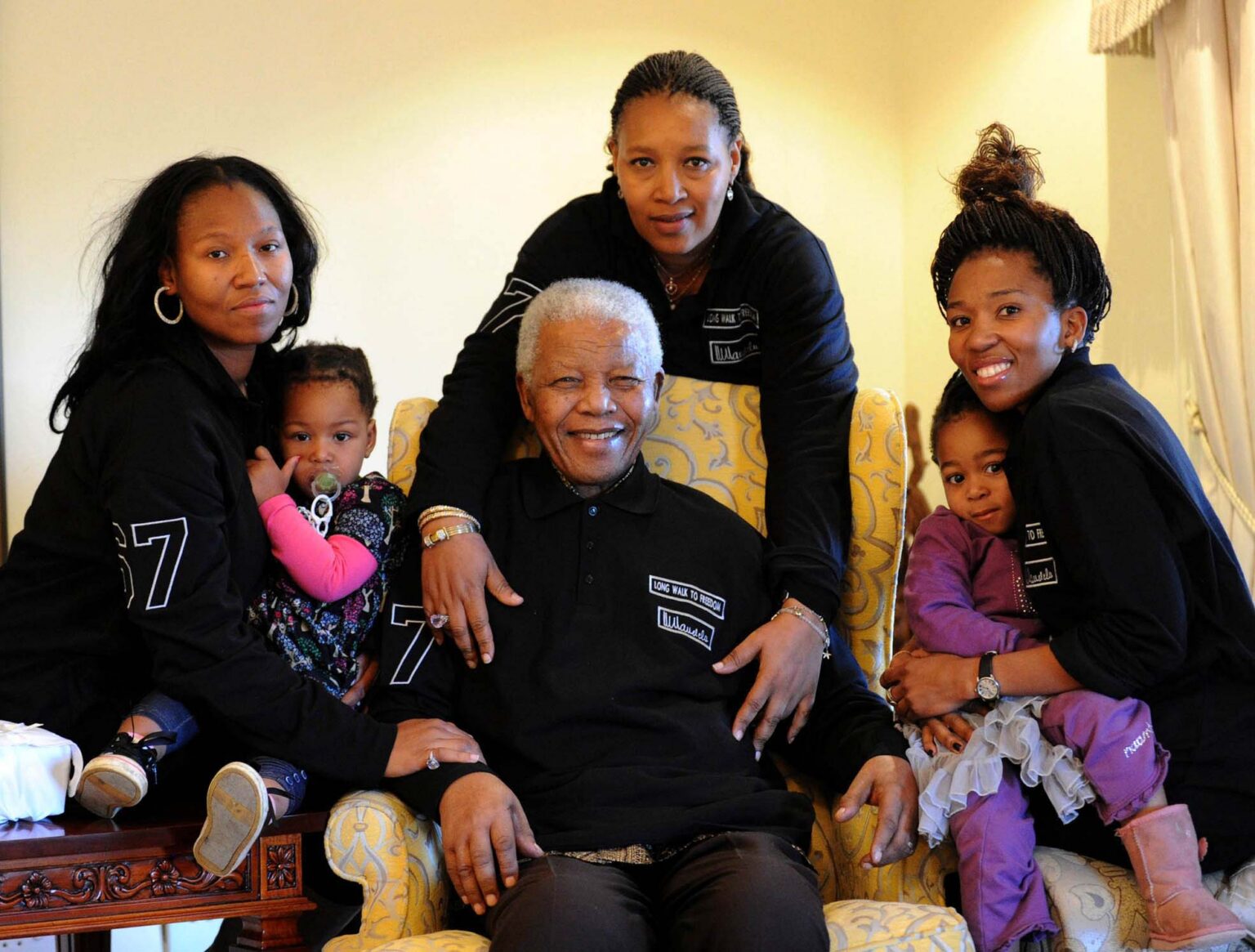
Zamaswazi Swati Dlamini-Mandela (Madiba’s granddaughter) is the second-born daughter of Zenani Mandela – the first-born of the two daughters of Nelson Mandela and Winnie Madikizela-Mandela. Swati’s father is Prince Thumbumuzi Dlamini – elder brother of King Mswati III of Swaziland. Interview by reGina Jane Jere
This is an important milestone for our family, but for me it is quite difficult to separate the legacies of both my grandparents [Winnie and Madiba]. I therefore celebrate them both at this special moment in the life of granddad Nelson Mandela.
May I start by stating that the biggest misconception that people have is that we had so much time with our granddad. We actually didn’t. There were times when we actually had to make appointments to go and see granddad. We had to join the line like everybody else. That’s how sad it was at times, sadder for my mum and aunties.
But when we got a chance to spend time with him, the advice that stands out the most for me, which he would repeat at every visit, was about our education. Education, education and more education!
He could just never stop drumming that in. On many occasions he would ask me: “Have you finished school?” and I would be like, granddad I finished school five years ago, and I’m actually working now. And he would go: “Well, that does not stop you from getting another degree.” He was that passionate about education.
His view was that the more education you had, the more it gave you the tools to do anything you wanted to do in the world and that it was through education that you could become an effective member of your society. And my grandmother was the same. My grandparents saw education as one of the most important tools in everyone’s life.
Long Walk To Freedom project
That is why my sister Zanziwe and I have chosen to take over our grandfather’s Long Walk to Freedom Library Service project.
I am also very mindful that I have a daughter who I am raising in this country. I am so grateful that I can raise her the way that I can. But I am aware that I cannot say the same for the majority of the people and children in this country. And it is heartbreaking to say that most girls in this country cannot be accorded the same opportunities that I am giving to my child.
Therefore this library project, not only keeps alive my granddad’s dream and wishes, but it holds special place in my heart as a parent.
The project, in partnership with the Department of Education and a social justice NGO called Soul Buddyz, involves delivering container libraries to disadvantaged communities across the country – more so in the rural regions.
For both of us it was important to carry on his education ethos, which he captured in his famous quote: “Education is the most powerful weapon which you can use to change the world.”
There are not enough libraries in this country and instead of waiting for the government to build libraries, this the fastest and most cost effective solution to deliver literacy to needy communities. These containers can last up to 50 years at a cost of just R20,000 each. And the beauty is that we have found that in the communities where these mobile libraries have been delivered, literacy levels have improved.
Limited provisions
It is sad that in the country that gave the world Madiba, we still have kids going to school without any textbooks, on empty stomachs and in worst cases, kids not going to school at all. We all need to play our small parts to break the cycle.
When both my grandparents retired they emphasised that we, as the next generation, have this duty to take on and move things forward, no matter how small or big the part we play. And for us as a family we are also always aware of the responsibility that comes with the name Mandela.
Granddad always used to say if you can make a difference in one person’s life then you have made an impact and you have done good. So this in my own small way of helping to realise both my grandparents’ legacy on education.
Madiba would be disappointed
Sadly, these days people are more interested in dealing with their own personal problems and trying to just get by with their daily grind. And as such, it is routine to forget what Madiba stood for.
Granddad felt so strongly for people who cannot, for example, put food on the table, or fail to have basic needs such as access to water, electricity or a roof over their heads, let alone take their children to school. But today, people in power are so far removed from these issues.
My grandmother kept talking about these things all the time, until her last breath and she is the only politician who still lived in Soweto and close to the people who go through these issues. She knew what she was talking about. She prided herself in the fact that she remained accessible to ordinary people and understood their plight.
But what would granddad say about the current situation in South Africa? In my view I think he would be very, very disappointed. Clearly the current environment is not what he fought for and I think he would be very harsh on the current politicians.
A lot of people gave up their lives for this country. People died! It is therefore very disappointing and sad to have those who came in power later to be so self-enriching at the expense of serving the people my grand parents sacrificed so much for. South Africans feel very let down.
But lately I feel that there is enough willingness and optimism to make this country work and there are people in power now who want to change things. I am optimistic. NA