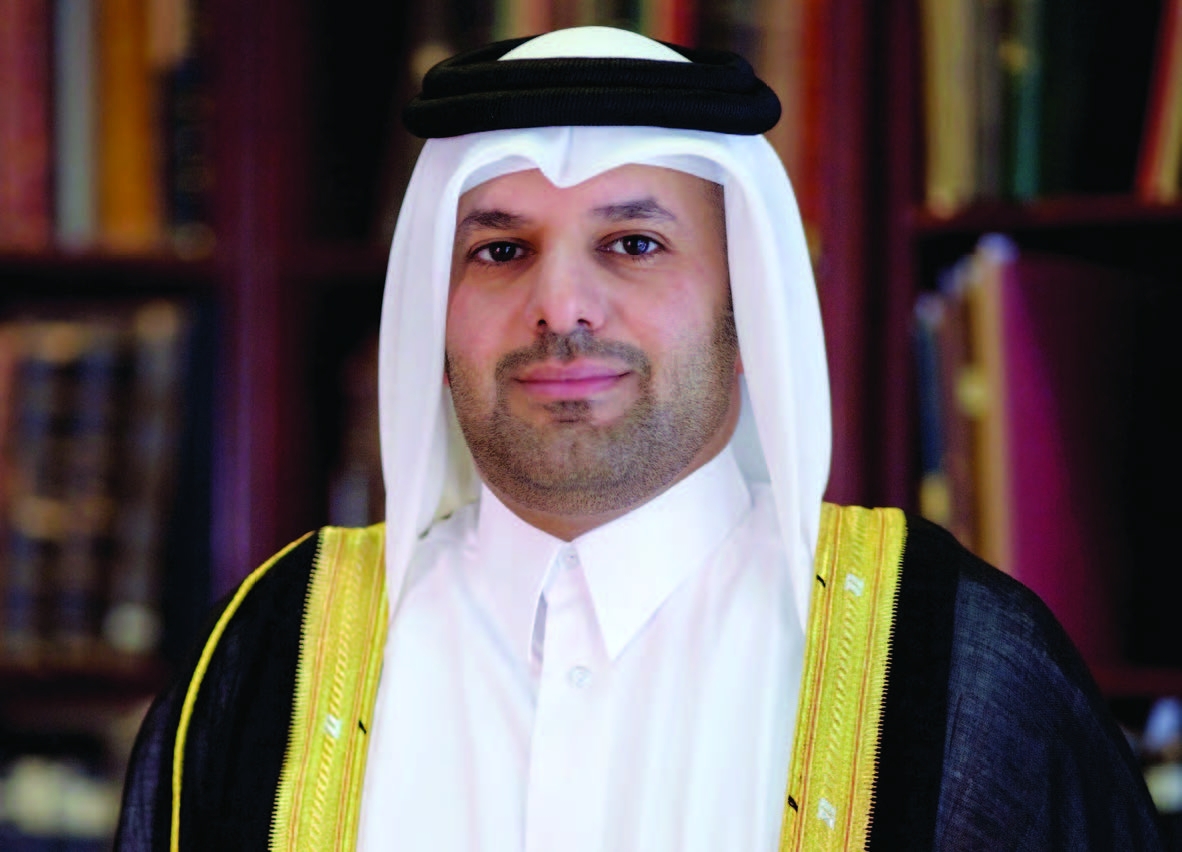
Education remains the cornerstone of any prosperous society. And when African leaders talk about Africa’s rich continent they all say its riches lie in its people, its human capital. As much as the indicators in education have improved, the continent still lags behind, especially if Africa is to become a global leader in innovation, services or even manufacturing. Luckily, new models of learning and innovative initiatives are yielding incredible results. It is to share these new ideas and developments, that The World Innovation Summit on Education (WISE) takes place in Qatar, where some of the world’s most renowned experts in education convene every year. New African spoke to Sheikh Abdullah bin Ali Al Thani, WISE chairman, about his expectations for this year’s summit and developments in education.
Why is global education strategically important to Qatar, and to you personally?
At WISE we believe that education must be placed at the top of the global agenda. While efforts have been made to widen access to learning, it is still a critical issue which is too often overlooked, and access does not in itself guarantee quality. The lack of relevant education and skills is the underlying cause of unemployment, poverty and conflict. We think education is the best investment nations can make for their people and their future. For example, finding solutions to environmental issues requires scientific research and engineering. But you don’t get scientists and engineers in countries without a viable education system. The problem is most acute in Africa, where 57 million children still don’t receive primary education. Education has always been at the heart of my career – first in teaching and then as Vice President, Education, at Qatar Foundation and President of Hamad bin Khalifa University (HBKU). I am also very honoured to have been Chairman of WISE since its launch by Qatar Foundation in 2009.
We live in a world where technology is changing the way we interact, the way we learn and the way we communicate. As Chairman of WISE, are you seeing rapid developments in the impact of technology on education?
Technology can improve access to education, but it also allows us to reinvent the way we learn. The recent debates about Massive Online Open Courses (MOOCs), which make content from universities freely available online, indicate that the rapid spread of technology is transforming education around the world, offering possibilities that were unimaginable a few years ago. Some of the initiatives recognised by WISE over the past five years use technology as an educational tool. A 2013 WISE Awards finalist from Uganda, for example, the Mobile Solar Computer Classroom, transports solar-powered PCs in a truck to remote rural areas. At WISE 2013 we will be focusing on the links between technology and learning, which will also be the theme of the third WISE Book to be released early in 2014.
What innovations or initiatives in education have captured your imagination?
Working with WISE one quickly realises that there are so many pioneering projects around the world that are having a profound effect on communities and individuals. Many of these initiatives deserve to be scaled up and replicated, both locally and regionally. The WISE Awards identify these projects and support their development by sharing them with the global community. Since 2009, WISE has recognised 30 WISE Awards winning projects. All of them are unique and have had an outstanding impact on societies. Teacher Education in Sub-Saharan Africa (TESSA) is a network of over 20 universities and organisations from twelve African countries that creates high-quality multilingual resources for teachers. Given the lack of primary education structures in Africa I already mentioned, these initiatives are true models for other people seeking to innovate across the continent.
This year’s Summit is themed “Reinventing Education for Life”: what does that mean exactly?
There is an increasing gap between the kind of education systems that are currently available and the kind we need to meet the demands of future generations. We need to fundamentally rethink our approach to education to make it more relevant to the real challenges of people’s daily lives. WISE 2013, “Reinventing Education for Life”, will explore how innovation can encourage skills development as a life-long practice, and help connect learners of any age with new opportunities. WISE sees education as crucial to individual empowerment and success in professional, cultural and civic life.
The Summit will see more than 1,000 top education practitioners, public sector representatives, corporate leaders and pioneers from an array of sectors gathering for three days of inspiring debates and discussions around these issues. Prominent participants from Africa will this year include H.E. Dr Adrienne Diop, Commissioner for Human and Gender Development at the Economic Community for West African States, Nigeria; H.E. Mr Lakhdar Brahimi, Former UN Special Representative of the Secretary General and Member of the Elders, Algeria; and Ms Angelique Kidjo, the singer, songwriter and activist from Beñin.
You have a session at the Summit entitled “21st century: how to balance the global and local?” How do you ensure that local values and heritage are retained within an education system in the face of globalisation, where everything is standardised and values diluted?
This will be a key session at WISE 2013. With attendees from more than 100 countries, the Summit is well positioned to discuss how to establish common values and goals, and how to learn from diverse cultures and ideas, while retaining one’s identity.The need to develop integrated, global perspectives on education is a core value of WISE. While we recognise that globalisation brings inevitable change, we are also sensitive to the need to create educational practice that respects unique and varied cultural heritage.
A good example from Africa is 2iE, in Burkina Faso, a public-private partnership which provides students with internationally recognised engineering programmes specifically adapted to the requirements of the African economy. Over 95 percent of students find jobs within six months of graduation! Here in Qatar we are transitioning from a carbon economy to a knowledge-based one, and the country has been assimilating social and economic development within the framework of its cultural traditions
What would you say has been WISE’s key achievement to date?
Through its many initiatives, including the annual Summit, WISE aims to make education a top priority on the global agenda. WISE provides a platform for innovation and partnership which supports the spread of sound education practice and thinking. I am especially proud of the WISE Prize for Education, a unique annual award honouring an individual or team that has made an outstanding contribution to the cause of education. Before the launch of the WISE Prize for Education in 2011, there was no prestigious global recognition for achievement in this field. I am particularly proud of the participation of Her Excellency Naledi Pandor, South African Minister of Home Affairs and former Minister of Science and Technology, who served for two years on the WISE Prize for Education Jury.
WISE has also identified many islands of excellence through the WISE Awards. All over the world, individuals and organisations are doing wonderful work, often in difficult circumstances. We must learn from them: we must discover how to expand, replicate, adopt and adapt these winning practices. Indeed, two of this year’s six Award winning projects are based in Africa: PEAS (Promoting Equality in African Schools), which delivers affordable, quality secondary education in Uganda and Zambia, and Medersat.com, which provides pre-school and elementary education in the poor rural areas of Morocco, Congo-Brazzaville, Senegal and Mali.
Our Learners’ Voice Program was created because we believe that innovation in education cannot happen without the input and insights from those at the heart of the learning process: learners themselves. The Learners’ Voice Program inspires and empowers
young people around the world. These outstanding students, aged 18-25, play an active role in the Summit and are also involved in the Program on a year-round basis. Seventy-eight young people have participated in the Program since its creation in 2011, including representatives from Cameroon, Kenya, Egypt, Tunisia, and Sierra Leone, among many more.
Finally, the WISE Haiti Task Force has continued its excellent work in helping to reconstruct Haiti’s education system following the earthquake in 2010. With our local partner, FOKAL, we have identified and are supporting Haitian projects that are achieving success on the ground, in the classroom. Of course much remains to be done to make education a priority for all. Today I am proud to say that WISE, now in its fifth year, is making a difference in building the future of education. WISE is an initiative of Qatar Foundation. Your emblem is the Sidra tree. Is there a particular message you are putting out? Traditionally, the Sidra tree provided travellers in the region with shelter from the harsh desert sun. As an image of perseverance and determination, it’s an appropriate symbol for Qatar Foundation.
How is Qatar transforming its education system? You have partnered with a number of leading international institutions to set up campuses locally; what is the rationale behind this and is this a strategy which you intend on pursuing in the long term?
At Qatar Foundation we are fully committed to playing our part in achieving Qatar National Vision 2030, which is based on a long-term strategy to create an advanced, sustainable society with a high standard of living for all of our people. We believe that, by providing students with the best higher education opportunities, they will be better prepared to make a real contribution to society. Hamad bin Khalifa University (HBKU) is key to fulfilling these objectives. As an emerging research institution, HBKU has partnered with leading local and international partners to provide high-quality, innovative graduate programmes. We will continue to welcome new partners worldwide to collaborate with us in our research and teaching.
Qataris are blessed with a small but very rich country – when one ‘has everything’, how do you create a society of learning and develop curiosity and a yearning for knowledge?
The blessing of oil and gas won’t last forever, so it is important to focus on education, which I believe is the most promising investment a nation can make. Qatar is aware of that and places human development at the heart of its long-term strategy. Students from over 90 different countries now attend the various institutions at Education City, and this is proof that we place diversity and learning at the heart of the advancement of our society.