
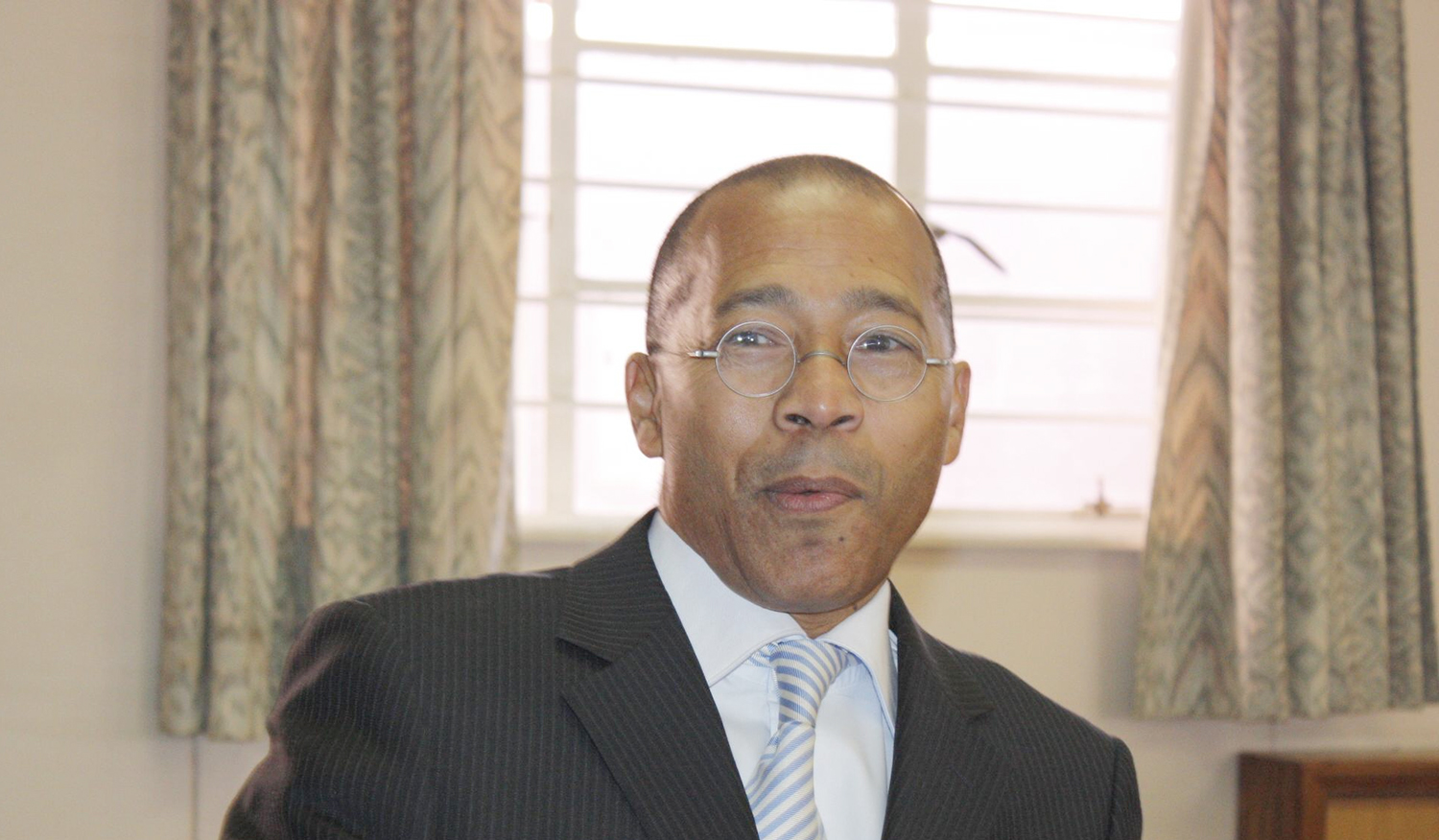
Our correspondent, Mabasa Sasa, interviewed Advocate Dirk Conradie, the chairman of Namibia’s Lands Tribunal, who told him that the Tribunal has not adjudicated a single case in 20 years of existence. Here are excerpts.
Q You have been the chairperson of the Lands Tribunal for more than 15 years now. Why is it that many people are not aware of the existence of this institution?
Why are you aware of the courts of law? Because every day litigants take each other to court to demand justice after the many disputes that arise in any society. These can be traffic accidents, character assassination, breach of contract, etc. There is this interaction by society in courts when disputes arise that makes us aware of the existence of the courts as they adjudicate these disputes. Now, just the opposite is applicable to the Lands Tribunal; there is no such interaction.
Therefore the Tribunal is quiet. The Tribunal cannot go around inciting parties to engage in land disputes, to make farmers and the government disagree about land prices just so that they come to the Tribunal. The aggrieved parties must approach the Tribunal for us to act; we cannot intervene without being asked to do so. This makes it look like there are no land disputes in Namibia because no cases are coming to the Tribunal.
It is my honest and respectful opinion that the present land reform is not working at all. This can be gauged against the inoperativeness of the Lands Tribunal [which] is equal to a court of law where disputes between landowners and the state are adjudicated. But no cases are coming forward.
Q How many cases or disputes have been adjudicated by the Lands Tribunal during your tenure?
Since the establishment of the Lands Tribunal about 20 years ago, not a single dispute has been adjudicated by the Tribunal. This was the case during the tenure of the late Justice Johannes Paulus Karuaihe before my chairmanship, and it has been the case since I assumed the office.
This means that there is no interaction between the state machinery entrusted with land reform and landowners. I believe that the prices offered by landowners are simply met by the state, and the asking price is paid, or there are no funds to pay for the land and a waiver is simply granted to the landowner to sell to whomever he pleases.
Importantly, in the new Land Bill, exclusive jurisdiction on land disputes should be given to the Lands Tribunal – to the exclusion of the High Court.
Q How does one gauge if land reform in Namibia is working? What is the primary objective of land reform?
I believe the overarching objective of land reform is to make land available to those who have hitherto been denied the right to own land. It is a fact that many of the indigenous people of Namibia were deprived of their land through corrupt practices and through oppressive laws and policies that were applied prior to independence.
But it is not my intention to establish if the resettlement programme is effective and if it contributes to the country’s Vision 2030 goals, but to establish, firstly, if there is distributable land available for land reform, and secondly, if the present methods to bring about land reform/distribution are effective. To the first issue, I would say that it is my honest belief that there is not enough available distributable land under the land reform policy, because the land is in the hands of a minority who are not willing to part with it. Why? Because it is a means of wealth accumulation, a leisure for the land barons. When they offer land to the state for redistribution, it is priced very highly. This brings us to the second question. How are we going to get land to bring about land reform and to redress the injustices of the past for which the current Agricultural Land Reform Act was promulgated?
The following must be re-emphasised. It is a fact – and a fact known to the minister of lands, the registrar of deeds, the director of lands, the legal fraternity, the banks and even the man on the street – that:
(a) land up for sale must first be offered to the state; (b) land is held by persons and by legal entities such as companies and close corporations; (c) land is held by persons on 99-year leases to avoid outright sale; (d) land is owned by foreigners as absentee landowners; (e) land is held by disloyal Namibians as proxies of foreigners; (f) individuals of foreign descent are owning up to 70,000 hectares of land; (g) individuals own up to four farms; (h) land transfers are being done in contravention of the law in that no exemption is sought from the lands minister, especially land owned by closed corporations and where only the ownership in the closed corporation changes and the farm indirectly changes ownership.
The Ministry of Lands will never know that the closed corporations have changed ownership and therefore the land is owned by another person, as there is no exchange of such information between the Ministry of Trade and Industry and the Ministry of Lands and Resettlement.
Q As a legal expert and a Namibian, what do you suggest the state should be doing?
Well, I would make the following proposals to the lands minister: Firstly, prepare a database of all land that belongs to absentee owners; land that is in excess of a certain size; land that is under 99-year leases; land that illegally changed ownership; land where proxies are involved; land that is underutilised.
Secondly, perform a revaluation of farmland required for national interest. Thirdly, buy land at reasonable prices in terms of the willing-buyer, willing-seller principle, and/or invoke the provisions of the Expropriation Act and expropriate land with fair compensation, in the national interest starting with the types of landholdings I mentioned above.
Recently our government was taken to court for expropriating four farms belonging to foreign owners. The government was unsuccessful in court and from then has never tried to pursue expropriation again.
I honestly believe and advise that the government should reconsider this avenue with more circumspection. Without this it will be a far dream to acquire land as is envisaged by the government, and our children will become tenants of foreigners in their own land.








