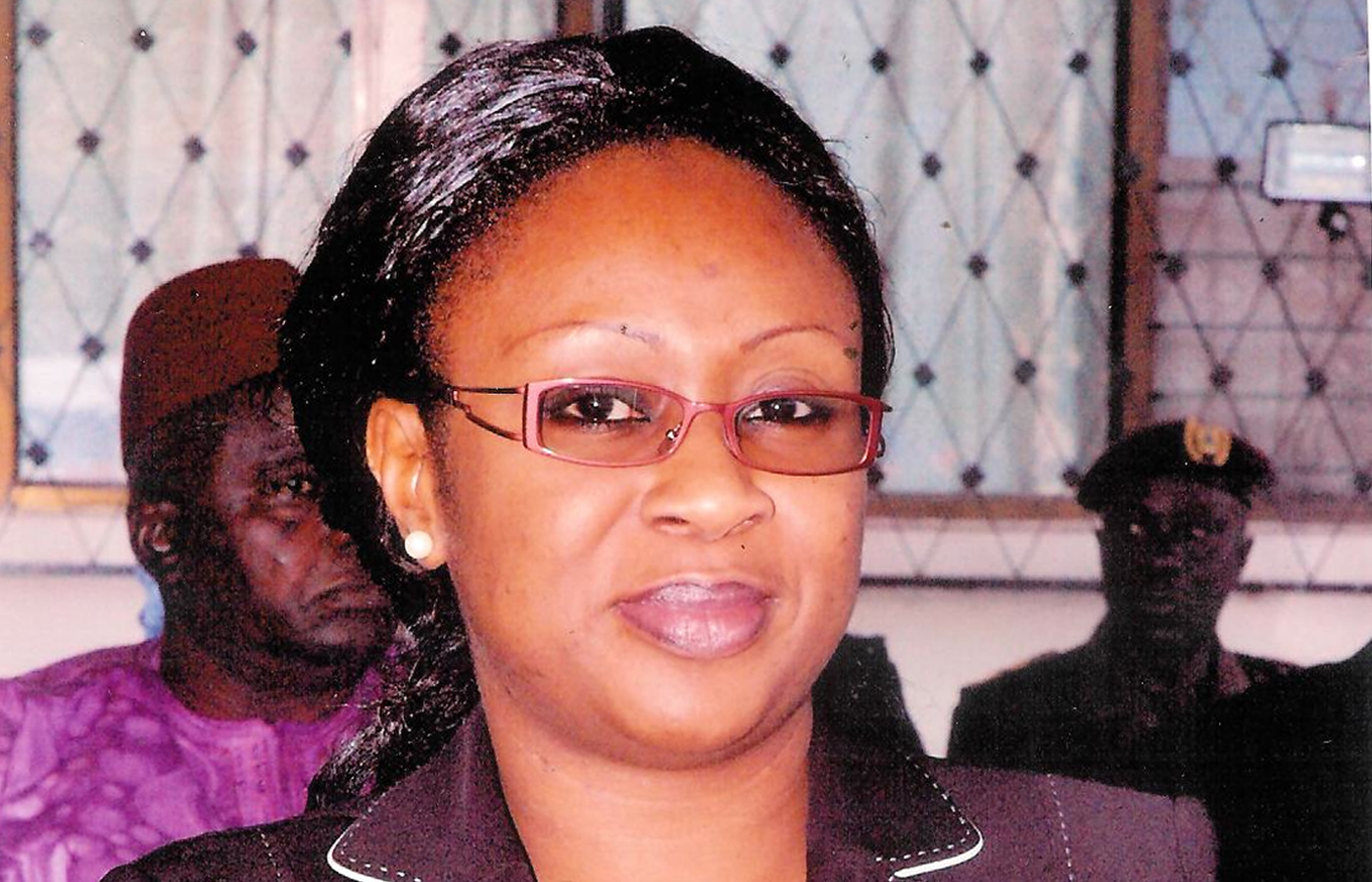
Blaring international headlines about justice and human rights in The Gambia are never far away. But what is the situation like on the ground? Who else to better explain than the Attorney General and Justice Minister, Mama Fatima Singateh, a lawyer herself.
You are under 40 years old and hold one of the biggest portfolios in cabinet as Justice Minister, in a country always under attack for so-called human rights violations. You have the right background as a lawyer, but it is a huge responsibility, isn’t it?
Yes, it is a heavy responsibility and it comes with rewards and challenges as well, but I thank God. I’m a lawyer but actually I’m passionate about children’s rights issues, this is what I love to do. I worked for about seven and a half years as a prosecutor. I was very passionate against rape cases and sexual exploitation cases, so that was my area of interest and then I moved on.
There’s so much to do within the Ministry of Justice. It is not only the Attorney General’s chambers but it’s the ministry, so we’re responsible for the prosecution of cases and we’re also responsible for defending government.
We also have the Registrar of Companies Office here. Last year we reviewed and enacted a new Companies Act. The last time the Companies Act was enacted or enforced was in 1955, a long time ago, so we inherited it.
Before independence?
Yes, so we had a lot of work to do and a lot of amendments have been done obviously, to suit the progress being made in the country at the moment; we have overhauled the system, to go hand in hand with how progressive the country is. In addition to that we actually introduced a process called Single Window, whereby all processes for getting business registration, the payment of taxes, every piece of information you require to set up a business is provided; it’s a one-stop shop. We also plan to go online, so businesses can be registered online. It’s very progressive.
Under the criminal division we prosecute cases. Recently we enacted two progressive laws, the Domestic Violence Act and the Sexual Offences Act.
Can you expand on that?
Yes. With this one I’m sure I’m stepping on the toes of her Excellency the Vice President because she’s responsible for women’s affairs but I’ll just give a summary. The Domestic Violence Act protects anybody who is subject to domestic violence; but unfortunately, given the society we come from, most of the victims are women. We provide facilities and funds to ensure that the subjects of domestic violence are not only removed from the home where they are being subjected to violence, but they are also put in protective care. We ensure that they are sensitised and empowered and provide training so they are in a better position to care and provide for themselves, if they’re dependents of those who inflict violence upon them. This is also very progressive.
With the Sexual Offences Act, again, it is mostly women who are victims, but we also have men and young boys who are also victims of sexual offences.
We recently completed our Universal Periodic Review Report and we go before the UN Human Rights Council in October. We are very eager to do so because there has been a lot of negative press about our country. When it comes to human rights we promote and protect the rights of everybody.
So what’s the message you’re going to be delivering?
The message is that we support human rights, we promote and protect everybody’s rights, but unfortunately what we hear about in the press is the rights of those who commit offences – the criminals who commit murder. When we punish them, all we hear about is those people who are fighting for the rights of the murderers. What about the rights of their victims?
Tourism in The Gambia is one of the country’s main revenue earners. What does the Tourism Offences Act entail?
The Tourism Offences Act relates to those offences that are committed by those who come to our jurisdiction for tourism-related activities. The Tourism Minister is doing a wonderful job in making our country the ideal tourist destination. But with tourism can also come negatives, because some people who would come here for the sun and sea also come here to take advantage of our people, and particularly our children. The Tourism Offences Act is there to ensure that laws are in place that prohibit certain acts against children, certain exploitations of our people, be it sexual or otherwise. This law specifically punishes those categories of offender.
When you talk about justice and human rights in The Gambia, one controversial issue comes up time and again; the gay rights issue. You are a lawyer, where do you stand?
That’s an interesting one. His Excellency the President has touched on this extensively, but I can give a legal perspective, not my personal view but a legal perspective. When we legislate we do so because of a need to correct something and we as a government – when I talk about government I mean the executive – just propose laws while the institution that enacts them is the National Assembly, which is a representation of the people. In The Gambia we have a law that views homosexual acts as criminal acts. What people do in their private life is just that, private; but there are certain acts that are not only contrary to our culture, our beliefs and norms but also contrary to the laws of The Gambia. It is my duty and my responsibility to ensure I prosecute.
There’s a lot of coverage in the international press regarding capital punishment in The Gambia.
And that’s not fair. You know what they say, negative press sells. We have a very effective judicial system in this country. We have the National Legal Aid Authority, which was established by an Act of Parliament out of the initiative of government and it provides a free service for anybody who has been charged with a capital offence. That’s how progressive we are, but that is not reported.
But why is it that most of the time the justice and human rights situation in The Gambia makes the biggest headlines and is narrowed down to the 2012 executions?
Unfortunately, they don’t give the reasons why. Let me just tell you about the recent gruesome crimes that occurred. We pride ourselves as being a loving and peaceful country but sometimes terrible things do happen. We have two individuals, currently, who have actually brought their appeals to the Court of Appeal.
These two men, who are not Gambians, hijacked a British man, robbed him, beat him and hacked him to death. These two people have been prosecuted and they have been sentenced to death, but they’re not going to be executed immediately – they have a right to their appeal.
So it is not like there are firing squads every week?
Not at all! We have laws, we are law-abiding individuals; everything that happens, happens through a process and there are laws that guide our every action.
But just to drive home a point, the National Legal Aid Authority, which is government supported, has actually succeeded in the past. I say this with authority because I was a Court of Appeal judge as well, they appeared before me and other panels of judges, and they have actually won some cases against government, in favour of the person accused.
So how liberal and how progressive and transparent is that? So when you hear about negative press, these people don’t really care what the truth is, they just want to character-assassinate.
What are the conditions in prisons like?
Actually we have a Prisons Act. Again, this is what people don’t know, but we have a Prisons Act that provides for how inmates must and should be treated and there’s also a committee – my ministry is represented as well – and what this committee does monthly is visit the prisons and send some recommendations as to what is wrong and needs to be fixed.
Of course there are gaps, sometimes some people do fall through the cracks but to deliberately lock somebody up without trial, come on, that’s ridiculous.
It’s almost 20 years since President Jammeh came to power; how has the justice system evolved in these two decades?
Actually, you don’t have to go back 20 years; so much has happened in just the last three or four years. We are actually trying to ensure that justice gets to the doorstep of every individual and this is one of the main passions of His Excellency the President, to ensure that everybody has access to justice.
Recently we have ensured that we have a court in each district. We even have a High Court in Basse. The government has ensured that the country has a Magistrate’s Court in every single division and region to ensure that everybody can have access to the courts. Before, we had offenders in the rural areas who had to be brought down to Banjul to actually appear in court.
And a couple of years ago, about two years ago, his Excellency the President set up a commission of enquiry into tax evasion, which I headed. The current Secretary General was also a Commissioner of the Tax Commission.
How bad is tax evasion?
It’s really bad. People do evade taxes. People don’t want to pay taxes and this is a serious thing. But we must understand that we need to pay taxes to see more development. It takes money to build these infrastructures and these structures.
A lot of awareness has been raised as The Gambia Revenue Authority is raising awareness of the importance of payment of taxes, so this is something that we are proud of. We were able to generate income because people were running to pay taxes.