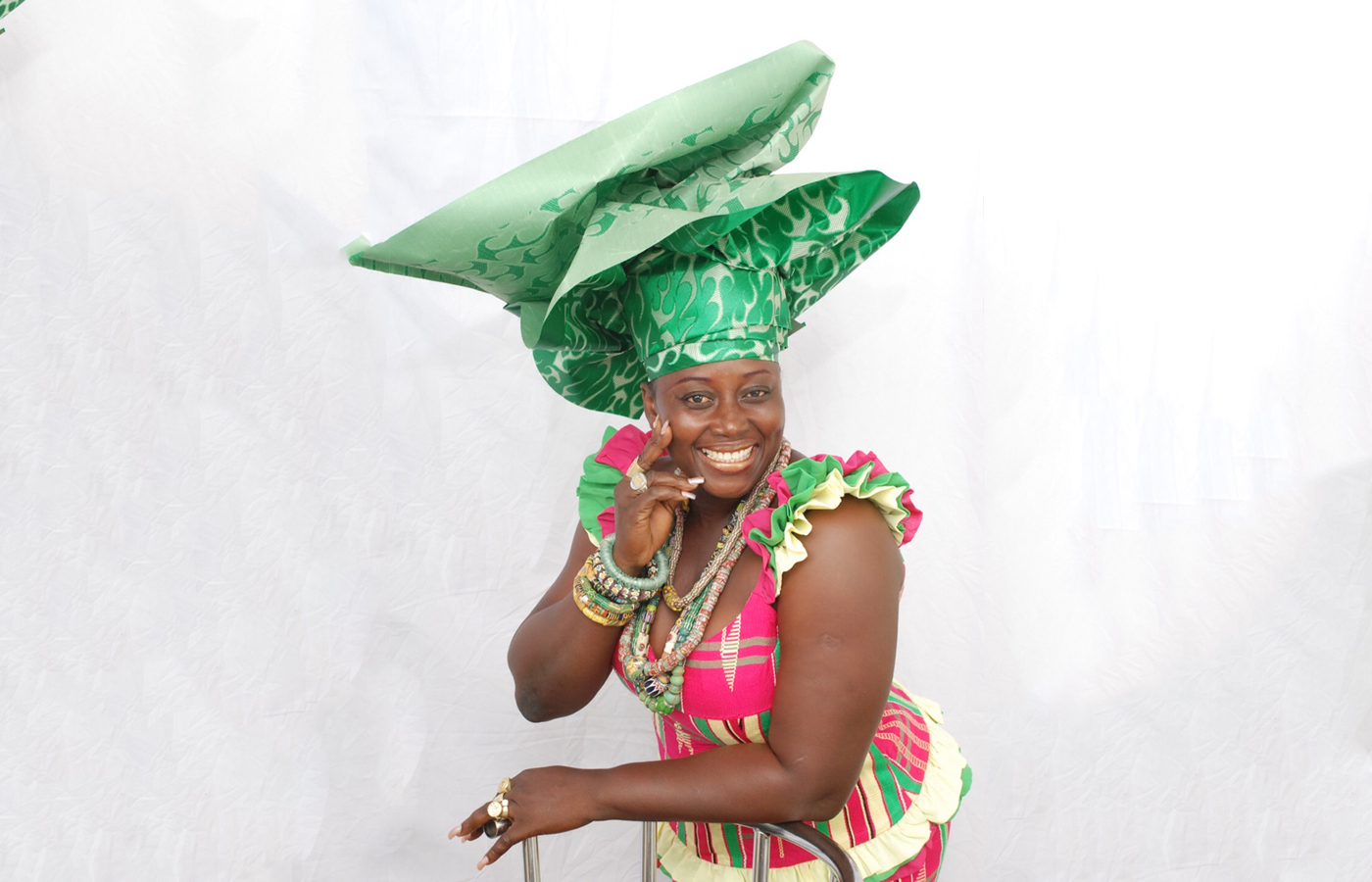
Although to many Ghanaians Joyce Dongotey-Padi needs no introduction, interviewing this formidable woman reveals how Ghana, and Africa by and large, is still failing its widows – something that Joyce, through her organisation the Widows Alliance Network (WANE) has passionately chosen to do something about, using education to empower them. She spoke to New African.
Formed only 5 years ago, and receiving the Qatar Foundation’s World Innovation Summit on Education (WISE) Award for innovation in education in 2009, the Widows Alliance Network (WANE) is now one of the foremost widows’ alliance networks in Ghana, with over 300 different widows’ clubs and associations nationwide. Launched by the Mama Zimbi Foundation (MZF), the umbrella organisation founded and run by Joyce Dongotey-Padi, WANE boasts over 6,000 registered members throughout Ghana.
As the second anniversary of the United Nations International Widows Day (23 June) approaches, WANE will use this occasion to hold its fourth National Widows Alliance Conference (WAC) at the Ghana International Trade Fair Centre, under the theme “Widowhood Is Not A Curse, But Ordained By God”. The conference, which will attract over 3,000 vulnerable widows, will also serve as a platform to advocate for a comprehensive national policy targeted at widows in Ghana and Africa as a whole.
One aim of WANE under Dongotey-Padi is to organise and hold an All Africa Widows Alliance Conference by 2015, which African heads of state will be invited to attend and speak at. A first Widows Alliance Hospital where young widows will be trained as health assistants, and a mobile Widows Clinic, are projects in the pipeline, among many others.
It’s sadly no secret that in today’s age, women in many African societies are forced into some of the most deplorable situations when they become widowed. According to WANE, “when a woman becomes a widow in our African society, these widows and their needy children are exposed to obnoxious cultural practices and unpardonable rites…they are ostracised from the community, denied any rights to their late husband’s property, and their children can also be denied education.”
As Dongotey-Padi – popularly known as Mama Zimbi – explains in the following interview, there is a need for a paradigm shift in how Ghana and Africa as a whole perceive and treat their widows. And educating them is one of the best answers.
Q: It’s nearly three years since you received the WISE Award. How have those years been and how beneficial was the award to you and the Foundation.
A: The WISE Award that the WANE project received from the Qatar Foundation has really helped us to begin and continue some of the initiatives that have brought sustainable economic development and freedom to our country’s widows. The Mama Zimbi Foundation would have wished to receive [further] annual financial support for the projects we began with our WISE prize award. The award has, however, also granted our organisation some level of international exposure.
Q: The work you are doing with Ghanaian widows is impressive and so are the numbers when you look at how many widowhood clubs and associations have been formed throughout the country. Do you have specific examples of beneficiaries where you look at them and say, “Look what educating a woman and empowering them can do?”
A: The projects we have done under WANE include: Beads arrangement projects by the Zimmerman Widows Association in Nungua in the Greater Accra Region; the Soap Making Project carried out by the Dunkwa-On-Offin Widows Association in the Central Region; the Gari Processing Project by the Women’s Alliance for Development in Hikpo in the Volta Region; and the huge radio and TV campaign against injustices meted out to widows in Ghana on Adom FM and Multi-TV. These are some of our main success stories.
Q: Explain briefly, how exactly WANE works from concept to end-user?
A: The Widows Alliance Network (WANE) for the sustainable economic development of widows in Ghana, which is one of the many projects under the Mama Zimbi Foundation, helps equip widows in Ghana with the right employable skills, human rights education, reproductive health and social integration programmes to create a paradigm shift in how Ghana’s communities perceive and treat widows. Through WANE, over 300 widow groupings have been formed in Ghana, with membership swelling to over 6,000 nationwide. The annual national Widows Alliance Network Conference for advocacy and national widows’ cohesion is also organised as the grand occasion where all of Ghana and Africa are made to appreciate the roles widows are playing as ambassadors of change in their communities.
Q: What lessons can indigenous organisations as well as African governments learn from initiatives such as the Qatar Foundation’s annual WISE summit?
A: Policy makers in Africa should give special attention to the plight of vulnerable widows and women in general in a similar way as the Qatar Foundation’s annual WISE summit highlights the importance of education. Our leaders should also enforce laws against infringement of the rights of widows and any deplorable acts meted out to them. Personally, the annual WISE conference keeps empowering and motivating me as a woman’s leader through its various plenary sessions focused on education.
Q: WISE has been of great support, we can assume. What other support do you have, or do you hope you could get from other forums including the Ghanaian government, that you don’t already receive?
A: WANE has been able to sustain its vision and initiatives more as a self-help organisation and through its community base. Though we have explored several avenues, we still do not have any regular donors or any governmental support.
Q: Widowhood is a very sensitive issue in our sadly still very patriarchal societies. The experiences of women who benefit from WANE may definitely vary, but in your view, what are the main benefits?
A: Most widows helped by the organisation have grown in self-confidence through the education and skills we have given them, and have been empowered economically through sustainable projects that we teach them to undertake.
Q: What’s the secret behind WANE’s success and if there have been hurdles on the way, how have you overcome those?
A: Because WANE is more of a self-help organisation and community-based, we encourage widows to come together as an association to learn to grow in self-confidence, to develop new skills as well as new friendships and to develop their families and their communities. WANE also works with all organisations that seek to promote the total wellbeing of the Ghanaian woman and her rights at the grassroots level.
Q: What else needs to be done in terms of education in Africa?
A: We believe that education must help an individual to acquire the requisite knowledge to solve societal problems, especially to meet the day-to-day issues of the immediate community. That is why informal vocational education, which looks at improving traditional cultural values and provides opportunities for the marginalised and neglected individuals in our society, like widows, who do not have formal education, is so important, to create some form of economic freedom and empowerment.
Q: What are your plans with WANE for this year and beyond?
A: With adequate funding, we have a number of projects lined up including: Widows as HIV/AIDS Change Agents, a project proposal that will involve the use of an integrated media and cultural approach to empower Ghanaian widows to become agents of change in the fight against HIV/Aids in their communities. Specifically, the project will employ traditional Ghanaian folklore to educate widows and a wide range of other disadvantaged women groups to enable them to have a revolutionary effect on the fight against HIV/Aids in Ghana. This project will work by: educating the widows on all aspects of the disease; developing innovative cultural entertainment packages like drama, to propagate information about the disease, and using the women as HIV/Aids ambassadors in their communities.
We are also looking at working on a project called Widows in Sustainable Agriculture (WISA) under which we will utilise the vast arable land resources in Ghana to engage widows in sustainable agriculture. We have a four-fold strategy for WISA comprising: acquisition of land in key selected agricultural communities; establishing training on sustainable farming practices for the women; the organisation of widows to commence small-scale farming initiatives; and the establishment of grocery stores to market and sell the produce from the WISA farms.
Q: How do you cope with the pressure of dealing with such a sensitive issue?
A: Though it has proven quite difficult to get rid of [harmful] cultural rites meted out on widows – because many people still have a strong attachment to all sorts of superstitious beliefs – education through advocacy and the provision of employable skills, such as those provided by WANE, are the best long-term solution to problems that have plagued African widows for a long time. Knowing that through our programmes these women can have their own source of income, removing the syndrome of being dependent on other people, is uplifting.
Applications for the 2012 WISE Awards are open until the 31st May 2012. Please see details. www.wise-qatar.org/awards.