Prof. Kwaku Atuahene-Gima* says for corporate Africa to make headway in the innovation race, it should follow the example of the Asian Tigers and ditch the accepted ‘common sense’ orthodoxy advocated by the West and, instead, look to its opposite.
Corporate Africa looks on with palpable envy as many companies in many emerging economies continue to innovate in a big way. Witness the remarkable agility and success of many Chinese companies at innovation. Before you regurgitate the Western mantra that Chinese companies are not good at innovation, consider the story of Wanxiang Group, the world’s leading supplier of auto parts.
Wanxiang’s innovation strategy has been to focus on the outcomes that really mattered to its customers – improved technical performance and low-cost/high-performance ratio. When Wanxiang entered the US market, US auto-parts companies dismissed it as a competitor. Yet, by 2005, Wanxiang had developed into a giant auto-parts maker operating 38 companies in eight countries, had acquired the Schiller Group, a leading US auto-parts maker.
Indeed, Visteon, the US auto-parts company which publicly derided Wanxiang as only a supplier of components for auto parts rather than an auto-parts maker, had by this time gone bankrupt. The Wanxiang story is one of the many examples of corporate innovation coming out of China using what I call ‘uncommon’ sense approach to innovation.
Uncommon sense innovation
Throughout the many years of studying innovation among companies in China, I have observed specific lessons that corporate Africa can emulate if we are to develop world-beating products and services for Africa and for the world. Here is the key lesson – innovate with uncommon sense.
Companies everywhere approach innovation with specific logics, the mental frameworks and assumptions that underpin and guide executive decision-making. In time, these mental frameworks and assumptions become generally accepted logics – common sense of the business of innovation.
The problem is that companies from emerging economies such as China and Africa dare not hope for success if they follow the accepted common sense. The reason is that most Western companies are far ahead in the technology race, have strong R&D capabilities as well as significant advantages of being first movers in many markets.
Innovating with the common sense approach in the face of such formidable opponents will be courting disaster. Many Chinese companies are successful at innovation because of their uncommon sense approach. Below I give three examples.
Focus on the right kind of innovation
The common sense approach to innovation suggests that companies are innovative only when they come up with path-breaking technological invention or what some people call ‘true’ innovation. A sibling of this logic is that customers, particularly in technology industries, don’t know what they need and that researchers, scientists know best. Indeed, this is the common sense logic behind the incessant charge in the West that Chinese companies are not innovative.
But who cares about ‘true’ innovation when the market needs are for real basic things that provide solutions to important problems. So the uncommon sense approach is to focus your energy and resources on the right kind of innovation – products and services that may not be technologically sophisticated yet solve important problems for customers.
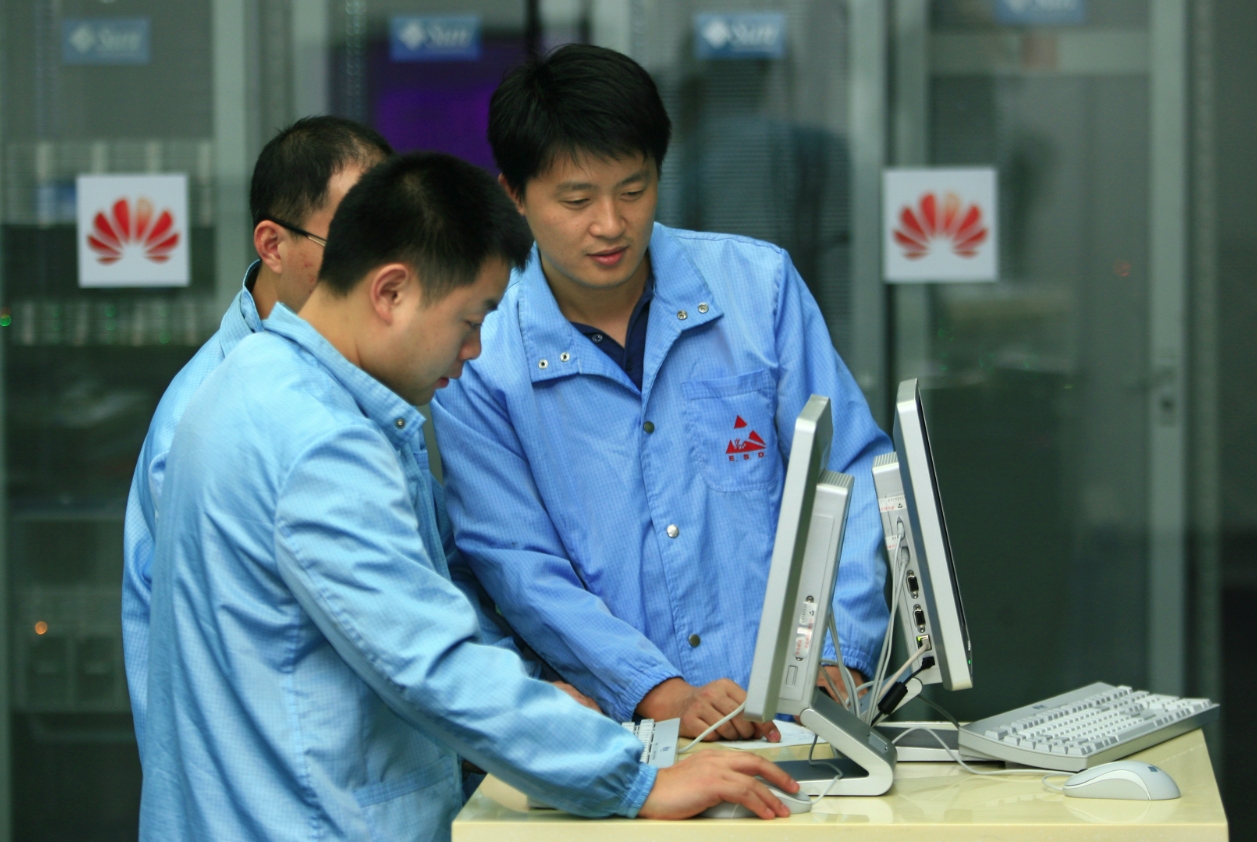
You can only uncover the right kind of innovation by having a customer-outcome approach. It is for this reason that, unlike many technology companies, Huawei enshrined its customer-oriented principles in its R&D process way back in 2003. One of these principles was that R&D personnel must blend in with customers. Notice the emphasis on the words ‘blend in’. Immersing oneself with customers allows you to understand the key problems and produce outcomes they desire.
Through such a blending-in process, R&D personnel are able to feel what the customer feels and thereby sharpen their senses about potential customer problems and possible solutions. To achieve this blend in, R&D personnel should spend at least 50% of their time in the customer’s business environment.
Huawei also encouraged R&D personnel to stick with a far-sighted approach to innovation, with different strategies at different stages of the growth of the firm. This ensured learning from failure and eschewed the tendency to take strong competitors head-on by responding to every move or action directly. This is an uncommon sense innovation approach rooted in Mao Zedong’s beachhead strategy during the civil war.
Innovate from the countryside to capture the city
Mao’s strategy emphasised that to win a war, the one must engage in ‘small experiments’ – focus on meeting the needs of the countryside, develop needed projects, learn from mistakes and improve. This process builds the support and morale of citizens (customers) which are needed for the army to then encircle and capture the cities. Chinese companies such as Haier, Mindray, Dawning, Neusoft, and many others have adopted this as a competitive business innovation strategy. For example, Mindray followed this strategy in the medical equipment business. It achieved its innovation breakthrough when it entered the Chinese third and second tier hospital markets in 2001 with a fully home-grown colour ultrasound diagnostic product.
It later improved its product quality and performance to enter the first tier market. It used the same strategy in entering foreign markets, first targeting unserved and underserved markets in Asia and Africa and then moving to the same types of markets in US and Europe. This strategy has been such a success for Huawei and ZTE that they are now regarded by most US competitors as significant threats to their survival. To stem the onslaught of Huawei and ZTE, US competitors’ last ditch anti-competitive tactic was to run to seek protection from Congress on the pretext of national security concerns.
Do not respect ‘unreasonable’ Intellectual Property Rights (IPR)
Most people have no idea that things like gunpowder, paper, the wheelbarrow, the compass, the plough, the seismograph and even your favourite pasta – inventions that have underpinned innovations that have transformed human civilisation and human life – were all invented in China. Notice that the Chinese did not have IPR protection for these inventions.
If they did – things may be different now! These inventions were stolen, copied, imitated and/or bought by European merchants along the Silk Road. These Chinese inventions were the knowledge tools with which many companies and industries emerged in the West. Why do I mention this here? I do so because you must be deaf not to have heard the incessant accusation that Chinese companies are just copiers of foreign technology. Those who make this charge have historical amnesia with regards to Chinese inventions and to the history of innovation.
Not long ago, in the 1970s and 1980s, the Japanese, and later the Koreans, were at the stage of innovation that China is today and were also accused of stealing and copying Western technologies. The common sense argument frequently made is that companies that come up with new inventions must have iron-clad protection of their rights so as to motivate them to develop more and better innovations in the future. Yet, we know that having iron-clad IPR does not necessarily encourage innovation from the owners. Indeed, there is evidence that some companies, and indeed countries, use IPR protection and associated royalty charges as a nuclear deterrent, to stifle competition and innovation.
Where a country or continent has massive problems in providing basic necessities for a growing and demanding population, it is scandalous to respect innovation-stifling IPR.
The uncommon sense innovation approach is for companies in emerging economies to creatively imitate and learn from technologies developed elsewhere and to adapt those technologies to build new products and services desired by their unserved and underserved markets.
Take the case of Zongshen Industrial Group, one of the world’s leading motorcycle manufacturers from Chongqing. This company, started from learning with parts of copies of disassembled Japanese engines. Combining this learning with the founder’s many years of experience as motorcycle repairer along with deep knowledge of the needs of the Chinese consumer, Zongshen ordered a foreign production facility, turned it into R&D centre and started to design and develop entirely new motorcycles. The rest is history.
This is the same imitation to innovation process that the Japanese, Koreans and Taiwanese followed decades earlier, and the West followed centuries earlier by building on Chinese inventions. Corporate Africa must learn to do the same.
*Prof. Kwaku Atuahene-Gima is founder and president, International Foundation for Africa Innovation (iFAI), Professor of Marketing and Innovation, China Europe International Business School (CEIBS) and Executive Director, CEIBS Africa.