Madhvani history in Uganda stretches back for more than a century and it is now a large, diversified conglomorate.
In 1908, a 14-year-old Indian boy, Muljibhai Prabhudas Madhvani, arrived in Uganda to join his uncles, Vithaldas and Kalidas Haridas, in their shop in the town of Iganga. His quick grasp of the basics of commerce persuaded his uncles to entrust him with the responsibility of running a shop in Kaliro when he was only 17 years old.
By the age of 20, he had opened and was managing a shop in Jinja. Before he was 24, he had built up his uncles’ business to a level where they made him the MD of the company, then called Vithaldas Haridas & Co. In 1918, the company bought around 800 acres of land in Kakira. This was the start of Madhvani’s flagship enterprise.
From those early beginnings, the Madhvani Group has today grown into a widely diversified conglomerate, encompassing agriculture and agro-processing, including sugar, tea, and floriculture; confectioneries; soap; packaging; matches; steel products; commercial property development; hotels and tourism; insurance; media and communications; ITC; construction; and trading in various industrial products and consumer goods.
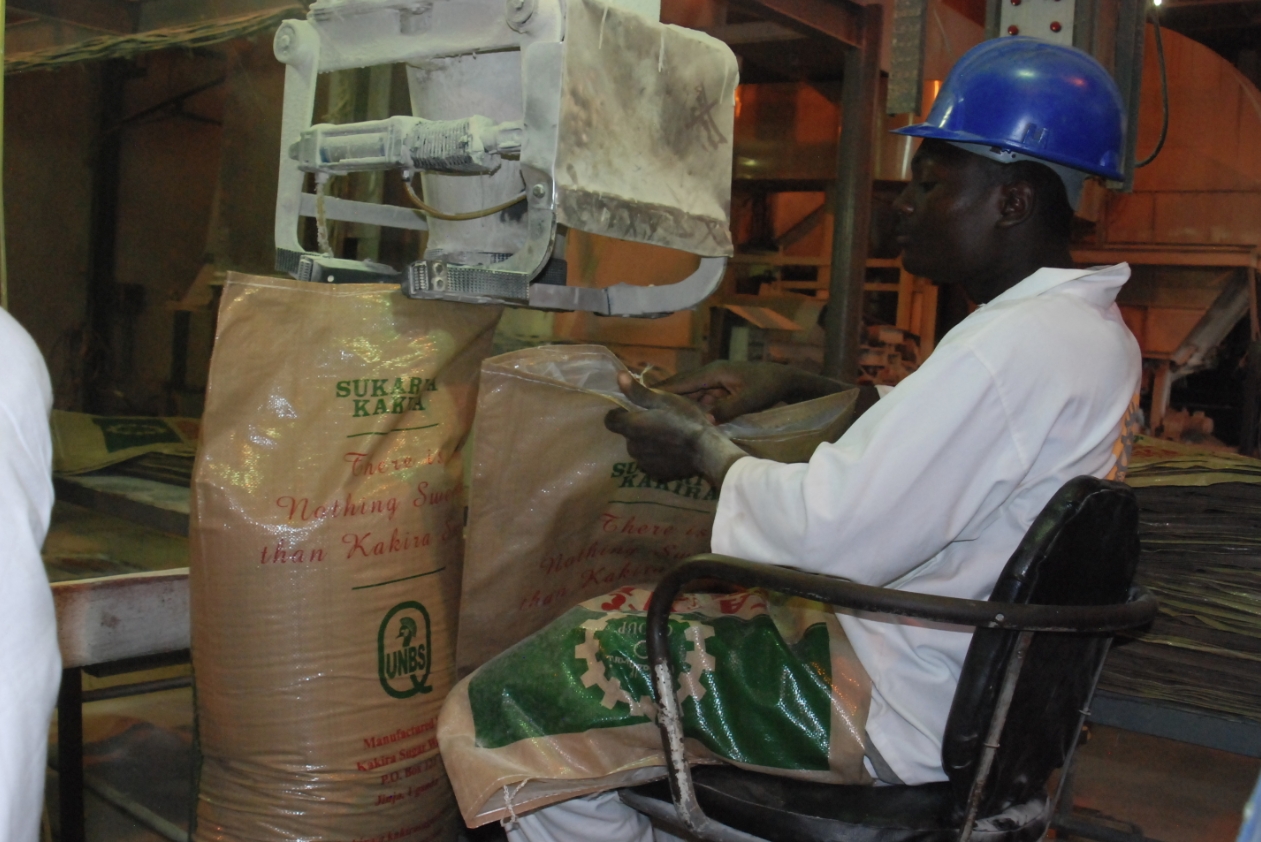
Today the Madhvani Group operates across Africa, the Middle East, India and North America. But the Group’s pride still remains the Kakira Sugar Works (KSW) which is now East Africa’s leading sugar producer. Today, it crushes 6,000TCD (Tons of Cane per Day) and plans to expand to 7,500TCD. Its ultimate goal is to crush 2 million tons of cane a year at Kakira, which will give it 20,000t more sugar than its current output.
This would be a crowning achievement, and a victory over bad politics. In 1972, KSW’s operations were seriously affected by Idi Amin’s expulsion of Asians and seizure of Asian-owned industries. In fact, between 1980 and 1988, Kakira had no production at all, even though in 1985, the Madhvani family was invited back to partner with the government in resuscitating the sugar estates. Technically, the current Kakira Sugar Works was formed in 1985 as a joint venture between the Madhvani Group and government to take over the assets of the old Madhvani Sugar Works Ltd.
Situated in the Busoga Region, the KSW factory now directly employs 7,500 permanent workers, plus another 4,500 contract workers. It also works with 8,600 out-growers in a 25km radius who grow cane on 25,000 hectares of land of their own and supply 65% of the sugar cane crushed by the factory.
KSW comprises of 22 villages on its 10,000ha sugar estate, and uses 100% manual labour to harvest sugar cane, employing 2,000 casual workers during harvest time. Prior to 1972, the Madhvani Group was contributing 10% of Uganda’s GDP. Today it is down to 5% as the economy has grown far bigger than it was in 1972. However, in the 2010-11 financial year, KSW paid $30m in taxes to the government as opposed to $5m 10 years ago.
KSW currently generates from sugar cane waste 22 MW of electricity, feeding the national grid with 13MW. Next year, it will be generating 52MW when its current expansion is completed. Out of the 52MW, 32MW will go into the national grid.
In the next few months, KSW will open a smaller sugar complex in the Amuru District of northern Uganda. The Madhvani Group also owns the only sugar factory in neighbouring Rwanda, the Kabuye Sugar Works, where it employs 400 factory workers and 5,000 agricultural workers. The factory currently produces 12,000 tons of sugar each year.
From whatever angle one looks at KSW, the company has lived up to its slogan: “There is nothing sweeter than Kakira sugar”. Its Ugandan operation is an example to be emulated.