In Kenya’s far north-western county of Turkana, celebrated worldwide for its prehistoric human origins findings, the backwater town of Lodwar, set in dry, sandy and intensely humid semi-desert, is steeped in memories of Kenya’s independence struggle. But the discovery of oil in the county is set to change it for good. Wanjohi Kabukuru reports why.
Lodwar, capital of Turkana county, is where Kenya’s founding President Mzee Jomo Kenyatta was incarcerated at the height of the country’s independence freedom struggle. His cell house there is today a national monument under the management of the National Museums of Kenya (NMK). Nearly all of Turkana county is considered an archaeological site of international importance, thanks to the numerous spots being researched and studied by the NMK, due to the priceless hominid finds. But today, the country has even further good tidings – the discovery of oil which has set both local and international interest in the area into overdrive.
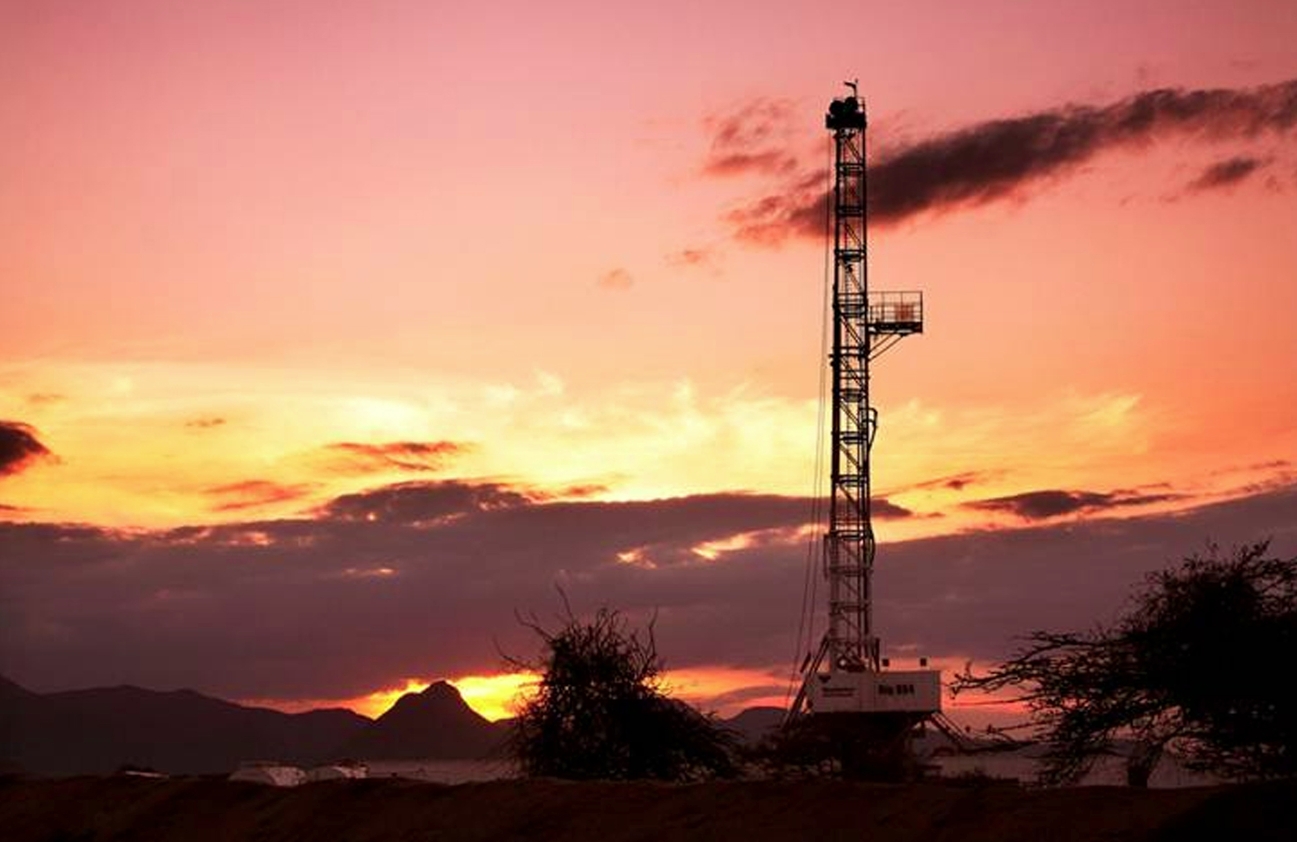
130km south of Lodwar, just off the dilapidated Kapenguria-Lodwar highway, is the much smaller centre of Lokichar, still within Turkana county. The remote region is served by daily flights to Lodwar. While the transformation of this town was planned three years ago, the reality of these plans took shape only early this year. In March this year Kenya’s President Mwai Kibaki announced that the Anglo-Irish oil multinational Tullow Oil had discovered oil in the Ngamia 1 (Swahili for “camel”) well located near Lokichar.
When the news of the discovery was announced in Nairobi, the country was abuzz with debates that were heavily tilted in favour of the “oil curse” argument. Few opinion shapers saw the find as an “oil blessing”. Ironically, in Turkana, the oil issue is not a hot topic even though the locals are well versed of what is happening in their county and even the youngsters can pinpoint the direction of the exploration wells.
At present there are several exploration ventures across Kenya with much of the activity concentrated in Turkana, where there are more than six heavily guarded sites.
Oil talk among the residents is treated with unusual calm for such a subject. “This oil found here belongs to all Kenyans,” says Katoo Awoi, a primary school teacher in Lokichar. “Of course, we will get our share as the people of Turkana, but this wealth needs to be shared by everyone within the Kenyan borders once they begin selling it.”
In the last six years the East African region has generated intense interest as far as hydrocarbon reserves are concerned, attracting various oil multinationals. Anza, Lamu, Mandera and the Tertiary Rift, whose combined surface area is estimated to be half a million square kilometres, are Kenya’s four petroleum exploration basins which are sub-divided into blocks for easier administration. Turkana, where Block 10BB is situated, became the first of the country’s oil basins, and thrust Kenya into the limelight.
Two months after the discovery was made public, Tullow and its partner Africa Oil, who operate Turkana’s Block 10BB, revealed that they had found an extra 43m of potential oil pay in its Ngamia-1 well in northern Kenya. Tullow has other interests in Ethiopia and Uganda, but the Turkana find is exciting the oil corporation.
“This ongoing wildcat is an excellent start to our exploration campaign. The net pay encountered so far in Ngamia-1 is more than double that encountered in any of our East African exploration wells to date. We now look forward to the drilling and evaluation of the deeper potential of this well and the acceleration of our seismic and drilling campaigns in the region,” says Angus McCoss, Tullow Oil’s exploration director.
From general conversations in Turkana county, a picture emerges of an oil company that has done everything not to antagonise its relations with the locals. Indeed, long before the oil find news was made public, Tullow had already built two primary schools and provided drinking water to locals. Charles Lomulen, a 22-year-old newspaper vendor, is optimistic about his county: “We will get jobs and our roads will improve, which means we will no longer need to travel for 24 hours to reach Nairobi.”
Away from oil boom discussions, in the towns of Kalokol, Lodwar and Lokichar, the residents are also aware of the multi-billion dollar development project that coincidentally ties in to the oil: the proposed Lamu Port South Sudan Ethiopia Transport (LAPSSET) corridor which touches these three towns. LAPSSET is a $24.7bn project that will see the construction of a 32-berth modern port at Lamu on Kenya’s northern coast. Other components in LAPSSET include an oil refinery, standard gauge railway and modern highway.
Turkana residents speak of the proposed 1,620km railway line which will link Lamu to Juba in Southern Sudan with a branch line to Ethiopia and a 1,300km oil pipeline linking Lamu with the oil fields of Southern Sudan, together with the 1,720km super highway being proposed to connect Ethiopia and South Sudan. All these infrastructure development will pass through Turkana county towns, and the excitement is soaring.
Charles Natwon, who lives in the Carlifonia suburb of Lodwar, sees it differently and has a philosophical slant: “We have always known that Turkana has oil. The oil that has been found here is massive. It will change our lives and we know change comes in pairs of good and evil. That is how life is.”
Archaeologists and conservationists who congregate on the eco-rich region for countless studies have lauded Tullow Oil’s eco-friendly policies. The locals continue with their businesses as usual, and are not in the least bothered by the oil corporation.
Decorated paleoanthropologist Dr Richard Leakey, who has worked in the Turkana for over 44 years, went on national television to express his gratitude at the way Tullow Oil had handled its affairs. That begs the question: are oil companies turning a new leaf? Events currently taking place in Turkana county would seem to indicate that is so.
Hope for good tidings pervades all across the region. “We will now get good roads, schools and medical care,” says Awoi.
The oil boom excitement has seen scores of business people rushing to Lokichar, Lodwar and Kalokol to acclimatise themselves in readiness for the expected oil windfall and improved communications network. Batista Kariuki and John Muriungi from Central and Eastern Kenya respectively, are two businessmen who have set up shop in Lokichar’s trading centre and are pinning their hopes of prosperity on the oil boom.
“We came here for business. Unlike in the past, where this area was seen as having nothing, the oil wealth will definitely change lives here and that is why we have come,” says Kariuki, adding: “We are not oil traders but we know that other jobs will arise with the need for building hotels, shops, schools, hospitals and equipping them, as well as supplying goods and services. Tourism will also begin and all will need accommodation and other services. These are the services we will be offering.”