Fes is an ancient city and former capital of Morocco. It is nestled in the Middle Atlas Mountains of this North African country and delights in hosting the Sacred Music Festival.
In mid-June, the city of Fes hosted the 20th edition of the annual Sacred Music Festival. A packed weeklong programme featured many artists drawn from across the world, but especially Africa, Middle East and the Indian sub-continent.
The opening concert was a musical extravaganza, a première of a work specially commissioned for the festival. Staged at the Bab Al Makhina, artists from around the world performed Conference of the Birds.
This work was inspired by the work of the Persian poet Farid Ud-Din Attar, and describes a group of birds (individual human souls) under the leadership of a hoopoe (spiritual master) who search for the legendary Simurgh bird (God). The birds must confront their own individual limitations and fears while journeying through seven valleys before they ultimately find the Simurgh and complete their quest.
This concert was a heavily abridged version of the classic poem. However, arguably the most important event was the concert by Senegal’s Youssou N’Dour and South Africa’s Johnny Clegg – two of the biggest stars in the contemporary African firmament.
Their show was also staged at the Bab Al Makhina. Built in the late 19th century, the Bab Al Makhina monumental gateway and plaza once provided access to areas where the official ceremonies of the royal palace of Moulay Al Hassan took place.
By this time, N’Dour’s band were really into their groove, clearly relishing, as all musicians do, the opportunity to play behind a strong vocalist
The city of Fes, the third largest city in Morocco, is as our hosts the Morocco National Tourist Board itself describes it, “an imperial city, the capital of traditional Moroccan culture”.
It has the oldest university in the world within the Karaouiyine mosque, and the city also has a reputation for the oldest African centre for astronomical studies.
New African, along with other press representatives, was treated to tours and the hospitality of some of the finest Riads (guest houses) the city had to offer.
Up first at the open air concert was a powerful set from Johnny Clegg, accompanied by a guitarist and kit drummer. Clegg, who was born in Britain but grew up in South Africa, is reputed to have spent much of his formative years hanging around township shebeens (informal beerhall bars)
There he learnt his craft, which incorporates Zulu guitar, the accordian “squeeze box”, and to dance – including the traditional indlama Zulu kick style. That became his trademark, and the curiosity of seeing a white man expertly whoop it up – singing, playing and dancing in a traditional African way, dressed in Zulu skins – soon earned him an appreciative and non-racial following.
That was long before Paul Simon, of Graceland fame, began to use South African musicians, much to the fury of the ANC, which had put in place a cultural embargo in an ongoing effort to dislodge apartheid. Clegg’s set was riveting, and the perfect opening for the evening’s entertainment. He may not have dressed in skins, but he nevertheless captivated the audience. What was especially appreciated was the flawless French that he introduced his songs with.
Whether or not his formative years had been as devoid of all schooling as legend has it, or whether the man’s huge fame, especially in France, has led him to learn the language, is perhaps a question an interviewer might want to put to him. Switching effortlessly from an electrified acoustic guitar to the mournful accordian, popular in urban South African music, he played a long set, including his song to Mandela, Asimbonanga (We have not seen him).
Coincidently, the N’Dour/Clegg concert took place on the very day that the Mandela family announced the end of the official mourning period, six months to the day after Madiba’s death on 5 December 2013, aged 95.
It was also highly appropriate as the 20th Fes Festival of Sacred Music had decided to recognise the legacy of Madiba, the first African president of postapartheid South Africa.
Consequently, the Fes Festival made a decision to invite Jack Langue, the former Socialist French Minister of Culture and Minister of Education.
Although Langue has written a book on Madiba, Nelson Mandela: Leçon de vie pour l’avenir, the Fes Festival might have been advised to have invited someone perhaps closer, or more in tune with Madiba’s sensibilities. But Langue’s contribution to the debate the Festival organised in the gardens of Fes’ Batha Museum was fulsome, especially his recollection of how impressed by Madiba’s force of character he had been on meeting him.
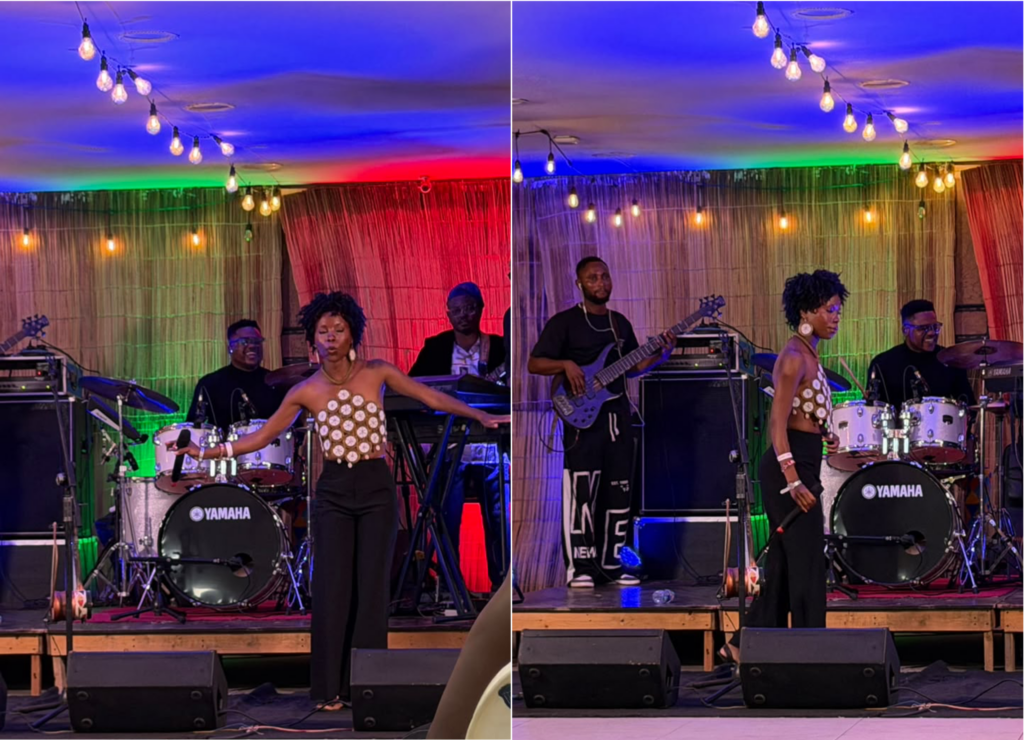
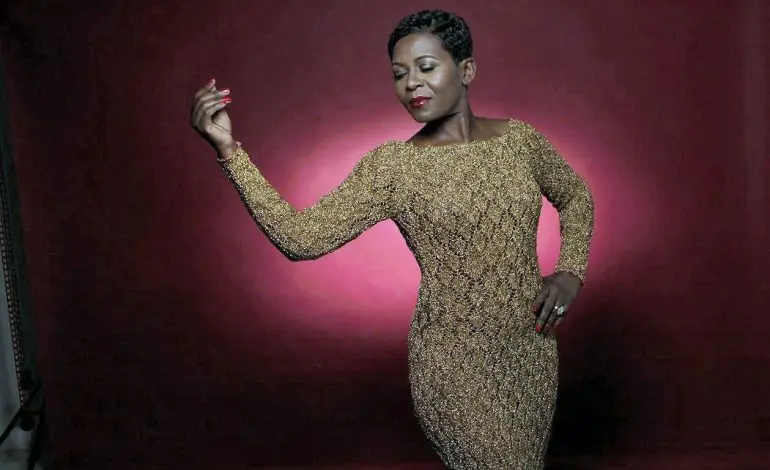
Later that day, again in the gardens of the Batha Museum, the Malian chanteuse, Rokia Traore with her band Beautiful Africa performed a set of her songs. Sometimes criticised for being just a little too perfect, it was clear that she won many hearts with her intricate yet gentle delivery, and the fine band that backed her. And there was just enough of that Bambara swing in her music to keep the African music aficionados happy.
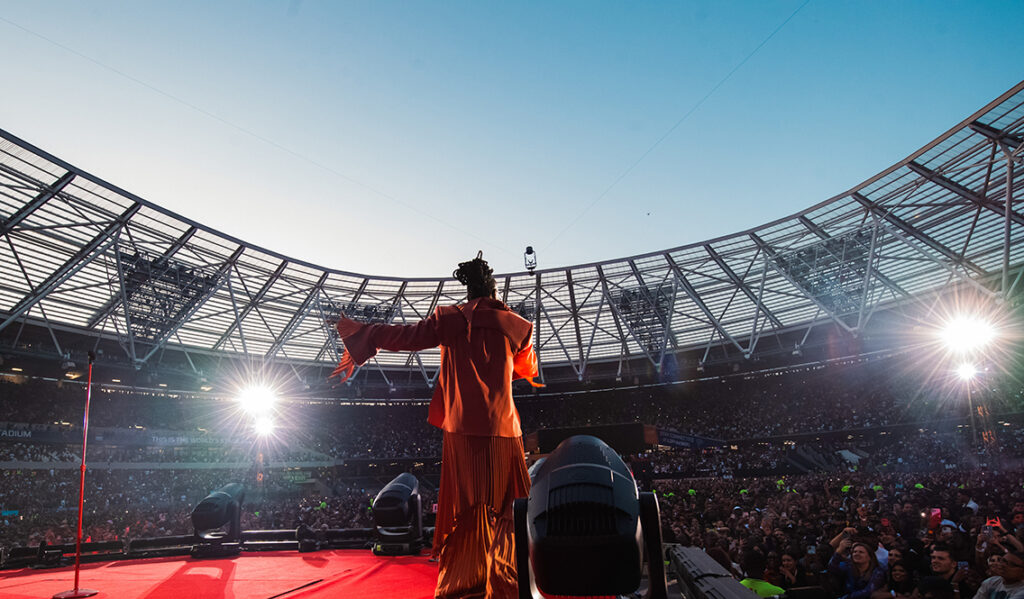
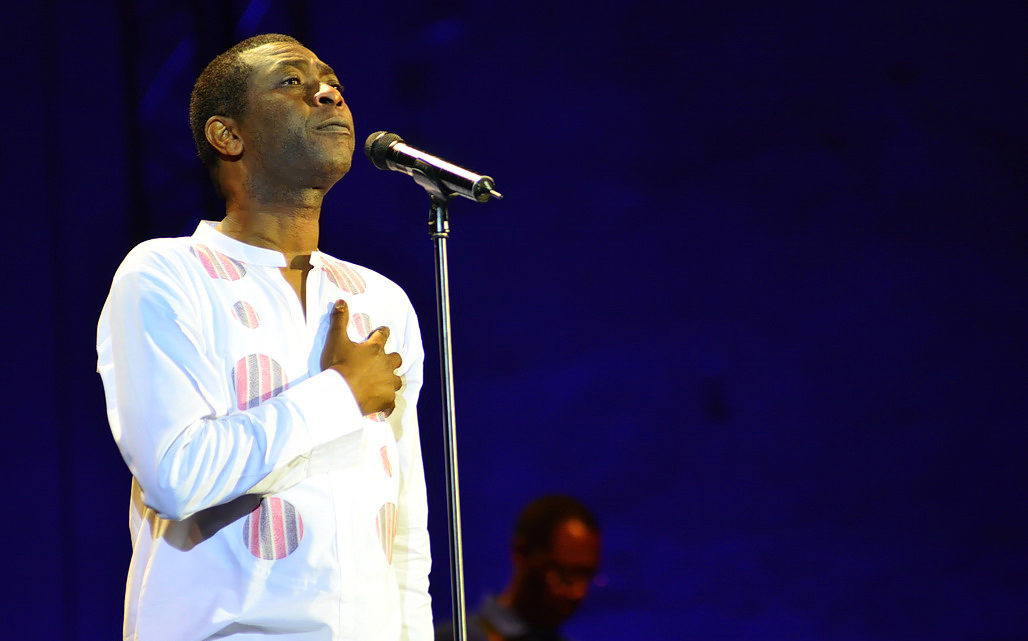
But the biggest performance was delivered by the inimitable Youssou N’Dour. Following a set from Johnny Clegg cannot be an easy ask, but he was up for it, not even waiting for his band to warm up but bouncing onto the stage to kick-off a set that was nothing less than stunning.
N’Dour’s abiding concern for social justice and the development of his continent was evidenced in the last elections held in his home country, Senegal. He had attempted to mobilise political support to run for president, but he eventually had to pull out of the race, after being disqualified over allegedly illegitimate signatures that endorsed his campaign.
In April 2012 it was announced that N’Dour has been appointed tourism and culture minister in the cabinet of the new prime minister, Abdoul Mbaye. Indeed, N’Dour’s band members all address him as Monsieur le Ministre.
N’Dour introduced his band to the audience at the Bab Al Makhina as his “Cameroonian band”. For those who do not know N’Dour’s music, it should be explained that it is very much a melange of many traditional West African forms, but it is Mbalax that he is most famous for. A Wolof music, it features percussion such as the Tama that often “talks” in a call and response fashion.
N’Dour has been performing for many years now. He began singing at the tender age of 13, and became a favourite – especially of the superbly demonstrative middle-aged ladies of Dakar who, dressed up in their waxed cotton and gold jewellery, would shower their favours upon him.
By 15 years old, he had arrived, in Senegal seen as a superstar. International celebrity status came along not long after.
Nearly 40 years ago, in 1988, N’Dour was chosen to be the Africa representative on Amnesty International’s “Human Rights
Now” world tour of North and South America, Asia, Australia, Europe and across Africa. Meanwhile, his musical output became ever more varied and his lyrics addressed many of the challenges that the majority of the world experiences. He sang about emigration, he sang about poverty, and he sang about retaining his culture.
Simultaneously, he seemed to take on a dual approach to making music; for his loyal fans in West Africa, he issued his purer Mbalax sound, while for the international market his songs became more pop-oriented, and he began regular tours playing with artists such as Peter Gabriel, Sting, Bruce Springsteen and Stevie Wonder.
His performance in Fes gave a nod to his pop-oriented genre with a rendition of 7 Seconds, the international hit he recorded with Neneh Cherry. Half-way through the set, to the delight of the audience, on to stage bounded an acrobat who proceeded to roll, tumble and somersault across the space. And then Youssou introduced Johnny Clegg and his band to join the party, singing together to reflect the brotherhood and unity of Africa and Africans,
By this time, N’Dour’s band were really into their groove, relishing, as all musicians do, playing behind a strong vocalist.
Even the contingent of bankers, sponsors of the show, got up from their seats to boogie.
All too soon the concert was over and we were left to repair to an after-show party on the roof garden of the exquisite Palais Amani art-deco Riad, sipping Vin Gris, Morocco’s famous grey wine, and snacking on tapas.
What better way of rounding off an extraordinary evening of Africa’s finest music?