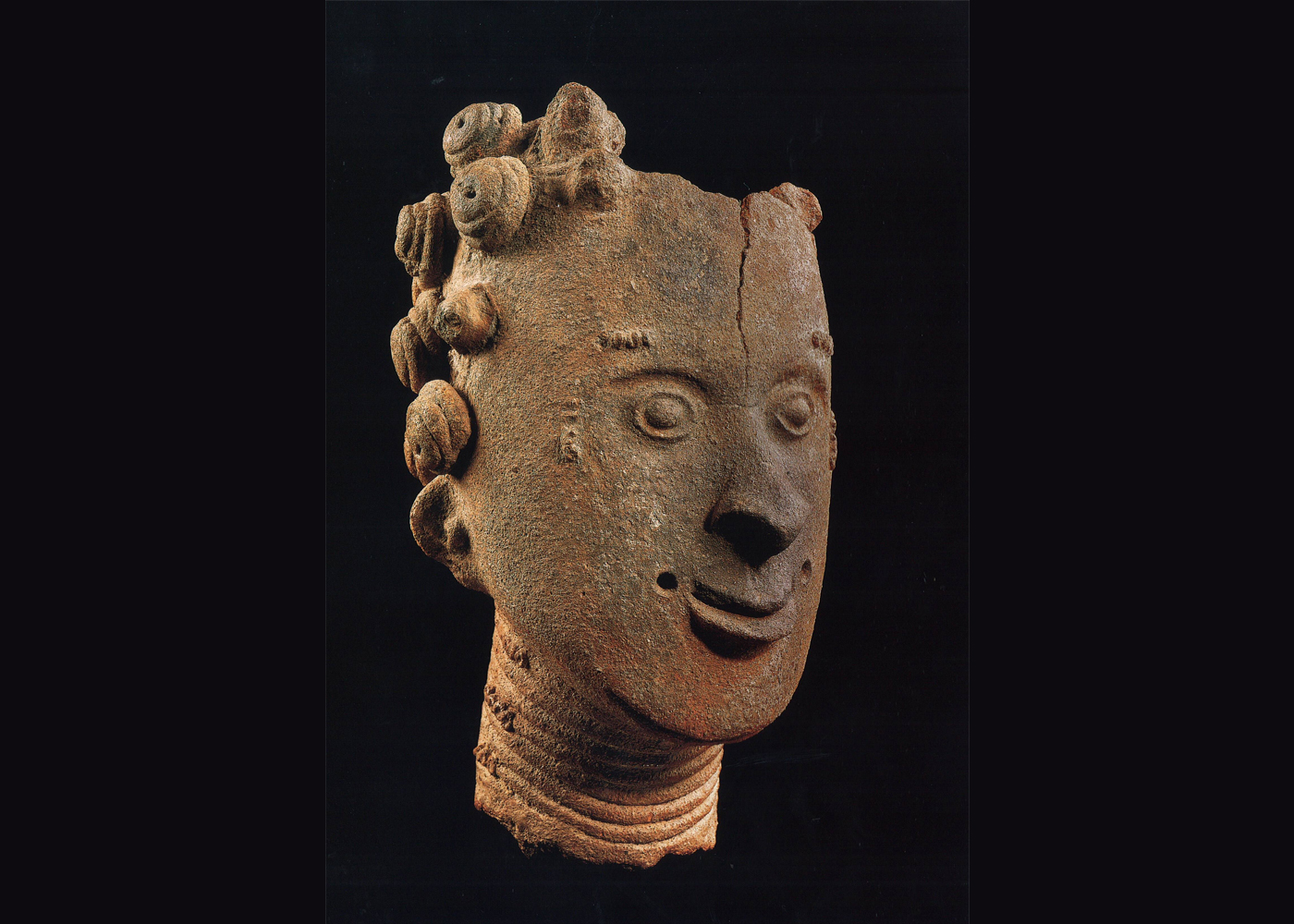
Once upon a time the Akan people of Ghana and Côte d’Ivoire immortalised their heroes and distinguished personalities in art form – mainly through terracotta sculptural representations. However, in recent decades, with the dominance of the Akanlands by Christianity, the tradition has been dying out. But thanks to an exhibition that was mounted by the Metropolitan Museum of Art in New York, the Akan art forms have been brought to life again.
IN MANY PARTS OF AFRICA, THE atrocity inflicted upon the people by the Berlin Conference of 1884-85 that balkanised the continent can be seen starkly in how homogeneous ethnic groups were carved up and shoved into two, three, and sometimes even more countries just by the stroke of a European pen. It is an atrocity that Africans have had to live with since that awful day of 26 February 1885, when the Berlin Conference ended and the Scramble for Africa began in earnest.
Some 127 years later, the Akan people of Ghana and Côte d’Ivoire, who happened to be one of those homogenous ethnic groups so carved up, have had their art forms honoured in an exhibition by The Metropolitan Museum of Art in New York. The exhibition was accompanied by a beautiful coffee-table book, edited by the museum’s curator, Alisa La Gamma.
Today the Akan people dominate both Ghana and Côte d’Ivoire by way of population. The Akans make up 45.3% of Ghana’s 24.22 million people, and 42.1% of Côte d’Ivoire’s 21.95 million population.
If humanitarianism (“help in suppressing slavery”), the advertised benefit to Africa of the Berlin Conference, was truly the objective of the European powers in 1884-85, the Akan people should have been made to constitute one country.
But no! Divide and rule was the rule. And so, without being consulted, the Akans found themselves shoved into two different countries. And that has been the order for the past 127 years!
The division has been particularly traumatic, as in the intervening decades, the Akans of Côte d’Ivoire, dominated by the French and their assimilation policy, have sought to differentiate themselves from their Ghanaian siblings, even as far as the spelling and pronunciation of their names – the same names! Kouassi is now the Ivorian variant of the Ghanaian Kwasi. But they mean the same thing: an Akan male born on Sunday.
All over the Akanlands, there is a profusion of such madness engendered by the division. But thanks to the Metropolitan Museum of Art, the Akans have symbolically come together again in art form to celebrate their heroes and distinguished personalities who have long joined the ancestors.
In her book, Heroic Africans, which accompanied the exhibition, Alisa La Gamma makes some telling points: “Along the West African coast of present-day Ghana and Côte d’Ivoire,” she writes, “both distinguished mortals and divinities were once celebrated through terracotta sculptural representations.
“In these societies, which traditionally relied on oral transmission of knowledge, the death of a leader who had not only served as the repository for traditions relayed by past generations but who also presided over a lifetime of events that came to define his or her community, embodied the loss of a host of irretrievable information. Thus, a West African proverb says: ‘When an elder dies, it is as if a whole library had burned down’.”
This awareness of the place of the elders in society was especially acute among the Akans before Christianity took hold of the Akanlands. In those days, the “awareness” translated into the creation of terracotta effigies that paid homage to the roles of the departed elders as vessels of the collective experience, wisdom, and memory of their people’s history. With Christianity now condemning such effigies as paganism, both the awareness and the art form have almost died away.
It is a real shame, because those artworks, which were modelled as markers of a mortal’s transient physical being, represented a cultural high point and afforded an enduring impression of how the leaders had sought to be immortalised.
As La Gamma puts it: “It is striking that, although the subjects of these works rose to power as purveyors of gold to the world at large, they elected to have their lasting presence in their own communities fashioned from common, and relatively fragile, clay.
“This tradition survives through isolated artefacts that range in style from highly schematic to intensely naturalistic, and are now preserved in institutional and private collections in Ghana and abroad.
“Unfortunately, these works became disassociated from their subjects after they were removed from their original shrines and isolated from complex ensembles of related figures. In only a few rare instances have scholars been able to determine which locales such works were associated with.”
The Akans
For context, it must be said that the Akan people share closely related dialects, matrilineal descent, and systems of centralised political authority. As La Gamma shows in her book, “linguistic and archaeological evidence suggests that the ancestors of the Akan have inhabited south-central Ghana for at least 2,000 years. The subsequent waves of migrants that joined them there included one that left the lagoon region of Côte d’Ivoire some time after 1000 CE.”
In the 14th century, the Akan state of Bono rose to prominence in the same area (now straddling Ghana and Côte d’Ivoire) by capitalising on its access to locally mined gold. The major collecting point of such regional resources – before they were relayed northwest through centres such as Kong, Bobo Dioulasso, Jenne, and then across the Sahara – was the market town of Begho (now in the Brong Ahafo Region of Ghana).
By the end of the 15th century, other Akan kingdoms had become influential through the exploitation of gold as well as salt, ivory and kola nuts. The bulk of the local resources disseminated through trade were gold and ivory, concentrated in forested areas occupied by Akan polities, including the Wasa, Akyem, Denkyira, and Igwira.
Coastal groups such as the Fante sought to capitalise on their location by acting as intermediaries between these inland polities and European merchants who began establishing themselves along the coast at the end of the 15th century, gradually shifting their focus from North Africa to Akan trade outlets.
Towards the end of the 17th century, a group of inland forest states to the north, which used to serve the Denkyira Empire, were unified under Osei Tutu and his priestly advisor, Okomfo Anokye, as the Asante kingdom.
Interestingly, although the Asante kingdom figures prominently within the region’s political landscape from the 19th century onwards, its people did not develop a tradition of commemorative terracotta sculpture.
Instead, the farthest north from the coast that this practice developed was in the Adanse region, which later came under Asante influence.
The soul of the Akan. “In Akan culture,” as La Gamma attests in her book, “kra is a concept that attributes to individuals and royal ancestors a collective soul. Kra, or okara, is manifested in the world of experience by way of the sunsum (spirit). It has been defined as that which links one person to another.
“This idea of an essential spiritual connection that transcends individual being was further articulated by the art historian, George Nelson Preston, who described it as evidence of ‘a continuum of soul and consciousness which unites the reigning chieftain’s soul, intellect, and character with that of his ancestors’.”
As such, Akan society recognises this continuum not only across the reigns of individual leaders but also between life and death. Thus, hierarchies established by the living are perpetuated and extended into the afterlife.
As a physical expression of this belief, an annual purification festival known as Odwira is held in September at the time of the first harvest of yams, a staple of life among the Akans. On that occasion, the ancestors are collectively honoured with a celebratory feast featuring vibrant visual and musical pageantry.
In fact, in Akan cosmology a deceased leader continues to occupy a parallel role in the ancestral realm. As such, he requires markers that affirm his status, including wives, servants, cloths, gold, and sustenance.
As a result, elaborate funerary ceremonies are held among the Akans to demarcate the transition between life and death, and to usher the soul into the ancestral realm. This practice actually goes all the way back to Ancient Egypt and Nubia, and was carried over during the migrations that ensued after the fall of those mighty empires. Historians and scholars have traced the Akan roots back to Ancient Egypt.
“In their journey to the ancestral realm,” says La Gamma, “the dead were believed to exist in an intermediate zone outlying the community. Post-burial rites often featured the deposition of ceremonial ceramics at a dedicated site identified as the “place of the pots”, called asensie by the Kwahu subgroup of the Akan and mmaso by the Aowin and Anyi.”
Terracotta creations
The terracotta artefacts assembled at the asensie or mmaso typically included both utilitarian receptacles used to serve the departed ancestors a votive meal, and figurative representations identified with important individuals and their followers.
As La Gamma shows, among the earliest documented Akan terracotta creations, dated to the 11th century, are elegant bowls and jars coated with slip and polychrome painting produced by potters in a suburb of Begho.
“A survey of the existing excavated record by the archaeologist James O.
Bellis,” writes La Gamma, “corroborates the observation of early European visitors to the region that a tradition of funerary terracotta sculptures was full-blown among Akan communities as early as the 1600s.”
She continues: “The richly diverse commemorative terracotta traditions of the Akan, which in some communities continue into the present, were historically concentrated in the southern and southwestern areas of Ghana, and southeastern Côte d’Ivoire.
“It has been suggested that their development and diffusion may have been related to the formation and expansion of the early Akan forest state of Akwamu during the 16th century. According to that chronology, these dedicatory sculptures predate, by a century, the founding of Asante.
“Examination of a critical mass of these creations makes apparent at once both the overarching aesthetic that informed them and the nuanced formal departures that signal works by artists from the same centre.”
The culturally shared ideal apparent across these various formulations gives pre-eminence to the head, defined as an elongated and expansive form whose facial features articulate an expression of supreme calm and serenity.
The artists (usually female) who made these delicate commemorative tributes selectively impressed into a basic clay template some defining features of their particular subjects, yielding an artistic corpus inflected by subtle refinements.
The American art historian, Michelle Gilbert, has undertaken extensive research in Akuapem, an Akan polity in southeastern Ghana, northeast of Accra, that in the 17th century was part of the Akwamu kingdom.
Gilbert’s long-term research in Ghana has led to numerous publications on religion, art, political power, divine kingship, and “popular” urban art.
In the 1980s, she described the continued use of naturalistic, lifesize terracotta heads, referred to as ohoni ti, or “effigy head”, to represent deceased chiefs in after-burial funerary celebrations.
According to La Gamma, Akan potters channelled their creative efforts into two major genres of funerary terracottas. The abusua kuruwa, literally “cup of the matrilineage”, or clan pot, was incorporated during the finale of a funeral, when the abusua, or matrilineal clan, of the deceased ate together and made an offering of sustenance for their departed member.
“In this rite marking the closure of an individual’s lived experience and his or her assumption of responsibility to support familial unity in the afterlife,” La Gamma attests, “hair and nail clippings were collected from living relations and the deceased to be comingled within a vessel.
“Aristocratic and wealthy patrons commissioned especially elaborate versions of these ceremonial receptacles. Such works sometimes featured motifs that referenced achievements of the deceased or pictorially evoked statements intended to offer them consolation in the afterlife.”
A second distinctive form of Akan commemorative terracotta consists of human representations that may celebrate important men and women, including senior chiefs, priests, and queen mothers.
“In both instances,” says La Gamma, “the head is the focus of intense elaboration and emphasis. As idealised depictions of deceased individuals, such works were surrounded by attributes of their subjects’ status and paraded through the community before being deposited by the family at a final resting place.”
The visual record of these Akan funerary representations attests to an amazingly rich diversity of styles and formal approaches to rendering human physiognomy.
One such celebrated potter and clay sculptor, Madam Abena Owu (1866-1956), supplied figures to royal houses in Agona, Akyem, and Asante. In the 1950s, toward the end of her life, she relayed to the archaeologist Richard B. Nunoo, the oral traditions relating to her far-flung patrons.
According to La Gamma, a distinctive stylistic consistency is apparent in works identified with the town of Ahinsan, north of Fomena in the Adanse area of Ghana. Excavated by the British archaeologist Oliver Davies in the 1950s and dating to the first half of the 18th century, this site was clearly a commemorative one, separate from places of burial.
Davies suggests that the terracottas may have been made in about 1700 by the Denkyira people whose empire, predating Asante, fell when Asante rose up.
Parallels to works associated with Ahinsan may be discerned among those identified with the Twifo region of Ghana. In the late 1960s, James Bellis found a rich horde of memorial terracottas at Heman. Discovered accidentally while clearing adjacent areas of undergrowth, it is one of the very few undisturbed deposits to have been excavated and documented. It contained terracotta vessels and human figurines arranged around centrally positioned hearths.
According to La Gamma, accounts of the creation of Akan heads suggest that the artist, selected by the family, studied the subject in repeated sittings during his or her lifetime.
Another group of famous Akan artists came from the Kwawu sub-group of Ghana. Mirroring the customs of other Akan groups, Kwawu individuals of royal descent and members of the aristocracy were honoured posthumously through terracotta representations. The works were then either transported to the royal cemetery to be deposited on the grave of the deceased or kept within the village or home of the departed.
Another distinct regional vision, developed by Aowin artists in western Ghana, is epitomised by two works now in the Museé Dapper in Paris, France. Notable Aowin leaders and chiefs were celebrated with highly accomplished effigies created for sacred groves called mmaso.
In 1972, five such Aowin mmaso sites, including Nkwanta, were documented photographically by the art historian Patricia Crane Coronel.
Across the Ghanaian border, artists from another Akan group, the Anyi, produced their own terracotta sculptural genre, again conceived as the material support for the souls of select ancestors. The Anyi are now concentrated in South-eastern Côte d’Ivoire.
This tradition and those of a number of other Akan Ivorian groups have been surveyed by the art historian Robert Soppelsa.
Over the centuries, as La Gamma attests, each of the Akan artists responsible for commemorative terracotta adapted a familiar prototype with finesse. They would customise a particular template with vivid details of a mundane nature associated with the persons they had been called upon to evoke, thereby contributing to the continuation of a regional vernacular and also providing distinguished ancestors with a degree of permanence.
Sadly, this tradition began to be abandoned by the early 20th century when Christian missionaries swarmed over the Akanlands. For example, in Côte d’Ivoire, according to Father Jean-Baptiste Veit, a parish priest in Bonoua from 1921 to 1954, the practice of depositing funerary figures in special cemeteries was largely given up in 1914, following the appearance in Aboure of a charismatic Christian fundamentalist, Prophet Harris.
Thus, “by the early 20th century,” writes La Gamma, “many of the Akan terracottas that had survived from previous generations were isolated from their original sacred groves and from the oral histories that recounted their relationship to the heritage of adjacent communities. One person alone, the French physician Marcel Lheureux, collected more than 200 of these works while on colonial assignment in Sanwi during the 1920s…
“Over time, their exposure to the elements has stripped them of colour and ornament so that their presence is now far more muted. Thus these now static, decontextualised works represent only vestigial traces of the Akan traditions that were once informed by theatrical pageantry, historical re-enactment, and ancestral devotion.”
What a sad state of affairs!
(Heroic Africans by Alisa La Gamma is published The Metropolitan Museum of Art, New York. ISBN 978-0-300-17584-4)