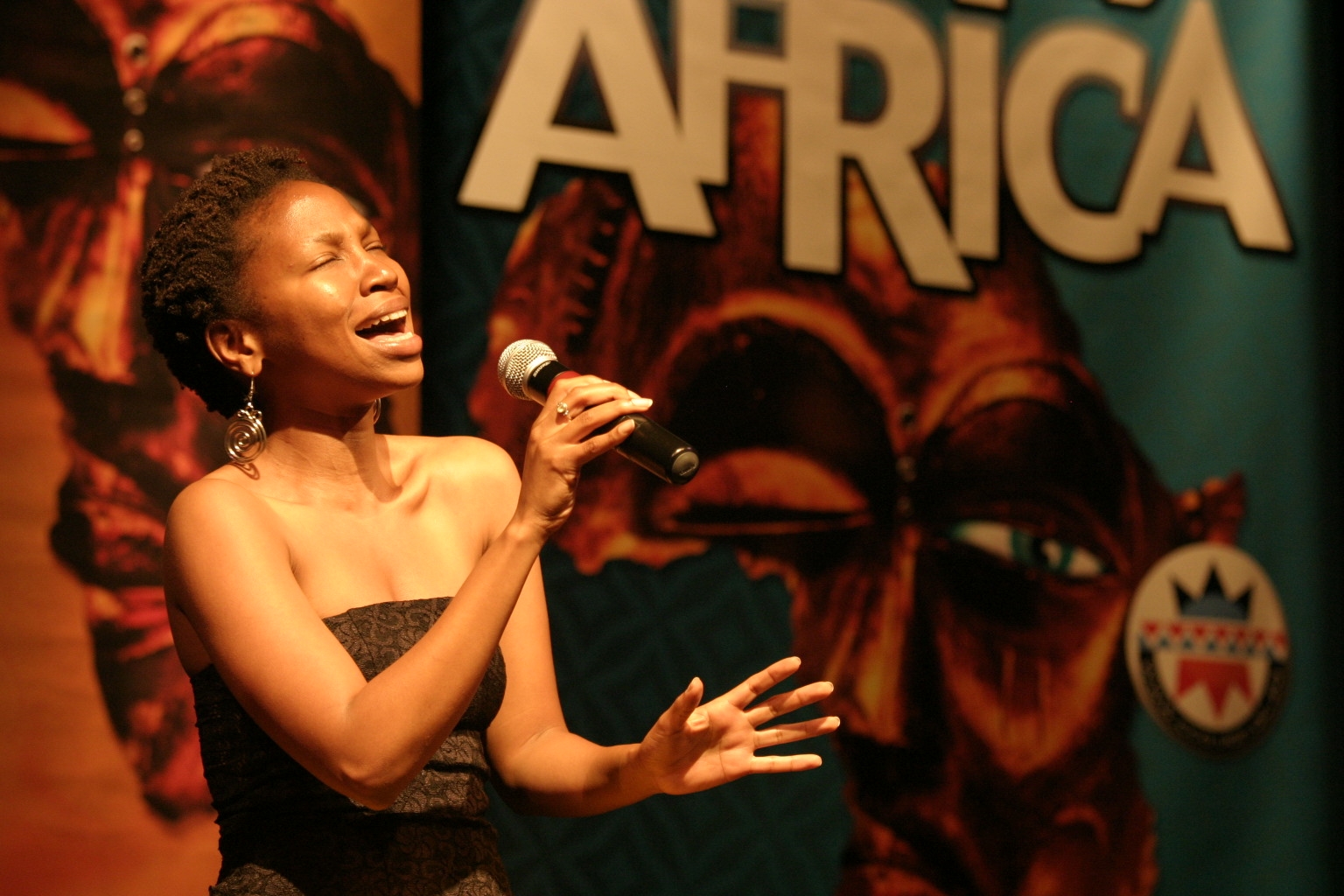
Despite Africa’s rich poetic heritage, the continent’s poets don’t receive the attention and support they deserve. The Badilisha Poetry X-Change is working to change this. Gabriella Mulligan explains how.
The Badilisha Poetry X-Change was launched in Cape Town, South Africa, in 2008. The project initially started as a Cape Town-based festival, featuring poets from across the African continent and from diaspora communities. However, the project soon outgrew the limited scope of physical meetings held in South Africa.
“Being based in Cape Town meant we were not fulfilling our vision of being a Pan-African project, we were not reaching a large, diverse group of Africans,” explains Linda Kaoma, project manager at Badilisha.
Soon, the Badilisha online portal was launched, creating a web-based showcase of African poetry accessible to anyone, whether based within Africa or beyond.
“Our transition to existing mainly online meant breaking down some of the geographical restrictions, and we are therefore able to reach a much wider audience,” Kaoma said.
The Badilisha Poetry X-change is now the largest single collection of African poetry in the world, showcasing the work of over 400 poets from 31 countries to date. Poems are archived in written text format, as well as in audio podcasts – enabling visitors to the site to both read the poetry of a wide variety of African poets for themselves, or to listen to the authors read their own works. Aside from the obvious attractions of creating an online archive of the continent’s poetry, Kaoma says the Badilisha online project also hopes to empower Africa’s artists by bringing African art and poetry back home, since much of Africa’s art is currently done overseas, and by members of the diaspora. Due to this trend, Kaoma says access to local art and poetry within Africa has to date been limited.
“For a range of historical, political and economic reasons, many of the important collections and productions of African art today are located or performed outside of Africa […] Africans living on the continent have limited access to their own artistic heritage and the world of contemporary practitioners,” Kaoma said.
One key frustration of this lack of access, she explains, is the way it negatively impacts on individual poets, their development, and sense of self-confidence.
“[The lack of access] means that African writers’ and poets’ knowledge of other African authors and poets is limited, preventing the inspiration and influence vital to their growth, development, self-confidence and sense of place.”
Kaoma adds that as compared to their counterparts in other regions of the world, African poets receive little attention and exposure for their work and are faced with very few viable career opportunities. Badilisha hopes to address these issues.
One African artist involved in the Badilisha project is acclaimed Kenyan poet Ngwatilo Mawiyoo, whose work has seen her invited to perform across Africa, Europe, and the United States.
Mawiyoo bemoans the lack of interest in African poetry. According to her, Badilisha provides an excellent platform for poets’ work to be made accessible.
“There aren’t many places poets from across the continent or the diaspora, for that matter, can meet, hear or read each others’ work. There are a handful of literary journals interested in our thoughts, but access isn’t great,” Mawiyoo said.
“Badilisha does something they don’t and can’t for orality. You can hear poets on Badilisha, you can read them, and you can do it whenever you want, they are online!”
According to Mawiyoo, the Badilisha platform now allows her work to not only transcend geographic boundaries, but also generations – with her work reaching out to poetry enthusiasts from both older and younger groups.
“Badilisha is an additional venue to have my work and allow it to travel ahead of me, in the company of others of my generation, and increasingly even the generations ahead of me, and now behind me, which is an amazing privilege,” Mawiyoo said.
“Oftentimes you feel like you are working alone, like you’re the only one who cares about this thing. Being part of Badilisha is a way to know, concretely, beyond your own network, that you are not.”
The Kenyan poet says one of the best features of the Badilisha platform from an artist’s perspective is how easy-to-use it is, and the fact that it is advert-free, focusing purely on literary content.
“The format is friendly and accessible, free to use and ad-free. There aren’t that many spaces like that around,” she said.
For Mawiyoo, the mission of supporting the African poetry ecosystem is to promote kinship among African communities and to foster the development of African cultural identities. She believes the fact that Badilisha works towards these goals through the medium of home-grown artists makes the project particularly valuable.
“Poetry is a way of knowing. When I invest in it, in reading and writing it, I learn more about myself, the world, and my communities.
“All poetry can contribute to building African cultural identities, but there is something irreplaceable about having voices closer to home make meaning of the world where you live, in a language that you know, perhaps even from a worldview you share.”
While deeply passionate about the Badilisha project, Mawiyoo cautions against putting too much focus on any one project. She believes building the African poetry environment can only be achieved through a wider movement acting across the continent, and beyond.
“It’s a huge ask to say what any one person, even an organisation, can do for African poetry. We are all cogs in a wheel, all playing our part, as individual poets, as organisations, people who work day to day at those organisations, people who support those organisations, and people who use those organisations as resources – people who love poetry. Everyone involved in the process is playing a vital role for African poetry and art, but none of us can think of ourselves as core. Perhaps we play a part in creating or sustaining a certain momentum,” she says.
In the meantime, the Badilisha team is not content to remain static. They continue on their mission to seek out new ways to reach out to a larger audience and make African poetry more accessible.
The web platform was recently relaunched in order to make the database more mobile-friendly, tapping into the preference for mobile internet access across Africa.

On an artistic level, the Badilisha team endeavours to bring onboard the widest possible variety of poets, speaking on various themes and topics, from all backgrounds and walks of life.
“We hope that this will encourage other poets to speak their minds and to remain true to their own unique voices and perspectives. It is important that African poets know what they have to say matters and is necessary,” Kaoma said.
While much work remains to be done, all those involved in Badilisha hope the project will open the world’s eyes to Africa’s diverse artistic heritage, and open African poets’ eyes to the future possibilities for their artform.
“Unfortunately, the African poet is often painted as one-dimensional and only capable of limited narratives. We hope through the platform the world can discover different facets of and narratives from the African poet,” Kaoma said.
“I hope [Badilisha is] able to continue expanding what’s possible for African poetry, and that we who are invested in African poetry, can encourage each other, by our presence and momentum, to further that expansion,” adds Mawiyoo.