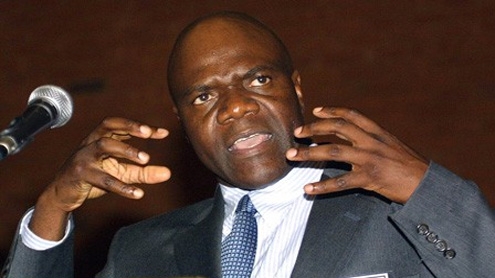
Prof Arthur Mutambara explained to a meeting in South Africa how he saw the Africa-China relationship developing, teasing out the arguments for and against expanding trade ties. We reprint an extract of his address.
It is important to understand what is meant by the assertion “China’s Growth Model is shifting”. Over the last couple of years the model has become less resource intensive as the economy moves into middle-income status. As its economy grows and prosperity spreads, it has become much more consumer and services driven. The growth trajectory has been slowing down and mid-April 2013 reports show a growth rate of 7.7%, down from the projected rate of 7.9%. The traditional above-10% growth rates are now history. All these changes require strategic positioning of Africa’s relations with China. What is Africa’s optimum response vis-à-vis this new reality?
Furthermore there is a new government in China, led by President Xi Jinping and Premier Li Keqiang, with a particular emphasis on the social and personal aspects of economic success, encapsulated in the notion of the China Dream that seeks to reimagine prosperity and reshape consumerism in China. The goal is to catalyse a new aspirational lifestyle that is innately sustainable for the middle class emerging in China. These new developments have implications for China’s commercial relations with Africa.
However, as we discuss how African states need to respond to China’s shifting growth model, it must be acknowledged that African countries have not effectively engaged the Chinese, even before the model started to change. Hence we need to learn from what has characterised the Africa-China relationship so far, and then use that as a basis to explore future partnerships as the Chinese economy changes. There have been two types or classes of critiques of the Africa-China economic relations. The first category is what can be termed Western-inspired criticisms and the second set consists of genuine grievances leveled by Africans themselves. Before we delve into a detailed assessment of these challenges, the key theme and central message in this treatise must be laid out up-front. African countries must not blame China or any other foreign power or institution for their problems. We must assume responsibility for our own circumstances, take charge of our economies and create sustainable solutions to impediments that confront us. By getting heavily involved in Africa economically, the Chinese have broken the West’s hold on Africa-World trade. Historically, Europe and the US have always considered Africa their area of political and economic influence.
However, the entry of China has meant competition for them, and they are not exactly amused. In fact they are getting clearly out-competed by the Chinese. This has led to baseless and self-serving Western-inspired attacks on the Chinese in Africa. The US policy makers have been in the forefront, feeding into, and abated by, naïve Africans. The charges include that the Chinese are indifferent to governance issues; supporting dictators in Africa; plundering Africa’s natural resources in a new era of colonialism; not adding value to African commodities; bringing in labour from China; and engaging in unfair and poor labour practices. While some of these accusations merit attention, the motivation, history and current practices of their Western sponsors make them seem hollow. The West and their investors have never encouraged beneficiation or value addition in Africa. They brought slavery, colonialism, imperialism and now neo-colonialism to Africa. Furthermore, the hypocrisy on the governance matter is striking.
When Western nations and their institutions go out to trade and invest they do not insist on democracy, good governance or human rights [as] pre-conditions. Illustrative cases include investments and business ties with Kuwait, Saudi Arabia, Dubai, Saddam’s Iraq (once upon a time), Mobutu’s Zaire and apartheid South Africa. Western countries trade with and invest in China, and yet China is certainly not a Western-type democracy. If the West does not put democracy or human rights preconditions to China before they deal with it, why should China place such conditionalities on African regimes before engagement? In any case, how can an “undemocratic” one-party state such as China insist on human rights prerequisites to African nations?
Would they be credible demanding multiparty free and fair elections that they themselves do not conduct? Really? It is safe to say most of the arguments against Chinese activities in Africa, inspired and driven by Western governments and their corporates, are hypocritical and meaningless. They are the views of competitors who have been out-gunned. Africans are best advised not to attack China on behalf of these outsmarted Americans and Europeans – lest we are misunderstood on the importance and efficacy of democracy, respect of human rights and good governance in African countries. These concepts are foundational in our agenda to build sustainable and viable African economies and societies. However, it is our submission that these ideals are not what influence, drive or determine the inflow of Western investment and its corresponding trade frameworks. History and current practices bear this assertion out. National economic interest, corporate and business ambitions, and geopolitical military considerations alone, determine the direction of Western trade and investment. Africans must embrace democracy on their own without depending on pressure from external powers.
In doing so, we must fully engage in and learn from the democracy vs. economic development debate. The doctrine that says “Seek first the Kingdom of Democracy” and the rest will follow, is not only flawed but is also not backed by history. For example – Singapore, China, Saudi Arabia, Taiwan, Malaysia, and Dubai do not exactly fit into the Western definition of democratic states, but they are quite economically prosperous. Malawi, Zambia, and South Africa fairly satisfy the Western democratic prescriptions, but the majority of their citizens are crippled by poverty, inequality and unemployment. There are no simple cut and paste solutions. A nation can be prosperous without following the Western democracy model, while embracing such a model does not guarantee economic success.
The contrived and tenuous links between democracy and economic development should be rejected with the contempt that they deserve. Democracy must be embraced as a public good in itself, not as a pre-condition for something else. A democratic tradition, respect for human rights, and a good governance disposition allow our people to express themselves and determine their destiny as fully empowered citizens. African States must internally, without depending on the benevolence or conditionalities of external players, strive to creatively and simultaneously achieve both democracy and economic prosperity.
The second type of critique levelled against the Chinese in Africa comes from Africans themselves. These are genuine concerns coming from African policy makers and business leaders, who want a win-win arrangement between Africa and China. They speak on behalf of African interests and hold no brief for Western nations. Given the history of collaboration and partnership between Africa and China in the struggle against colonialism and imperialism, there are high expectations from the economic ties between the two blocs. These high expectations are rooted in a history of solidarity and shared aspirations. So when sincere criticism is leveled by an African, it must be considered as constructive dialogue among members of one family. The Chinese must not be defensive to these genuine African concerns – the extractive trade in raw materials without value addition; understating the value of unexploited natural resources; bringing labour from China with low employment of locals; little or no skills or technology transfers; buying primary goods and selling Africa manufactured goods; unfair local labour practices; and cheap Chinese goods (sometimes low quality) undercutting African products. All these activities, some Africans critics contend, have contributed to the deindustrialisation and underdevelopment of Africa. In particular, the African textile industry has been decimated by cheap Chinese imports.
While China’s trade with Africa has surged $10 billion in 2000 to $166 billion in 2011, this has mainly been in the exchange of African minerals for Chinese manufactured goods. Chinese imports are undermining Africa’s own manufacturing businesses. For example, in South Africa, manufacturing only contributes 15% of GDP, while in Kenya and Nigeria it is 11% and 10%, respectively.
Given all these challenges, what should be the African strategic response? First and foremost African countries must not blame China. We must take responsibility for our own problems and solve them. In fact, we must blame ourselves for the current plight of Africa, including these Chinese excesses. Most of the African countries attained political independence more than 50 years ago. By way of illustration, Ghana has been free for almost two generations (56 years); Zimbabwe, 33 years; and South Africa, 19 years. Certainly, there are problems whose roots you can trace back to slavery, colonialism, neo-colonialism or apartheid. However, we cannot use this problematic African history to justify incompetence, corruption, lack of economic vision, inept economic planning, poor execution, and now clumsy negotiation capacity. The time for excuses is gone. Africans must wake up and take charge of their lives.
This is an extract from a key-note address made by Prof. Arthur Mutambara, deputy Prime Minister of Zimbabwe, to the IDC in Sandton, South Africa.