Stunning revelations by FIFA that international friendly games were fixed, before the 2010 World Cup, offers South Africa a real chance to confront the deep-rooted corruption within its football, reports Mo Allie.
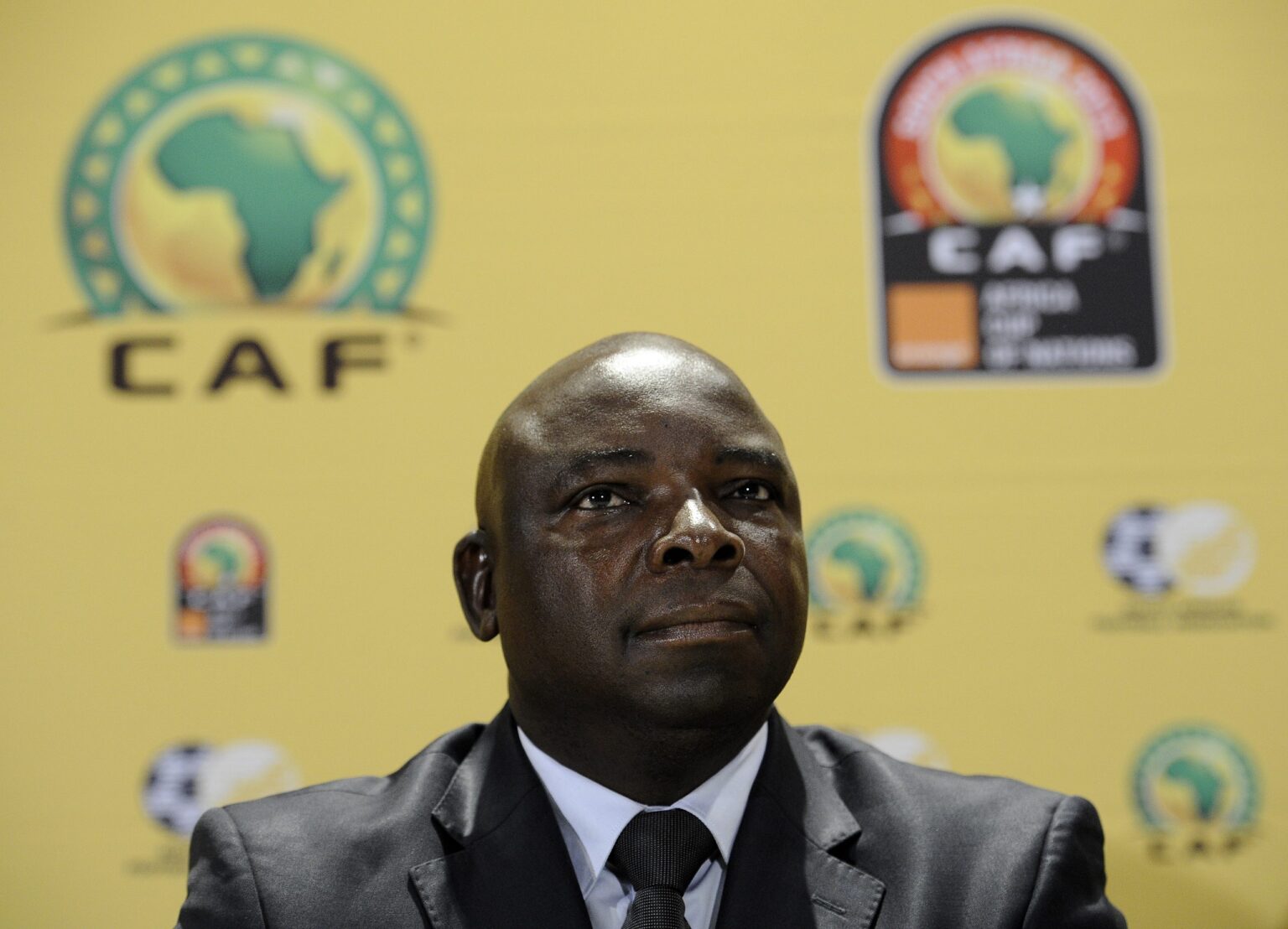
The suspension of five senior South African Football Association (SAFA) officials in December, including its president, Kirsten Nematandani, following FIFA’s investigation into match-fixing, relating to games involving Bafana-Bafana in pre-2010 World Cup friendlies, may have come as a huge shock to ordinary followers of the game.
But not to informed commentators of South African football, considering the recurring allegations of corruption and bribery that have been made over the last 15 years. A 500-page FIFA report revealed that matches against Thailand, Bulgaria, Colombia and Guatemala, in the weeks leading up to the last World Cup finals, were pre-arranged to benefit an Asian betting syndicate.
Convicted Singaporean match-fixer Wilson Raj Perumal (see the profile on Perumal) and his Football 4U organisation played a central role in the appointment of dishonest referees, who ensured that the results were skewered for the syndicate.
Besides Nematandani, only in the SAFA job for a few months, at the time the dubious friendlies were played, others implicated include Dennis Mumble, the acting chief executive; national teams’ manager Lindile Kika; referees’ boss Adeel Carelse and Bafana-Bafana manager Barney Kunjane. South African football has been dogged by allegations of wrongdoing since the late 1990s, especially after the formation of the Premier Soccer League (PSL) in 1996, which saw huge inflows of cash generated by lucrative TV deals – the $235m five-year contract – with satellite TV broadcaster SuperSport, being the most recent one – and in addition to the corporate sponsorship boosting the coffers of the local game. Previous commissions into corruption and bribery, within the domestic game, have failed, disappointingly, to deliver results, after being trumpeted as heralding an overdue clean-up.
“Operation Dribble”, an investigation launched in June 2004, into match-fixing in domestic football, was supposed to have cleaned the Augean stables.
But despite the early promise shown, when over 40 arrests, involving club bosses, match commissioners and referees were made by the police, only four insignificant match officials were convicted of attempting to alter the outcome of matches. While suspicions swirled around several powerful club owners and administrators, the investigation fizzled out and faded into inexplicable oblivion. That “Operation Dribble” came to naught was no big shock. It suffered the same fate as a similar investigation, the Motimela Commission, which took place five years ago and concluded that many top officials in the national game were guilty of corruption, and recommended their expulsion from the game and prosecution. But, as was the case with “Operation Dribble”, the report was not publicly released.
Molefi Oliphant, SAFA president during the period of the Motimela Commission, claimed the public release of its findings would expose the organisation to litigation.
No statement, on the cancer of corruption within the national game, can be as brutally frank as the one made by Ace Ncobo, following his resignation as the PSL’s general manager in November 2009, after failing a lie detector test: “Football in this league is dirty to the core and who will clean it [up]? I don’t know.”
Ncobo’s sentiments were firmly backed up by a former PSL coach. “There is plenty of match-fixing going on and I’ve been involved in football for many years. I have been approached myself and have even been threatened to let another team win,” he revealed to African Football, on conditions of anonymity.
Fierce critics of previous corruption inquiries have rightly questioned why no action was taken when club officials were caught, red-handed on video, paying bribes to officials, or when respected members of the South African football community revealed to police, under oath, the names of people known to be involved in corruption.
A consequence of the police investigation, following “Operation Dribble”, was the clear fact that the cankerworm of corruption had eaten deeper into the fabric of the South African game than first previously thought. Ruthless prosecution of the culprits, involving some of the country’s most influential football personalities, would have brought the commercially successful PSL to its knees, which led many to suggest an amnesty as a face-saving measure.
SAFA’s lackadaisical approach to eradicating corruption is further highlighted by the fact that it was only FIFA’s threat of an embarrassing suspension from international football – with just weeks to hosting the Africa Cup of Nations – that compelled them to act on the recent revelations. News of the match-fixing allegations came shortly after Phil Setshedi, a former star defender with Orlando Pirates and assistant national coach to Clive Barker – when South Africa won the Cup of
Nations in 1996 – became the first person in the country to be convicted for match fixing. Nicknamed “Mr Jones”, Setshedi was convicted in a Cape Town court “after being found guilty of an attempt to unduly and improperly influence the outcome” in play-offs for promotion to the second tier of the national league. Those involved in the lower leagues are adamant that more must be done to root out the corruption that pervades the game at that level, fuelled by new club owners, desperate to make a quick climb to the lucrative PSL. That the country’s elite crime fighting unit, The Hawks, as well as Interpol, are involved in the current investigation into Bafana-Bafana, suggests the new probe might not suffer the same fate as The Motimela Commission and “Operation Dribble”.
According to Hawks spokesperson, Paul Ramaloko, the crime-busting unit is poised to arrest prominent officials in connection with the match-fixing scam, believed to involve $1m in bribe payments. “The arrests will shake South African football to its core,” he promised.
The local police, in cooperation with Interpol, are currently sifting through incriminating documents seized during raids on several SAFA officials’ offices and homes, as well as the offices of foreign football associations.
Ramaloko told African Football that whilst the Hawks had been investigating the case since early 2012, it was only at the end of last year that an official “complaint of corruption” was made.
While there is some relief that the key figures at the heart of corruption in South African football may finally be exposed, the real possibility exists that embittered factions, unhappy with the current balance of power within the administration of the game, may be using the crisis to land early blows ahead of SAFA’s presidential and executive council elections in September, where the fight for power is bound to be bitter.
Whispers are circulating that members of the emergency committee, established following the suspension of Nematandani and the other four accused persons, secretly harbour ambitions of ousting the incumbent president at the next elections. Early signs of a power struggle have already manifested itself, following the reinstatement of the five suspended officials, including Nematandani as SAFA boss, following a meeting with Sports Minister Fikile Mbalula in early January.
The long knives appear to be out, ahead of what is expected to be a bruising battle in the run-up to September’s elections, as South African football inevitably becomes the long grass, which the political elephants will fight on. Whatever the case, the suggested Judicial Commission of Inquiry, to be headed by a respected retired judge, should rid the game of corruption and dodgy characters. And while that goes on, a forensic audit of the quality – or the lack of it – of SAFA corporate governance practices, wouldn’t be out of place either.
While other sporting codes in South Africa have, rightly, been criticised for their lack of development programmes, football has been among the worst offenders, with the government doing little to bring them to order.
The highly regarded School of Excellence that had world-class facilities and produced the likes of Steven Pienaar, Brett Evans, Bernard Parker and Nkosinathi Nhleko, all of whom played for the country, has sadly fallen into a state of disrepair.
SAFA’s annual – but empty – promises to restore the facility to its previous state, remains just that, as it remains a far cry from its glory days in the late 1990s. Such is the public’s lack of confidence, in the ability of football’s guardians to manage the sport, that football is losing talent to better organised sports, like cricket and rugby, because youngsters believe they stand a better chance of rising to international prominence in those sports.
A thorough and transparent cleansing of the country’s football will be a good start in restoring badly needed trust.
That the national game, which has hit a deep low, desperately requires confidence-building measures, to restore its reputation, is not in doubt. Another bungled investigation into corruption is a disaster the game’s fraternity cannot afford, as it could sound the death knell for South Africa’s most popular sport.