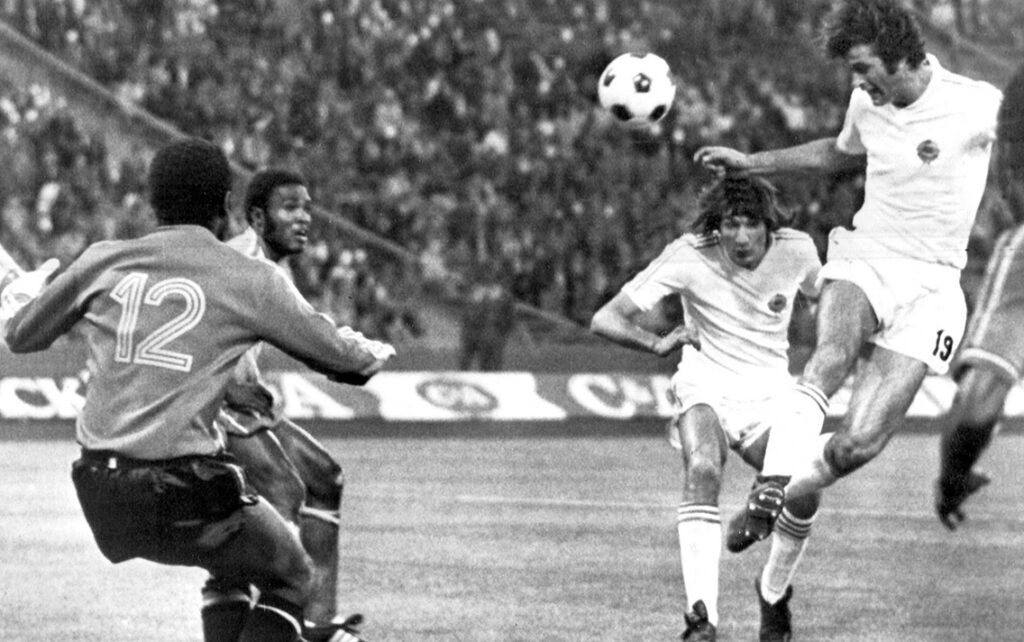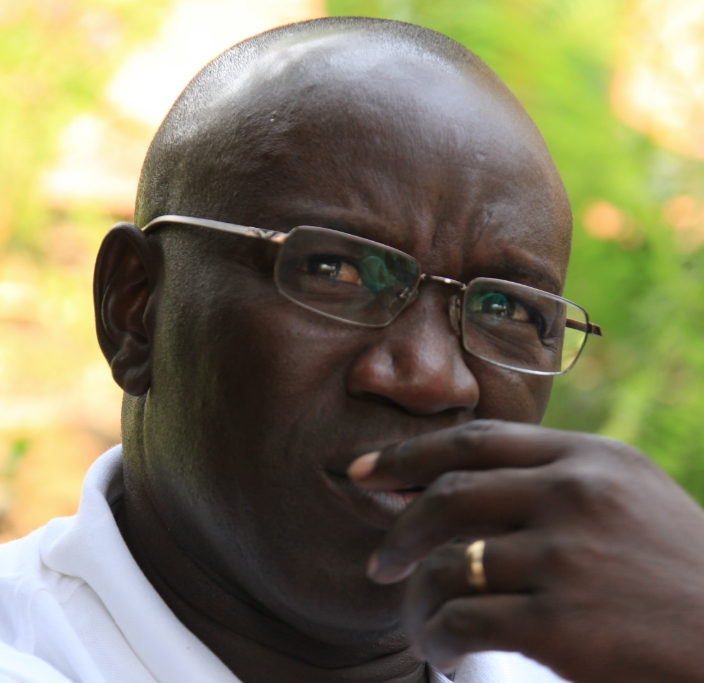
Despite managing Mazembe to the 2010 FIFA Club World Cup final, Lamine Ndiaye, their Senegalese coach, insists his side still has a steep mountain to climb.
Managing Cotonsport Garoua to several Cameroonian league titles, as well as a spell in international management with Senegal, his home country, and French second division side Mulhouse, before he took charge of Les Corbeaux, 55 year old Lamine Ndiaye has the arduous task of forging TP Mazembe into a solid, dependable unit.
Even with a 2010 CAF Champions League title in his kitty, as well as a runners-up medal from the 2010 FIFA Club World Cup in Abu Dhabi, Ndiaye admits the tough demands of the job have often put him on a collision course with those who continually question the competence of African coaches.
But the former France Ligue One player, in this exclusive interview with African Football, comments, frankly, on the African game and offers his vision for Mazembe, insisting his club will remain a formidable force.
Osasu Obayiuwana: Most African club owners with big ambitions opt for non-African managers. Were you surprised when Mazembe made you an offer? How did you get the job?
Lamine Ndiaye: Well, I was approached by Roland Scheubel (a French consultant of Mazembe) and Salomon Kalonda, who is the right-hand man of Mr Katumbi.
I have to admit that I was initially reluctant, because African coaches are often not taken very seriously.
But we met at Arsene Wenger’s place, and I was invited to watch the 2010 CAF Champions League group match between Mazembe and Esperance Tunis in Lubumbashi. I came, very anonymously, so I could see things for myself, after which I had a discussion with Mr Katumbi. I said, after he told me that he would like me to work for him, that I’d rather prefer to work in a consulting, advisory capacity.
Diego Garzitto, a French coach, was in charge and I did not want to be imposed on the team.
But after that meeting, Mazembe lost 3-0 to Esperance in their return Champions League match and I subsequently took over as coach on the 1st of September 2010, which makes it just over two years I have been in charge.
OO: Why do you think African coaches are not respected within the continent?
LN: It is the colonial mentality, the inferiority complex in many African club owners, who have a distinct lack of trust in their own people. Even here, in spite of what I have achieved, I still feel some people question my competence, because I am an African coach. I feel that.
OO: Really? You felt disrespected?
LN: Certainly. Especially when we have a spell of bad results. They forgot the mistakes made by the French coach that was here before me. But fortunately, I retain the confidence of Mr Katumbi, the chairman, who has never failed to support me, despite the criticism from some quarters. If he had succumbed to public opinion, I would have been fired a long time ago.
OO: How does the stressful job of coaching a top team impact on your mental health?
Lamine Ndiaye: Dealing with stress is what comes with this job. When the team wins, it’s the players victory but when it loses, it is the coach’s fault (he smiles). It is only one’s passion for the game that keeps one going in difficult moments. Pressure will always be there and I enjoy it.
OO: You enjoy the pressure of this job?
LN: Yes, I do. One has had to accommodate the realities of this job and live with them.
OO: FIFA president Sepp Blatter believes the future of African football should be plotted by its own coaches, not those that come from outside. Do you agree with him?
LN: That is an intelligent and astute point of view. However, it is important that African coaches prepare themselves properly for the job of coaching, by getting the right training. The coaching courses we have in Africa are, unfortunately, not deep enough, not sophisticated enough.
OO: When Egypt won three Nations Cup titles in a row, (2006, 2008 and 2010) they did it with a local coach, Hassan Shehata. What should African football learn from this?
LN: Egypt had an experienced, knowledgeable coach who was working with good players from strong domestic clubs, like Ahly, Zamalek and Ismaili, who functioned as a very good unit. It is very surprising that this very good example from Egypt has not struck the mind of African football leaders. As long as we don’t have strong domestic leagues, there will be a problem of consistency in the national teams.
Look at Côte D’Ivoire. The team has all the talent. But it lacks cohesion, because the players are scattered in several countries. Look at how they lost to Zambia in the 2012 Nations Cup final, a team whose players are largely local.
OO: It took CAF almost a half-century to devise a course that will enable them to licence coaches. Are you surprised it took them that long to do this?
LN: Well, it is better late than never (he smiles)
OO: What is your vision for Mazembe? What are you hoping to achieve?
LN: To be honest, the most important thing is to deal with the immediate thing in front of you – which is winning the next match. If you plan for the long-term but you are not doing well in the short term, you will never have the chance to implement the long-term vision. I am working with a president that has big ambitions, big dreams, so we are not ignorant of the need to plan. But, as we say in French, we have to ensure that the present lasts. I want to build a team with a dependable, consistent group of players.
But I must be realistic. My top players will always be transfer targets for European clubs with more money.
OO: Have you a preference to build your team with Congolese players, especially from the Katanga province?
LN: As a Senegalese coach working for a Congolese club, I do not look at the passport of the players. What I am concerned about is the talent, the skill of the player.
OO: How long do you want to be in the coaching business?
LN: For as long as I am motivated to work. The moment I wake up in the morning and I feel that the job is a chore, that is the moment I will bid farewell to this business.
OO: The only new trophy you can win for Mazembe is the FIFA Club World Cup that you could not win in 2010. Is this a realistic target to set for your team?
LN: Just repeating what we did in 2010 would be extraordinary. But remember, the past does not exist in football. It is what you achieve in the present. It is about winning now.