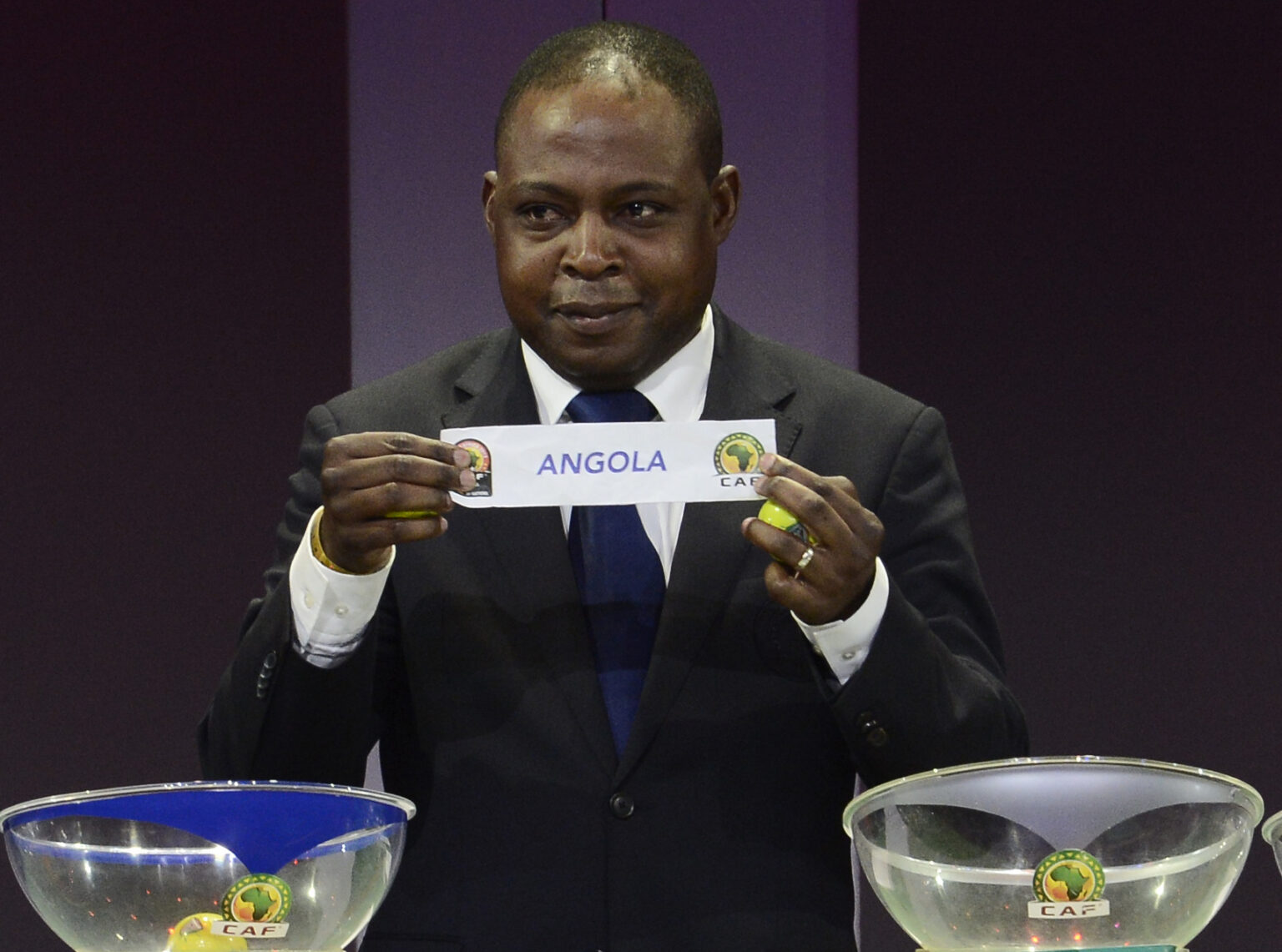
The fallout from the September meeting of the Confederation of African Football (CAF), as well as the return of previously banned officials to CAF’s all-powerful executive committee, indicates that nothing has been learnt in the corridors of power, reports Osasu Obayiuwana, our football editor.
Edmund Burke, the 18th century British philosopher and politician, made a very poignant observation about the visceral, brutal nature of combat in the moral square. “When bad men combine, the good must associate; else they will fall one by one, an un-pitied sacrifice in a contemptible struggle,” he said.
There appears to be a frightening conclusion, within the continent’s football community, that those bent on maintaining their iron-grip on the Confederation of African Football have, for now, outsmarted and outfoxed those seeking genuine, sustained change.
“It makes no sense for those wanting change to stand with nothing, when your enemy has an entire artillery lined up against you,” a high-profile personality, who has been at the razor-sharp end of African football politics, recently told me, over a dinner conversation in Johannesburg.
“When you are faced with such a situation, it is best to retreat and regroup, in order to have any chance of winning the battle in the future,” he said.
It is a lesson that Leodegar Tenga, the president of the Football Association of Tanzania, who also heads CECAFA, the East African regional football body, has clearly taken to heart.
After being the lone man on CAF’s executive committee to courageously oppose, on the record, the controversial change in September of the eligibility rules for the CAF presidency (see NA Nov) which allows only voting members of the CAF executive to contest the office, Tenga has kept his own counsel.
Tenga has bluntly refused requests, and there have been many, for him to speak publicly on the recent events within CAF, opting to maintain a studied – even if heavily pregnant – silence, on the happenings within its inner sanctum.
“Ah, you are expecting me to comment on what happened in the Seychelles?” he said, laughing, when we met at the Beverly Hills Hotel in the Durban suburb of Umlanga, on the eve of the draw for the 2013 Africa Cup of Nations.
“There is no way that I am going to say anything on that… But I will say this – I always stand for what I believe in. I will always stand for things, on principle,” Tenga said.
But Kalusha Bwalya, the 1988 African footballer of the year, a colleague of Tenga’s on the CAF executive, was not as reticent, concerning what took place in September.
“I have read a lot about what happened in the Seychelles. There was a proposal [from CAF executive member Mohammed Raouraoua of Algeria] which was supported by six or seven countries and then there was a vote…
“There was never any counter proposal… There are rules and regulations in football. If people are not happy with this new rule, let them come up with a proposal and it can be examined,” Bwalya argued, during a one-hour conversation we had.
“In Zambia for instance,” Bwalya continued, “we have a rule that anyone contesting the presidency of the FA must have worked in club football for five years. And to be a member of the executive, he must have worked in club football for three years.
“I have heard that the new CAF rule was brought about to prevent certain people from becoming the president. But I can tell you that no one has approached me to say that they intend to contest the presidency,” the Zambian said.
Responding to the comments of Jacques Anouma, the FIFA executive committee member (who is on the CAF executive committee as an ex-officio member), who told me that September’s deliberations were held in a “hypocritical, secretive atmosphere”, Bwalya accused him of violating the principles of “collective responsibility”, by discussing the group’s inner workings.
“The executive committee discusses things before coming to a conclusion… There are views that are expressed. But once a decision is taken, it is taken,” Bwalya argued.
“It is not right for a member to start saying, in public, what this person or that person said during our deliberations. That is wrong. We have made a decision… You should not shirk your responsibility simply because your intentions are different.”
Whilst aware that the overwhelming public perception of CAF bigwigs is that of a group of power-hungry folks, keen to stay on the financial “gravy train” for as long as possible, Bwalya, on the executive committee for just over a year, insists that image is grossly unfair.
“From the outside, I was also sceptical about CAF. But after coming inside and working with CAF president, Issa Hayatou, my voice is heard.
“I have made my stand known on the issues of officiating in African football, as well as age-cheating. I am fighting for change, so that we can address the concerns of the people on the African street,” he said.
The near 25-year reign of the Cameroonian Issa Hayatou as CAF president, which will be extended to nearly 30 years, should he be re-elected at the March 2013 congress in Marrakech, Morocco, is another hot potato.
Responding to arguments that it is time for Hayatou to resign or be forced out, in order to give way for a younger, dynamic president, with fresh, innovative ideas for the African game, Bwalya posits that the change of guard must be done “carefully”.
“Change, for the sake of change, is wrong… Anybody who has any intention of challenging Issa Hayatou has a right to do so. But if he (Hayatou) feels that he is able to go for another term, then why not? Hayatou has done his work diligently and honestly. I will support him, if he seeks another term.
“Going forward, we have to address the issue of mandates… What do we want to propose? A president with a maximum three terms [of four years each]? Or should it be two terms, of five years each? Those are the issues we should discuss.”
And, perhaps, one might dare to wonder, ask even, whether it is right for anyone, who has brought African football into disrepute, to have the immediate right to return to its highest table?
Mali’s Amadou Diakite, who served a two-year FIFA ban for unethical conduct, over the 2018/2022 World Cup bid contest, has returned, with aplomb, to his place on the CAF executive committee.
His attendance at the 2013 Nations Cup draw in Durban on 24 October was his first public appearance since the completion of the ban.
“Amadou Diakite was banned for a period of two years, as of the moment he was provisionally suspended (20 October 2010). This two-year ban was confirmed by CAF. Therefore, the ban expired on 20 October 2012,” FIFA told me in a written statement.
As one of Hayatou’s closest associates on the executive committee, the CAF president was certainly glad to have Diakite back, as I clearly saw from their interaction at Johannesburg’s Oliver Tambo airport.
And with Tunisia’s Slim Aloulou, also back on the executive committee since completing his one-year FIFA ban, the three men are finally together again.
Plus ça change, plus c’est la même chose. Voilà, mes chers amis, ça c’est le football africain… (The more things change, the more they remain the same. That, my dear friends, is African football…).