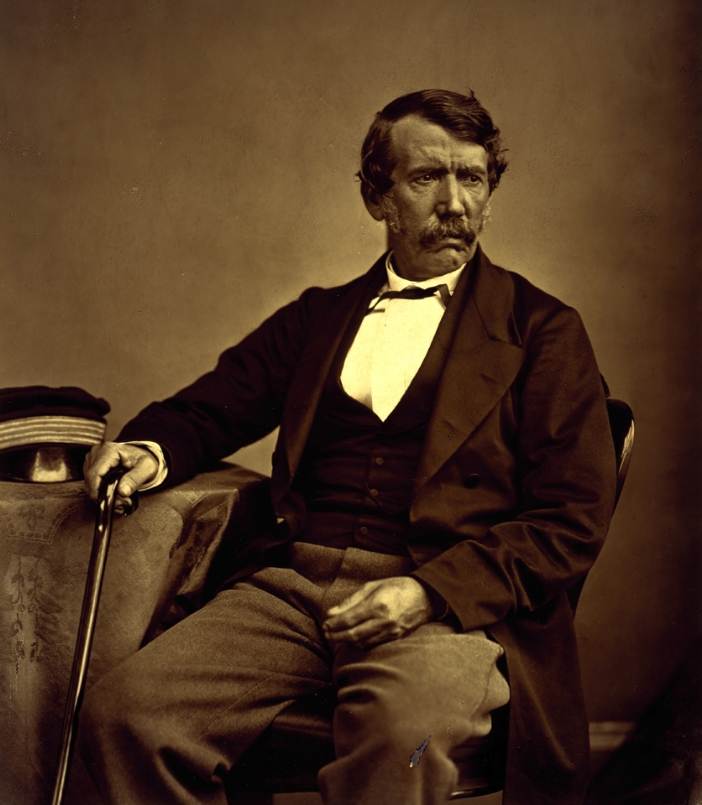
This year marks 200 years since David Livingstone’s birth. As part of the celebrations, his home country Britain, and the continent he dedicated his life to, Africa, will reflect on his work and how he left a model for black and white co-operation in Southern Africa.
During the 19th century, missionaries from Britain and other European countries made expeditions to various parts of Africa, seeing the colonisation of the continent as an opportunity to spread the Christian message. None of them affected a country as profoundly, and as far beyond the realms of religion, as David Livingstone did in Zambia, with the result that he is still revered there today.
Decades after Britain ceased to govern any nations in Africa, a Zambian town still bears the name “Livingstone” and the capital of neighbouring Malawi is called “Blantyre”, after the Scottish village where David Livingstone was born.
Whilst some African leaders continue to berate the evils of the British Empire, and the work of missionaries as an appendage of imperialism, there is something about David Livingstone that ensures he continues to be held in high esteem, both in Africa and Britain, long after colonialism has passed into history as a largely disreputable aspect of Britain’s history.
Livingstone was born on 19 March
1813. Perhaps, had he restricted himself solely to missionary work, he might not have been so successful in both this and other fields.
Having been ordained in 1840, his early years in Africa were focused very much on missionary work, in modern-day Botswana and South Africa. But after his marriage in 1845, he became interested in exploring deeper into Africa, becoming the first European to see the Victoria Falls in 1853 and pioneering a trade route across East Africa.
During these years of exploration, Livingstone regularly encountered Arab slavery and this led to a lifelong campaign to end the slave trade.
At the height of his career, Livingstone was possibly the most famous man in the world, returning from three years of exploring the African interior to a hero’s welcome in England in 1856.
The following year, the explorer electrified an audience at Cambridge University by shouting at the end of his speech: “Do you carry on the work I have begun? I leave it with you!” However, even in Victorian times, there were some who viewed missionaries as meddling, ineffective do-gooders.
The socially-conscious Charles Dickens made no secret of his dislike for missionary work, but even he, after reading Missionary Travels and Researches in South Africa, wrote in his Household Words periodical, in 1858: “I have been following a narrative of great dangers and trials, encountered in a good cause, by as honest and as courageous a man as ever lived.” Praise indeed from an opponent of missionaries!
Livingstone went back to Africa and nothing was heard from him for a long time back in England, with many presuming him dead. He was eventually “found” by an intrepid reporter called Henry Morton Stanley, who famously greeted him with the words “Dr Livingstone, I presume.”
Less well known are some comments Stanley made in New York, not long afterwards:
“Wherever that good man went, he was received. A few rejected him; but the majority listened to him calmly and kindly, and some of them felt quite ready to be of his profession and of his belief. But the words that he dropped were similar to those of the angels heard over Bethlehem, ‘Peace on earth, good will to men’.”
The language used by Stanley makes Livingstone seem like a messianic figure, similar perhaps to Mahatma Gandhi, but Livingstone was reassuringly very human.
After an encounter with a lion, in which he was mauled and nearly killed, Livingstone was asked what went through his mind when believing he was at the point of death; he simply replied: “I wondered which part of me he was going to eat first.”
Livingstone also had a tendency to fall out with most of his associates at some time or other; he was not by nature a team player. Sadly, Livingstone never did achieve the goal with which he became obsessed; finding the source of the Nile. His original purpose of becoming a missionary became supplanted by a wider vision for Africa of “commerce, Christianity and civilisation”; a combination that would, he believed, end the slave trade that he was constantly witnessing on his travels. Livingstone became convinced that this could be best achieved by exploration, to bring the region to the attention of Europe. He died after long illnesses, by the River Congo, which he mistakenly thought to be a tributary of the Nile.
The Zambian people today typically regard Livingstone with affection, believing him to have been a charitable man who came to Africa to improve lives with literacy and medicine.
Zambia and several other countries in the region, are strong Christian nations, in many ways much more identifiably Christian than the Western European nations that brought Christianity to the continent. In this area alone, Livingstone’s legacy is astonishing.
But his work extended to medicine, literacy, exploration and even astronomy. And of course, he campaigned so vigorously against slavery.
A charge levelled against Livingstone is that his explorations helped open the way for aggressive European colonialism and racism.
However, if Livingstone had not been the first European to explore large regions of Southeast Africa, there is no saying that another expedition without any humanitarian motives would have sooner or later opened up the area and Livingstone’s humanitarian legacy can certainly be argued to have helped empower Africans to eventually win their freedom.
It is a matter of pride for many Africans that it was black people who helped Livingstone on his journeys and later carried his body on a hazardous journey across the continent, so that he could be buried at Westminster Abbey in London (although his heart remains buried in Africa, near the Victoria Falls in Zimbabwe).
In the Zambian town that bears Livingstone’s name, a conference will take place from 19 to 21 April 2013, to mark the bicentenary of his birth and celebrate Livingstone’s work.
Zambia’s first president, Kenneth Kaunda, called Livingstone Africa’s first nationalist, and from an age when imperial conquest and exploitation were rife, Livingstone remains a powerful symbol of a better way for mankind.