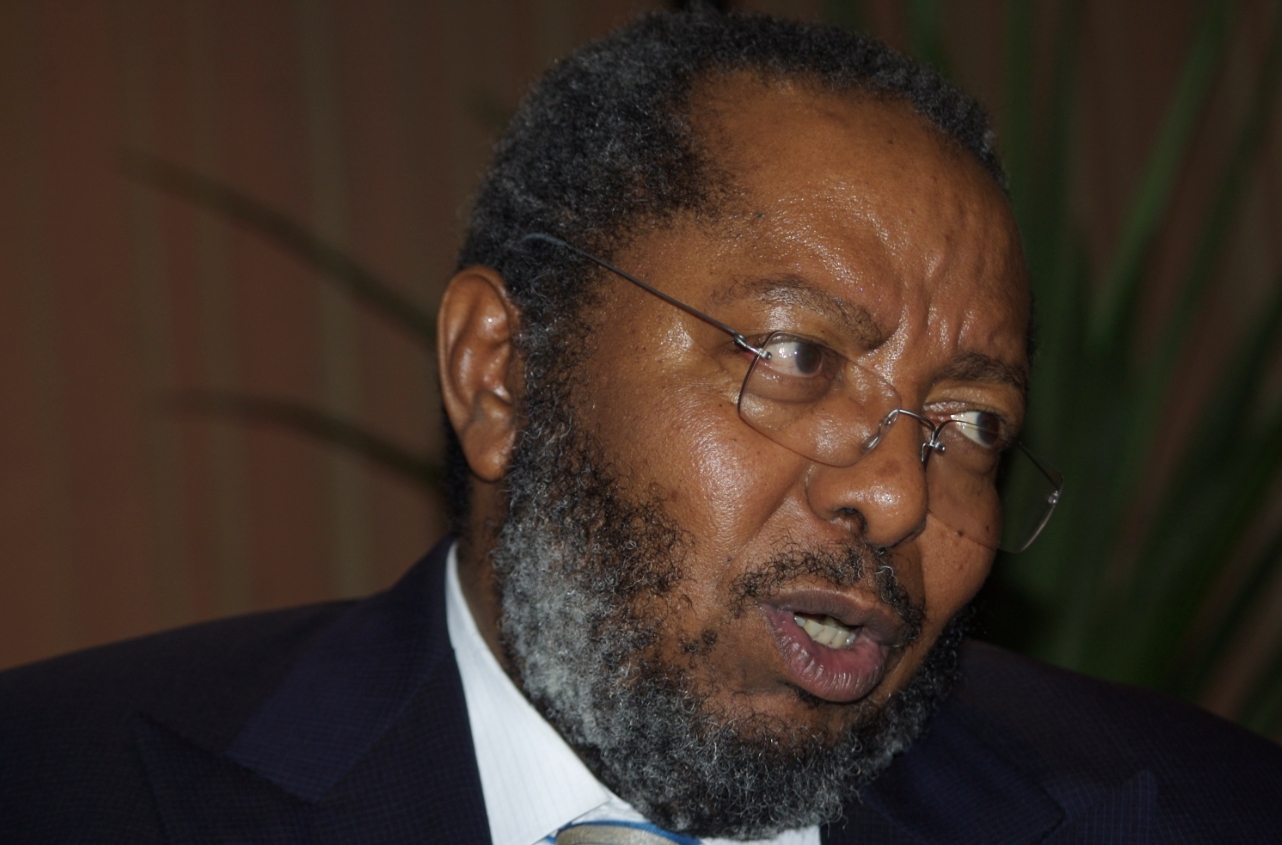
Professor Emmanuel Tumusiime-Mutebile has been at the helm of the Bank of Uganda as Governor for over a decade, and has presided over some of the most pivotal moments in Uganda’s modern economic history. He talks frankly to Darren Moore about some of the challenges and his vision for the Bank of Uganda as the country reaches its 50th year of independence.
Q: Under your tenure as governor what would you say has constituted the Bank of Uganda’s most critical challenges?
A: The first major challenge was reforming the prudential regulatory framework for the banking system in the first half of the 2000s. These reforms were necessary to strengthen the framework in response to several bank failures that had taken place in the late 1990s. The banking laws were revised with the enactment of a new banking act, the Financial Institutions Act (FIA), in 2004, which raised the minimum capital requirements for commercial banks.
The Bank of Uganda’s (BOU’s) authority to intervene and force failing banks to implement remedial measures or be closed were greatly enhanced with the inclusion in the FIA of mandatory “prompt corrective action” provisions. The BOU also reformed its approach to bank supervision by implementing “risk based supervision”, which emphasises analysis of the risk profile of each bank and the quality of its risk management.
The strengthening of the prudential regulatory framework has paid dividends in that the banking system has been able to expand rapidly since the turn of the millennium, to increase the ratio of loans to deposits from 43% in 2002 to 71% in 2012 and has also become more competitive with several new entrants while at the same time remaining in a very sound financial condition.
The second major challenge has been to maintain macroeconomic stability, particularly in the face of a series of major external shocks over the last four years, shocks which include: The steep rise in global fuel and food prices in 2008; the global financial crisis, and subsequent great recession in the advanced economies; and a second food price spike in 2011. The global economic environment has become much less benign and this has adversely affected Uganda’s balance of payments and increased the volatility of the exchange rate.
Nevertheless, Uganda has been able to navigate its economy through these storms and has maintained positive real GDP growth of 4-6% each year since the onset of the global financial crisis.
Q: What procedures have been put in place to manage Uganda’s external debt?
A: External public debt is managed in accord with the External Debt Strategy of the Ministry of Finance, Planning and Economic Development (MFPED). All proposals for external borrowing must be first approved by the MFPED and all external loans must be approved by parliament before the government can contract them. The external debt strategy has so far restricted external borrowing to concessional loans, although this may be relaxed to allow very modest amounts of commercial borrowing in future, in a manner that is consistent with maintaining debt sustainability. The details of all external borrowing are kept on a central database to ensure that the stock of debt and its composition can be properly monitored at all times. The MFPED, with the assistance of the BOU, undertakes an external debt sustainability analysis on an annual basis. The net present value of Uganda’s public and publicly guaranteed debt in 2011 was only 13% of GDP and 59% of exports, which is well within the applicable sustainability thresholds of the IDA/IMF low-income countries debt sustainability framework of 50% and 200% respectively.
Q: What inflation-combating measures have been implemented in the bank, and how effective have these been?
A: Up until last year, the BOU’s monetary policy framework had involved quantitative monetary targets, but the BOU reformed and modernised its monetary policy-operating framework when it formally adopted “inflation targeting lite” (ITL) in July 2011. The ITL framework involves the BOU setting a publicly announced policy interest rate, which is called the Central Bank Rate (CBR), to guide the movement of other interest rates in the economy. When the ITL framework was introduced last year, inflation was rising very rapidly because of domestic and global food price shocks and a sharp depreciation of the exchange rate. Core inflation, which is the measure of inflation targeted by the BOU, climbed from 6% in January 2011 to almost 31% in October 2011.
In response to the rise in inflation, the BOU raised the CBR, which has been initially set at 13% in July 2011, to 23% in November 2011. The increase in interest rates had two important effects; it brought about a slowdown in bank lending and it supported the exchange rate, mainly by attracting short-term portfolio capital into Uganda’s financial markets. Together with the gradual abatement of the food price shocks, the tightening of monetary policy has cooled the inflationary pressure in the economy. Core inflation has fallen back to 11.5% in August and I expect that it will have fallen to single digit levels by the end of September.
The BOU aims to hold annual core inflation to around 5% over the medium term. Although a developing economy such as Uganda will always be vulnerable to inflation in the short term due to supply- side shocks, such as food and fuel price rises, I believe that the ITL framework that we have put in place in Uganda gives the BOU the tools to control inflation to our target level over the medium term.
Q: Having celebrated the 50th Independence Anniversary of Uganda, what are your hopes for the region and Uganda’s financial stability and growth for the future?
A: I hope that we can build on the economic progress made over the last two decades, a period in which the Ugandan economy has expanded in real terms almost fourfold; to strengthen our competitiveness; modernise agriculture and generate many more jobs for the growing workforce. Long-term growth and structural change will only be possible if we maintain macroeconomic stability and ensure that the financial sector is soundly managed, but I am confident that we can continue to deliver these objectives given our long track record of success in these areas.
The more difficult challenges pertain to the supply side of the economy. We need to devote more resources to interventions that can assist smallholder farmers to adopt modern farming technology and produce for international markets. We also need to attract much more private investment, especially in labour-intensive industries, to create formal sector jobs. Deepening the regional economic integration in East Africa will be crucial to realising this aspiration, because this provides an opportunity to expand markets, for example for Uganda’s food surpluses, and strengthens competitive pressures which are essential for driving productivity gains. Reducing fertility rates to accelerate the demographic transition is also very important for long term structural transformation of the economy, because this will reduce Uganda’s high dependency ratio (the share of the population who are too young or too old to work compared to the working-age population) and boost our savings rates, enabling us to mobilise more resources for investment in human and physical capital.