The horrific corporal punishment meted out to a young student by a teacher, which resulted in his death, has sent shock waves throughout the East African region. Lashing pupils, banned in many countries, is still carried out regularly, often expressly against the law. The fact that President Magufuli appears to endorse such beatings has raised concerns far and wide. Report by Eric Kabendera.
On 26 August, 13-year-old Sperius Eradius, a fifth-grade student at Kibeta Primary School in the north-western Tanzania town of Bukoba, raced out of his classroom to help carry his teacher’s luggage as she arrived at the school in the early morning on a motorcycle taxi.
A few minutes later, the teacher summoned Eradius into the teachers’ office and accused him of stealing her handbag, which was one of the items the pupil had assisted in carrying into the office.
Eradius denied having stolen the handbag. The teacher asked her male colleague to strike the pupil until he said where the bag was. As the teacher continued to hit the pupil, the motorcycle taxi operator returned to the school and told the teacher that she had left her handbag in the taxi.
At home, Eradius started vomiting blood. The head of the Bukoba Hospital, Dr John Mwomboki said the pupil had been taken to the hospital but by then had already died of injuries sustained from the beating.
Eradius was an orphan living with a foster family, which had taken him from an orphanage to educate him.
The death of Eradius and two other students in this year alone has raised a public debate about whether corporal punishment is still essential and whether it helps instill discipline in students.
The Education Act of 1979 enabled the Minister of Education to create the Education (Corporal Punishment) Act of 2002, which offers directions about what circumstances corporal punishment should be administered in.
Section 3 (I) of the Act says “ the corporal punishment would only be administered in the event where a student has been implicated in a major disciplinary issue and the punishment, which shall not exceed four lashes, will be administered considering age, gender and the general health of the student.”
Apart from this, it is only the head of the school who is allowed to administer the corporal punishment, or appoint a teacher to administer it.
Punishment supported by the President
Most of the injuries resulting from the physical punishment to students go unreported in Tanzania because parents generally accept it, as such punishment has been in place since before independence.
However, the three recent cases in which students died show that schools and teachers have been abusing the regulations, given that students are beaten frequently and given more than the four lashes stipulated by the law.
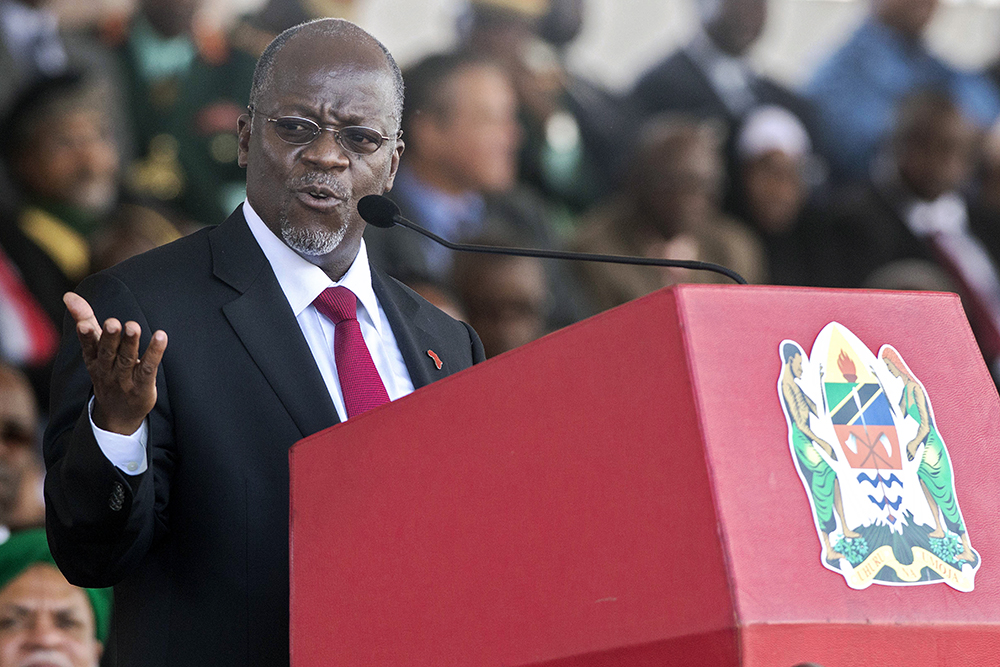
Since President John Magufuli came to power in October 2015, the government has said its most significant success has been the provision of free secondary education, but there have also been rising concerns about the way President Magufuli has consistently encouraged teachers to beat students due to his belief that most students lack discipline. The President has said that both parents and teachers are not beating children frequently enough, leading to an “erosion of ethics”.
President Magufuli has linked a lack of discipline to increased cases of teenage pregnancies and had ordered that schoolgirls who become pregnant should not be allowed to continue with their studies after giving birth.
In November 2016, the Minister of Education, Science, Technology and Vocational Training, Prof. Joyce Ndalichako, said that concerns had been raised about a lack of discipline in schools countrywide, but said that teachers were complaining that school boards were defending ‘naughty’ students from being punished. She said that students must be punished as per the law.
President Magufuli’s position on the pregnant girls contradicts the ruling party Chama Cha Mapinduzi’s (CCM’s) 2015 manifesto, which Magufuli used to campaign on and subsequently win the presidency. The manifesto says that the CCM government would create a conducive environment for girls who become pregnant while studying to continue with their education. “All the girls who become pregnant while in school will continue with their education”, the manifesto says.
However, President Magufuli believes that girls who return to school after becoming pregnant and giving birth would become a bad influence on other students, who might follow the same path. President Magufuli has, further, asked non-governmental organisations receiving funding from foreign governments to set up schools for girls who become pregnant, explaining
the government wasn’t ready to allow schoolgirls to return to school.
Despite the government’s tough position on teen pregnancies, such cases are still on the rise. Figures from the 2016 Tanzania Demographic and Health Survey (TDHS) show that teen pregnancies have increased from 23% in 2010 to 27% in 2016.
Girls drop out of school
Government statistics show that at least 8,000 girls drop out of school due to pregnancies. Another piece of research conducted by a local education advocacy NGO, HakiElimu, says most of the girls reported as not going to school because of truancy do so because of pregnancies and fear to return to school because they expect to be kicked out.
The Shadow Minister for Education, Suzan Lyimo, says that while both girls and boys have the same constitutional rights, the government is infringing the rights of girls by not allowing them to return to school after becoming pregnant.
“Tanzania is a signatory to different international protocols, which aim at protecting the rights to education of young girls. President Magufuli’s directive has breached the international protocols,” she said.
Tanzania’s neighbouring countries, such as Zambia, have allowed girls to return to school after giving birth.
One of the reasons that cases of girls becoming pregnant in Tanzania are on the rise is the lack of reproductive health education in schools. Most teachers who provide such education lack the skills to teach the subject. The unavailability of such educational services means that girls who have reached puberty lack choices, or knowledge, when it comes to using contraceptives, since it is still taboo for young girls to discuss contraceptives or have access to them.
In addition, while girls who become pregnant are punished and the lives of many of them are destroyed when they return home, little is done to the boys or men who impregnated the girls in the first place. It is widely believed that teachers, especially in rural areas, regularly abuse their charges.
In Tanzania, women have an average of five children, one of the highest rates in the world. The government has been trying to increase its budget to ensure that family planning services are available in most parts of the country. However, the Ministry of Health’s budget for 2018/2019 saw a 20% decline in the budget allocated to it, subsequently impacting reproductive health services to girls and young women.
But, and in contradiction to the stated policies, Magufuli has on several occasions at political rallies, discouraged citizens from using family planning methods.
Magufuli believes that those who use family planning methods are lazy and worried that they won’t have enough food to feed their children.
He has also said that Tanzania’s economy is doing better and that secondary education was free, and therefore parents should give birth to as many children as possible.
“Because they are afraid they will not be able to feed their children … they do not want to work hard to feed a large family. Moreover, that is why they opt for birth control and end up with one or two children,” President Magufuli said at a recent rally.
The contradictions between policy, its implementation, and Magafuli’s increasingly authoritarian manner have left many Tanzanians scratching their heads in bewilderment. NA