It would be impossible to overstate the importance of Dr Albert Schweitzer to the Gabonese people. Regarded as something between a saint and a national hero, his legacy is often cited as the reason that Gabon has one of the best health care systems in sub-Saharan Africa.
So the centenary was not something that the Gabonese were about to let pass. Instead, they turned to Richard Attias Associates, the New York-based communications specialists, to bring nearly 400 international participants to the Gabonese capital, Libreville, for a high level symposium.
The logistics, ably organised in close co-operation with Gabon’s Head of State, President Ali Bongo Ondimba and his administration, allowed physicians, scientists, researchers, representatives of pharmacological companies and NGOs to participate in two days of debate and panel sessions, as well as a trip to Lambaréné, the small town on the banks of the River Ogooué where Schweitzer built his hospital.
Lambaréné is about a four-hour drive from Libreville, along the excellent Gabonese road network, but we travelled courtesy of the Force Aérienne Gabonaise (Gabon Air Force) aboard one their mighty Hercules C190 transport planes. Unfortunately, exciting as this was, the plane lacked a few creature comforts (such as windows) so we missed looking down on the spectacular Wonga-Wongué National Park that our flight path took us over.
But arriving in Lambaréné (population 24,000) we spent the next few hours discovering just why Schweitzer’s legacy has paid such an important role in Gabon’s development. The country has 90 per cent access to health care, despite its small population density, put at five inhabitants to each square kilometre, and one of the highest ratios of doctors to patients in Africa today. There were three parts to our visit; the first being to visit a new 150-bed hospital complex with specialities that ranged from tropical diseases to maternal and child health, ophthalmology, and radiology, as well as boasting a state-of-the-art operating theatre.
This new hospital will serve as Moyen Ogooué Province’s hospital and was actually opening its doors to patients the very next day.
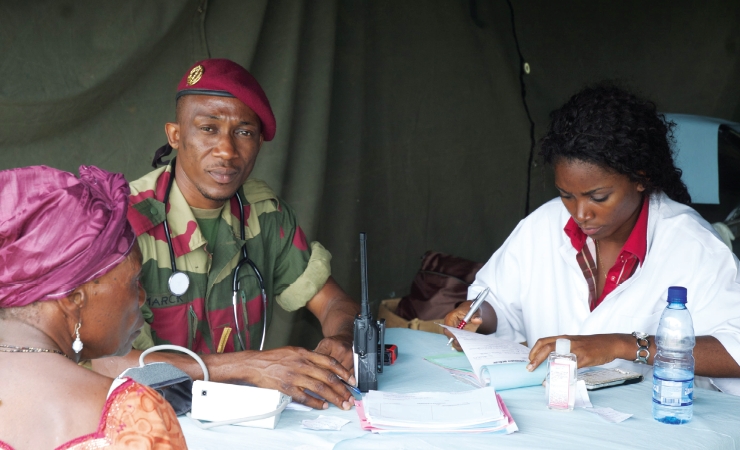
We then visited the new research centre, still under construction, which upon completion will house one of the best medical research facilities in Central Africa. Finally, we were taken to a “field hospital/clinic” being run by Gabon’s army. Astonishingly, 25 per cent of the army’s medical staff is involved in delivering health care to citizens. They alternate between the country’s nine provinces each year, and 2013 happened to be the turn of Moyen Ogooué (of which Lambaréné is the provincial capital).
Next it was back to Libreville, again on the Force Aérienne Gabonaise’s Hercules
C190 transport plane, to attend the symposium. The symposium had as its special theme a focus on the three diseases of the triple pandemic – namely HIV/Aids, TB and malaria.
In fact, Schweitzer was also confronted with a triple pandemic when he first established his “jungle hospital”. But that was before the emergence of HIV/Aids and the third disease in his triumvirate was leprosy.
HIV/Aids and leprosy share one important characteristic. Victims of both diseases are often ostracised by their families and communities as (it was and is still sometimes erroneously believed) they pose the risk of infection by touch or sharing utensils. When Schweitzer won the Nobel Prize in 1952, he donated the $33,000 Award to establishing a leprosarium, following his established tenets of creating a “village” environment for his patients. This meant traditional living quarters and kitchens for the patients’ family members, and keeping chickens and livestock – all in the belief that holistic therapy, in a familiar environment, benefits the healing process.
While the triple pandemic received much attention, the symposium by no means restricted itself to these diseases. For example, Nigeria’s Minister of Health, Professor
Onyebuchi Chukwu, drew attention to the 14 so-called Neglected Tropical Diseases (the seven most common being ascariasis, hookworm infection, trichuriasis, lymphatic filariasis, onchoocerciasis, schistosomiasis, and trachoma).
As they do not kill large numbers of people, NTDs tend to be overlooked, but they do cause blindness, deformity, disabilities, or maim their victims. They are also only prolific in the developing world – particularly, as they are caused by water borne parasites, where access to potable water is lacking.
Yet, unlike the treatment of the three triple pandemic diseases, they can be inexpensively prevented or even cured. Many health professionals believe that with limited health budgets, the focus of spending should shift towards dealing with these ailments.
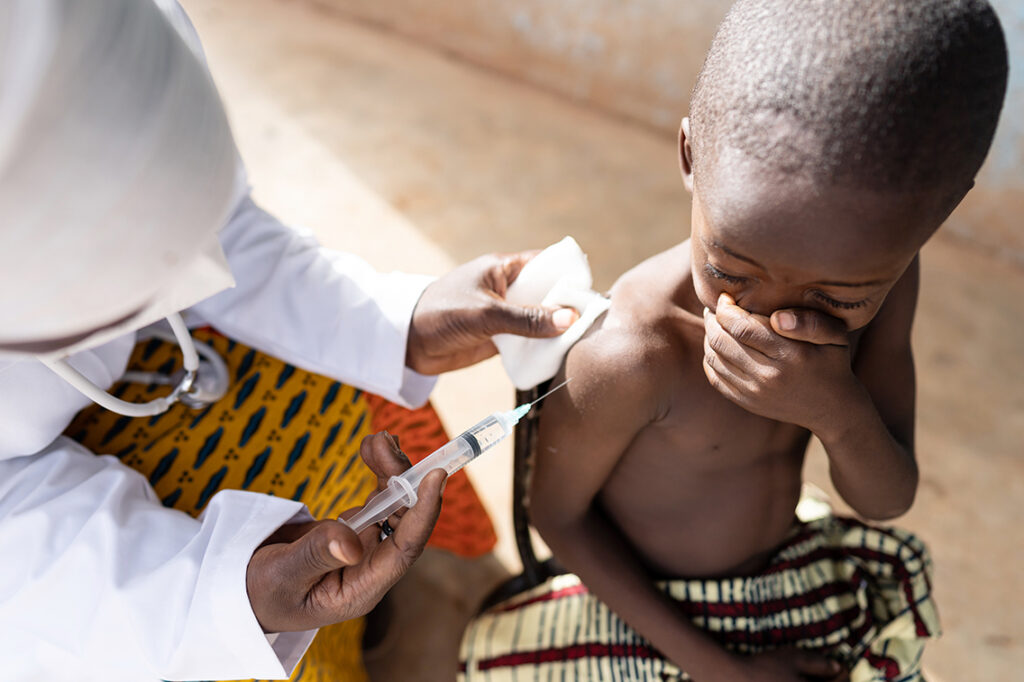
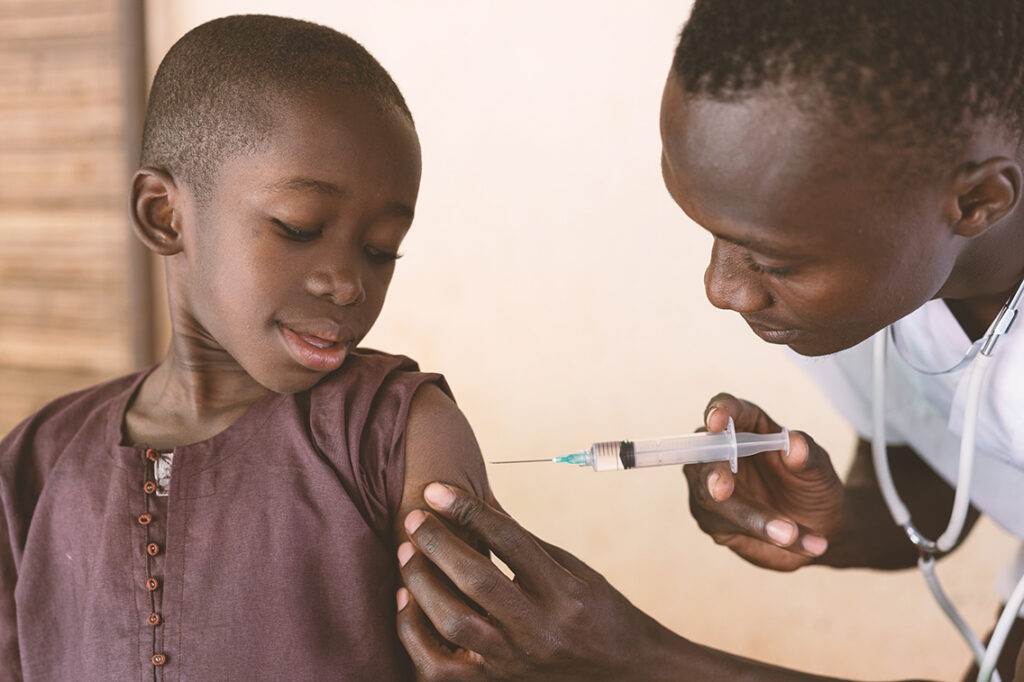
There was considerable debate amongst the participants on the likelihood, or otherwise, of developing vaccinations for HIV/Aids, TB and Malaria. On the issue of HIV/Aids, opinion was divided amongst the optimists and sceptics.
One researcher told New African quite bluntly that there was little chance of an effective vaccine being developed in the foreseeable future, whilst other experts were a lot more hopeful.
One of the Nobel laureates who attended the symposium, the highly controversial Luc Montagnier (who won the Nobel Prize for first isolating the HIV1 virus) told the symposium that he believed an effective HIV/Aids vaccination was imminent. That, in medical research terms, means still some years off, since before the widespread adoption of any new vaccine, its safety has to be verified.
And what of the other two diseases: any chance of new vaccines to protect against these two killers? There is already a TB vaccine, Baccilus Calmette-Guérin (in use since 1921), which is generally administered at birth. However, there are drawbacks to the BCG vaccine as there continue to be doubts over its efficacy (80 per cent at best) and the duration of its protection.
Yet, no one at the symposium was in any doubt that with increasingly antibiotic-resistant strains of TB around the world, work on a more effective vaccine is urgently required. TB’s association with HIV/Aids is well established, and HIV/Aids positive patients often succumb to this disease before any other. But there is far more positive news on the malaria front. There are challenges, of course – not least that the mosquito vector has changed its behaviour, with the wider adoption of bed nets, and the insects biting more people in the early evening before they have gone to their beds.
There is another problem too. The insecticide that impregnated many of the bed nets that have been distributed across Africa is now reaching the end of its effectiveness.
But there is also some reasonably positive news on the vaccine front, as was explained to New African by Professor Peter Kremsner, the scientific director at the Albert
Schweitzer Hospital at Lambaréné.He has been working on a new malaria vaccine that is going forward for licensing. It is not perfect, for as Kremsner confirmed, it has no therapeutic quality (in other words, it does not cure the existing disease) and appears to be less effective for new-born babies. But even if it was 40-50 per cent effective as a preventative measure amongst the rest of the population, that would be an astounding blow against the disease.
“The consultation phase is completed,” Kremsner told New African, “and we have another year or so of gathering data in order that it moves forward. GlaxoSmithKline (the giant healthcare company) are ready, and the money has been secured from the Bill and Melinda Gates Foundation. It is now a matter of discussion with the UN’s WHO to determine this vaccination’s efficacy. Everyone will follow the WHO’s recommendations. If all goes to plan, it will be out in about two years.”