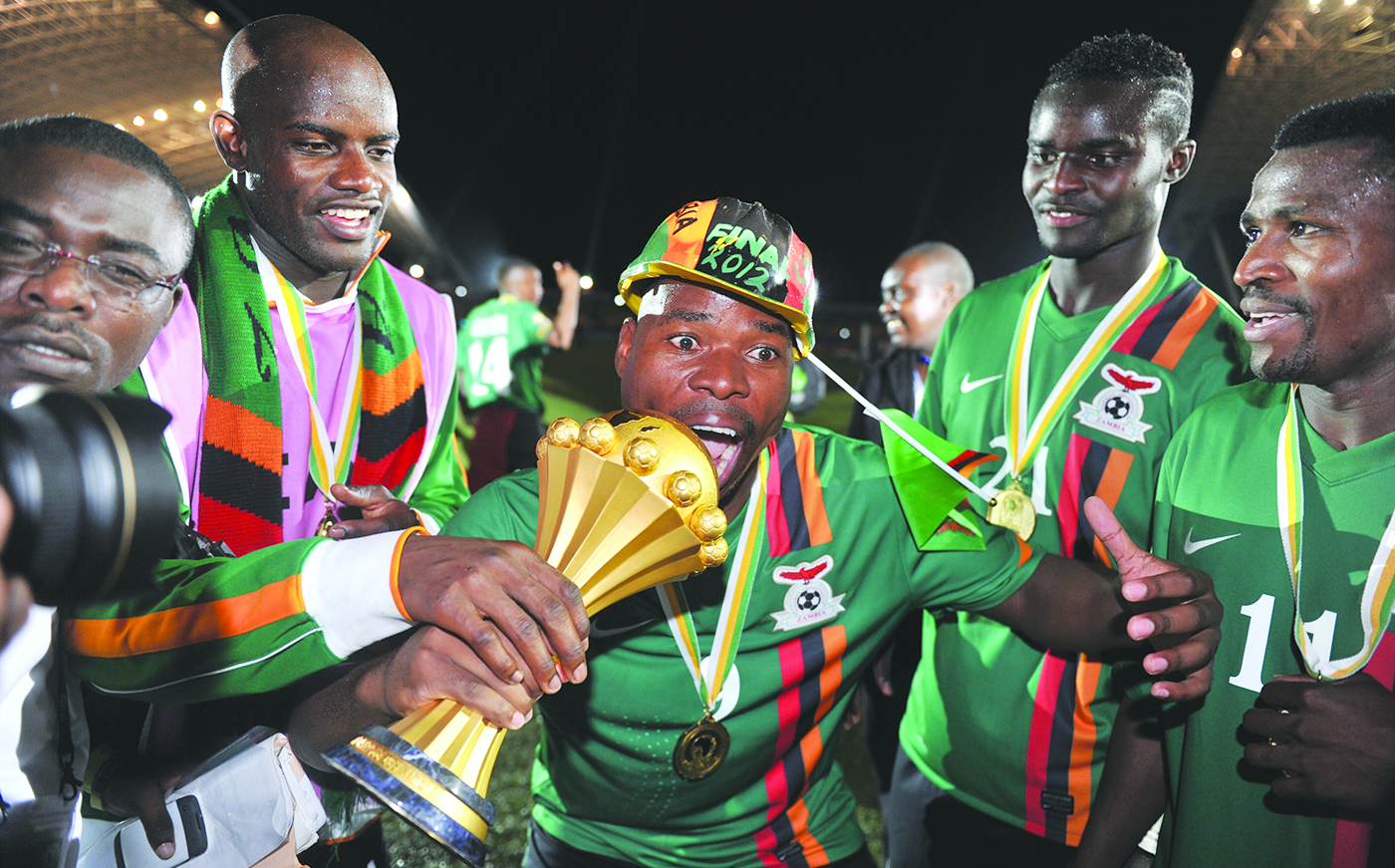
Hardly given a chance of winning the Cup of Nations, Zambia’s fairytale victory is a heart-warming testimony to the power of fortitude and team work, with the hand of providence undoubtedly playing its part, as Kennedy Gondwe reports from Lusaka.
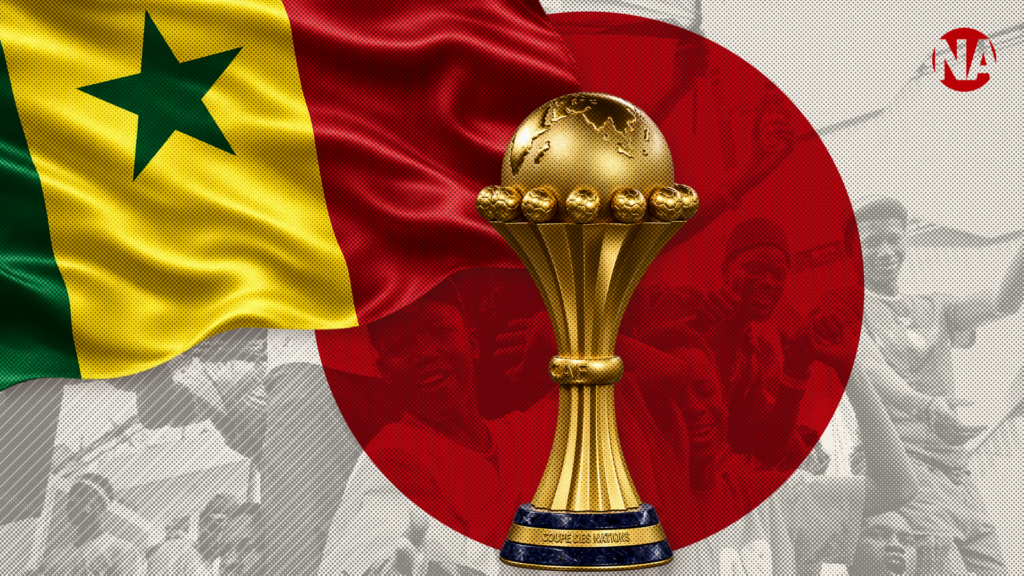
Destiny’s unswerving curve – as well as an indomitable fighting spirit – are, without question, the two ingredients that produced the elixir of success that saw Zambia lift the Cup of Nations for the very first time on 12 January at the Stade de L’Amitié in Libreville, Gabon.
That the Chipolopolo (Copper Bullets), experienced their greatest triumph in the same central African country that was the epicentre of a horrific plane crash, on 27 April 1993, which claimed the lives of 18 national team players and 12 officials en route to Senegal for a 1994 World Cup qualifier, has produced what is perhaps the most inspiring tale of triumph in the 55-year history of the tournament.
Matched against the star-studded and more experienced Côte d’Ivoire in the final, a team that had not conceded a single goal en route to the championship match, there was no question that the Southern Africans had a steep mountain to climb.
“It was a tall order [that Zambia would win the Nations Cup title],” admitted Dennis Liwewe, arguably Zambia’s best-known football commentator.
But unintimidated by the presence of European club football stars like Didier Drogba, Kolo and Yaya Touré, the current African Player of the Year, in the West African side, Zambia, captained by Christopher Katongo, conjured a performance that confounded the Ivorians.
The West Africans had little self-confidence left after 120 minutes of play failed to produce a goal, with Didier Drogba, of all players, missing what would have been a match-winning penalty for the Elephants in the 70th minute.
As Francois Zahoui, the Côte d’Ivoire manager, admitted after their 8-7 loss on penalties, the pulsating final was one that he and his players never expected.
“It’s difficult when you take part in a competition when you do not concede a goal and score nine… We missed the penalty in normal time, then perhaps lost a bit of confidence. This is a big disappointment for us.”
It was anything but that for the emotional French coach Hervé Renard, who joined his players in a frenzied group dance, after Stoppila Sunzu calmly slotted home the winning kick that gave the Southern Africans the title that eluded them at the 1974 and 1994 finals. “I know we’re not the best team [in Africa] but we have a strength and force that animated our team and made us African champions… This is something enormous – something that appeared unrealisable before the competition began,” Renard said.
Having led the Chipolopolo to the quarter-finals at the 2010 finals in Angola, where they could have beaten a lacklustre Nigeria, which had to draw upon every ounce of experience to earn a semi-final berth, Renard returned to coach Zambia late last year, after Dario Bonetti, an Italian, was surprisingly sacked despite earning the 2012 qualification ticket.
Renard’s return to Zambia, after a short stint in Angola, was not without its critics. Many felt he had abandoned the country that had given him his first major coaching job, after working as Ghana’s assistant coach at the 2008 Nations Cup finals, with previous stints with English side Cambridge United and French team AS Cherbourg.
But having the support of Kalusha Bwalya, the 1988 African Player of the Year, now the president of the Football Association of Zambia (FAZ), Renard returned to work and rejoined the players that he had grown to know well. Imbuing confidence into his players, they gathered mental strength, as they tried to convince a largely sceptical country, tired of underachievement, that they were the team to finally turn the tide of chequered outings and take the Zambian game to the African summit.
But, as even the 43-year-old Frenchman would admit, winning the 2012 Nations Cup tournament was never on the agenda, as he had set a modest quarter-final target.
The Chipolopolo’s opening Group A fixture against Senegal, one of the pre-tournament favourites, with a formidable array of strikers, like Demba Ba and Papiss Cissé, was expected to be a particularly tricky fixture, with most pundits giving the game to the Lions of Teranga well before the kick-off.
But a stunning 2-1 victory over the 2002 World Cup quarter-finalists set the tone for the impressive Chipolopolo run in the preliminary stage, emerging as Group A winners, following a 2-2 draw with hardfighting Libya and upsetting the mammoth home crowd to get a 1-0 win over Equatorial Guinea.
Team unity, a result of having a core group of players who had played in the national team set-up for close to a decade, was visible.
With no talismanic player to build the team around, it relied on the experience of several veterans like captain Katongo, battle-hardened from featuring in several Nations Cup tournaments.
Katongo and his younger brother Felix were part of the team that featured at the 2006 finals in Egypt, that also included Joseph Musonda, goalkeeper Kennedy Mweene, Isaac Chansa and James Chamanga.
Rainford Kalaba and Davis Nkausu, who formed the heart of the midfield, were part of an Under-17 side that coach Simataa Simataa had put together in 2002, whilst Stoppila Sunzu and Hichani Himoonde have been developing from their time in the U-20 team.
Refusing to tolerate any acts of indiscipline, Renard would not hesitate to apply the axe against those that failed to subject himself to his regimen and camp rules. It is an extremely bitter lesson that Clifford Mulenga, the 2007 CAF Young Player of the Year, who plays his club football for South Africa’s Bloemfontein Celtic, will never forget.
Refusing to apologise to Renard for going out with some of his colleagues after their victory over Equatorial Guinea, Mulenga was expelled from the squad before their quarter-final game against Sudan.
While his colleagues enjoy the glory and adulation that come with winning the Cup of Nations, Mulenga can only wonder what could have been for him.
“I just want to say [I] am very sorry to my parents, my siblings, nieces, nephews, uncles, aunties, my friends, fans, supporters, soccer lovers, the Zambia national team, my friends in the national team, my club Bloemfontein Celtic and my church,” Mulenga said on his Facebook page. “I have no excuse for what I did in Malabo, leading to my expulsion from the Zambian team. I am not looking for sympathy or a shoulder to cry on but all I am asking of you is forgiveness,” he pleaded.
With Mulenga’s departure from the camp, the Chipolopolo trudged on and became the first team to qualify for the semi-finals, earning an emphatic 3-0 win over Sudan in Bata. After Stopila Sunzu had scored the game’s opening goal, Zambia had the added advantage of playing against a 10-man Sudanese team, as Saif Eldin was given a red card for fouling Rainford Kalaba in the box. Christopher Katongo calmly converted the penalty kick, whilst James Chamanga put the victory beyond doubt with a final strike.
The task of defeating Ghana, the 2010 World Cup quarter-finalists, in the semi-finals was regarded by continental pundits as an impossible task. And when David Nkausu fouled Kwadwo Asamoah, Ghana’s talismanic midfielder, in the penalty area, it truly looked like Zambia’s tournament run had come to its end.
But like he did at the 2010 World Cup finals, missing what would have been a match-winning penalty that could have taken Ghana to the semi-finals, Asamoah Gyan relived his nightmare. Gyan’s failure to convert yet another crucial penalty gave an unexpected lifeline to the Zambians, who did not fail to make the most of the opportunity, as Emmanuel Mayuka scored the winner in the 78th minute.
Earning passage to the final, which was a pleasant surprise for the majority of Zambia’s 12 million people, heightened expectations of paying the ultimate tribute to the players that had sadly lost their lives, whilst serving the nation, in the plane crash.
Little wonder goalkeeper Kennedy Mweene, who stopped Asamoah Gyan’s penalty in the semi-final and blocked Kolo Touré’s spot-kick in the final, as well as scoring a goal of his own, remarked that winning the Nations Cup was “the best way to put the souls of our fallen heroes to rest.”
Mweene was a little boy when the 1993 crash occurred but the tragic story is one that he and the current generation of national team colleagues know well, as tales of the tragedy have been passed on.
“Most of us were in primary school when the crash happened, but Kalusha [who narrowly escaped death, as he was supposed to have travelled on that plane] remembers it vividly. He has encouraged us to keep those that perished in our minds, whenever we fight for our country.”
Yet those words would have been incomplete without a journey to Libreville, the city of the crash, with the stadium in which they played the February final just metres away from the Atlantic Ocean.
On their arrival in the Gabonese capital for the Cup-winning game, having played all their matches in Equatorial Guinea, it was a matter of course that paying homage to the departed was an immediate duty that had to be performed.
“Twelve million Zambians wanted us to go the whole way to Libreville [for the final]… It is imperative we play for them,” Renard said.
Solemn hymns and sombre speeches characterised that brief ceremony, on the shores of the Atlantic Ocean, with the players laying wreaths before preparing for the dramatic final.
“They came in plastic bags in death,” commentator Dennis Liwewe recalled. “We will not come back from there with a defeat… If we are going to lose, then we are going to lose with dignity and honour but we won’t come back from there in black bags of death. We will come with victory for Mother Zambia.”
Liwewe’s words, which summed up the passionate feelings of most Zambians, certainly set the scene for the nail-biting match, with the overwhelming majority of non-Zambian fans willing the Chipolopolo to win, as they clearly showed their dislike of the Ivorians. Having more than matched the supposedly superior Ivorian team throughout the 120 minutes of play, Zambia’s growth in mental strength was evident when it came down to the penalty shootout.
With the Chipolopolo conceding just three goals en route to the final and Ivory Coast none, the game, undoubtedly the most exciting match of the entire tournament, did not fail to provide drama, which kept everyone on edge until the very end.
The triumph of the Chipolopolo saw a nation erupt into joyous celebrations, as never seen before.
President Michael Sata, who rewarded each player with $59,000 on their return to Lusaka, had sent a high-powered delegation, which included founding president Dr Kenneth Kaunda, Rupiah Banda, Sata’s predecessor, and Guy Scott, the incumbent vice-president, to witness the final.
Kaunda, an avid football fan (who had his initials form the previous moniker of the national team, then known as the KK11), was joyous on seeing the Chipolopolo win the title for the first time.
“This is an amazing experience and we can only thank God for this joyous moment. The people of Zambia have been honoured and we have to be grateful to the creator for this victory,” he said.
“I am happy the boys did it in style, in memory of the late colleagues and the next step is the World Cup,” former president Banda added.
Both men were present at the luncheon that President Sata and his wife hosted for the victorious team at State House. “You have really honoured your departed colleagues who perished during the course of national duty off the coast of Gabon. To the coaches, team management, Football Association of Zambia executive and everybody involved, I say it is a job well done,” Sata said. “You went with admirable humility and competed with heart, unity and patriotism… The result of your hard work is the trophy which you have brought to your motherland for the first time.
“This gesture was meant to demonstrate to you and the entire nation how much importance we attach to football and how this sport unifies our country,” he said. “Indeed, you have demonstrated once again that nothing beats unity and hope and it is my desire that you will continue with this spirit as you pursue even greater success.”
Financial rewards for the players will not just be coming from the government, as mobile telecommunications company MTN Zambia pledged $200,000 and Zambian Breweries gave a $40,000 reward. Other corporate organisations, keen to bask in the reflected glory of the Nations Cup triumph, are expected to join the victory bandwagon.
FAZ president Bwalya is already looking beyond the euphoria of victory, as he says that qualifying for the 2014 World Cup finals in Brazil, which would be another footballing first for the country, is a priority.
“This is certainly the best team that Zambia has produced in the 30 years that I have been associated with the national team,” Bwalya commented shortly after the final. “The courage and determination that the players showed throughout the tournament was incredible and I salute them.”
With Renard’s success with the Chipolopolo firmly putting him in the frame of national teams and clubs looking for an inspiring figure to transform their football, the Frenchman will certainly be tempted by lucrative offers to move elsewhere. And as his move to Angola, after his first stint with Zambia ended in 2010, indicates, he is not averse to the lure of more money.
But Renard has promised that he will stay with his team and consolidate on the gains of the Nations Cup victory: “I have been asked a lot of questions about that [returning to Ghana, where he was assistant coach in 2008]. I don’t think it would be fair to leave Zambia… I have to stay with them; we have to stay within the family and to continue our work.”
It is certainly the desire of a grateful nation, which hopes the victory in Gabon is just the beginning of a new chapter in the annals of the Chipolopolo, in which the February 12th triumph is the start of a lengthy, glorious era.