West Indian Sir Learie Constantine was a force of nature who used his extraordinary cricketing skills to elevate the position of people of colour in the UK and became the first person of African heritage to be knighted. His legacy continues to inform and shape race relations in Britain to this day. By Clayton Goodwin
When I was growing up around the villages of rural Kent in the 1940s, we were not aware of any Africans or West Indians being either in our country or abroad. It was a monochrome world. Yet there was one black man whose name had already become a household word and whom we all considered to be a personal acquaintance. That was Learie Constantine, the West Indian cricketer (and more). He had a way of making his presence and personality felt. In this Black History Month it is well that his story should be told.
Learie was the first person of African heritage to become a member of the House of Lords, almost exactly 50 years ago today. There is a campaign for his statue to be erected at Nelson where he stayed on first coming to this country. Constantine, as we shall see, was the Great All-rounder.
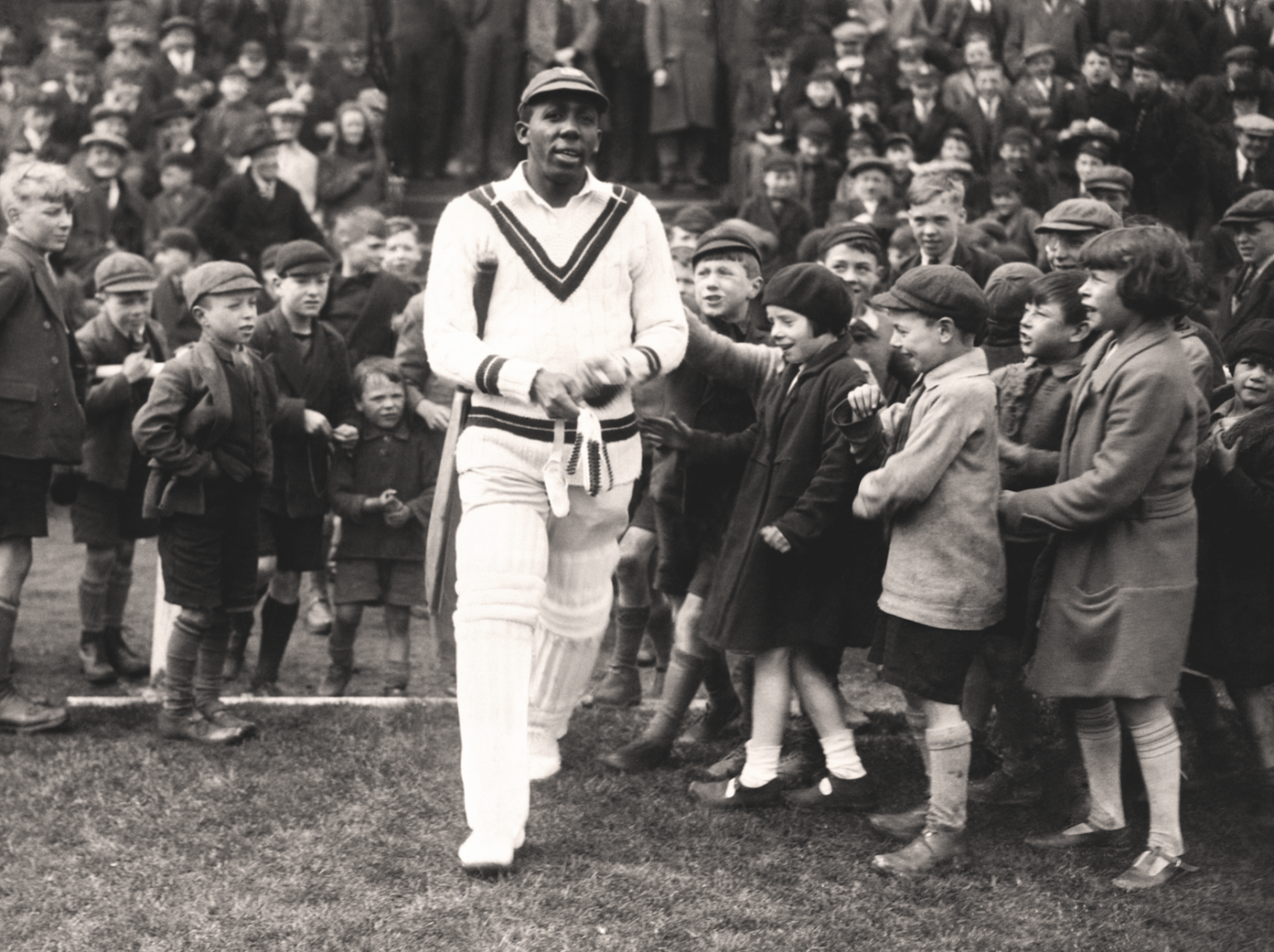
For a start, he was one of the greatest all-rounders cricket has known. Learie was an entertaining batsman, who invented strokes it seemed could not be invented, a versatile fast bowler, and, above all, a fielder so outstanding that he is probably the only cricketer who has ever attracted crowds just to see him field.
He was a key member of the West Indies side from his first tour to England in 1923 until international competition was suspended in the shadows of the approaching Second World War 16 years later. Cricket made Constantine’s reputation but he used the game as a platform to prove that he was so much more than just a cricketer.
Because of the lack of opportunities in his home region, the Trinidadian pursued his career as a League professional at Nelson in Lancashire from 1931.
At first, Learie considered returning to his home island because of the racism which he experienced, but he fought that battle with the same courage as he faced his opponents on the pitch. Before long he won over his detractors and established a strong rapport with the local population. Constantine came to love, and identify with them and they adored him. He became the epitome of the League cricketer for whom entertainment-value and character are paramount. In doing so he prepared the way for other West Indian cricketers to find opportunity and a home in Lancashire.
When the West Indies team left England at the outbreak of hostilities, Learie stayed on to entertain the public in League and charity games. His willingness to share the war-time dangers and deprivations considerably enhanced the esteem in which he was held. He also played his part in the war-effort as an Air Raid Precautions Officer and by helping with evacuees, and was appointed Welfare Officer in the Ministry of Labour and National Service.
Working mainly from Liverpool, Constantine helped West Indians, including the many arrivals who had volunteered for military service, to settle into England. He liaised with the trade unions, using his prestige to pressurise otherwise reluctant companies to accept non-white workers. The home community recognised and accepted what he was doing – “You know, that Learie Constantine, he is one of us.”
Milestone act of defiance
In August 1943 Learie booked rooms for four nights for himself and his family at the Imperial Hotel in London after being assured that his colour would be no problem. However, on arrival the family were told they could stay for only one night as their presence “might offend other guests”.
It is understood there were a number of American military personnel staying there who wished to maintain the segregation they had known at home. Constantine’s successful High Court legal action against the hotel is regarded as a milestone towards the creation of the Race Relations Act of 1965.
To celebrate the end of the Second World War a match was arranged between England and the Dominions at Lord’s, the world headquarters of cricket, in August 1945. The Dominions captain, Lindsay Hassett, the diminutive Australian, had to pull out on the eve on play. As the senior player Constantine was the obvious choice to replace him, but the selectors hesitated lest the appointment should not be accepted by other members of the team. However, they had no other option.
Arriving at the ground to break the news, they found to their surprise that his colleagues had taken matters into their own hands by already making Constantine captain. His leadership was instrumental in the Dominions’ victory by 45 runs.
Now in his mid-40s, Learie was too old to resume his full-time career in cricket – though for several years he took a team of well-known West Indians to play against English urban and village clubs (which is how I came to know about him and the Caribbean region).
While studying for a law degree at the Middle Temple in London, Constantine maintained himself by coaching and cricket writing/journalism. He also became Chairman of the League of Coloured Peoples, was elected Chairman of the Caribbean Congress of Labour, and was called to the bar in 1954. His book Colour Bar (1954), which discussed racial issues and how lives of black people could be improved was considered to be challenging and hard-hitting by white readers but not radical enough by a black audience.
Ministerial position
When he returned to Trinidad that same year Constantine was recruited to the People’s National Movement led by Dr Eric Williams. He was elected to parliament in 1956 and appointed Minister of Communications, Works and Utilities in the PNM government.
Learie worked towards his country’s independence and to the formation of the West Indies Federation. Nevertheless, he was not really at home in the parliamentary environment, nor, having lived for so long in England, in Trinidad. He was back in London again by the time the twin-island state of Trinidad & Tobago obtained independence in 1962. He came with honour, however, as his country’s first High Commissioner to the United Kingdom.
Sir Learie was knighted in the New Year’s Honours List of 1962. He attracted censure, though, by a tendency to intervene in British political affairs as if he were representative of all West Indians, and without reference to his own government. His tenure of office was not extended when it came to an end in 1964.
Constantine turned once more to legal practice and cricket journalism and broadcasting. He became a founding member of the Sports Council and one of the three-person Race Relations Board. His health was already indifferent by the time he was appointed a governor of the BBC and Rector of St Andrews University.
Learie was awarded a peerage in 1969 and took the title of Baron Constantine of Maraval in Trinidad and Nelson in the County Palatine of Lancaster. He said: “I think it must have been for what I have endeavoured to do to make it possible for people of different colour to know each other better and live well together”.
He died from a heart-attack brought on by bronchitis two years later. Constantine was given a state funeral in Trinidad, awarded the Trinity Cross posthumously, the country’s highest award, and was honoured by a commemorative service at Westminster Abbey.
Learie Nicholas Constantine (21 September 1901 – 1 July 1971) was loved, respected and admired, but not necessarily liked universally: he was considered by some to be too self-confident, self-opinionated and arrogant. Perhaps they were qualities that were necessary to be a successful pioneer cricketer, lawyer, politician, diplomat, social worker, manager and writer/broadcaster. Yes, he was the Great All-rounder, and deserves comparison with his namesake from antiquity … Constantine the Great.