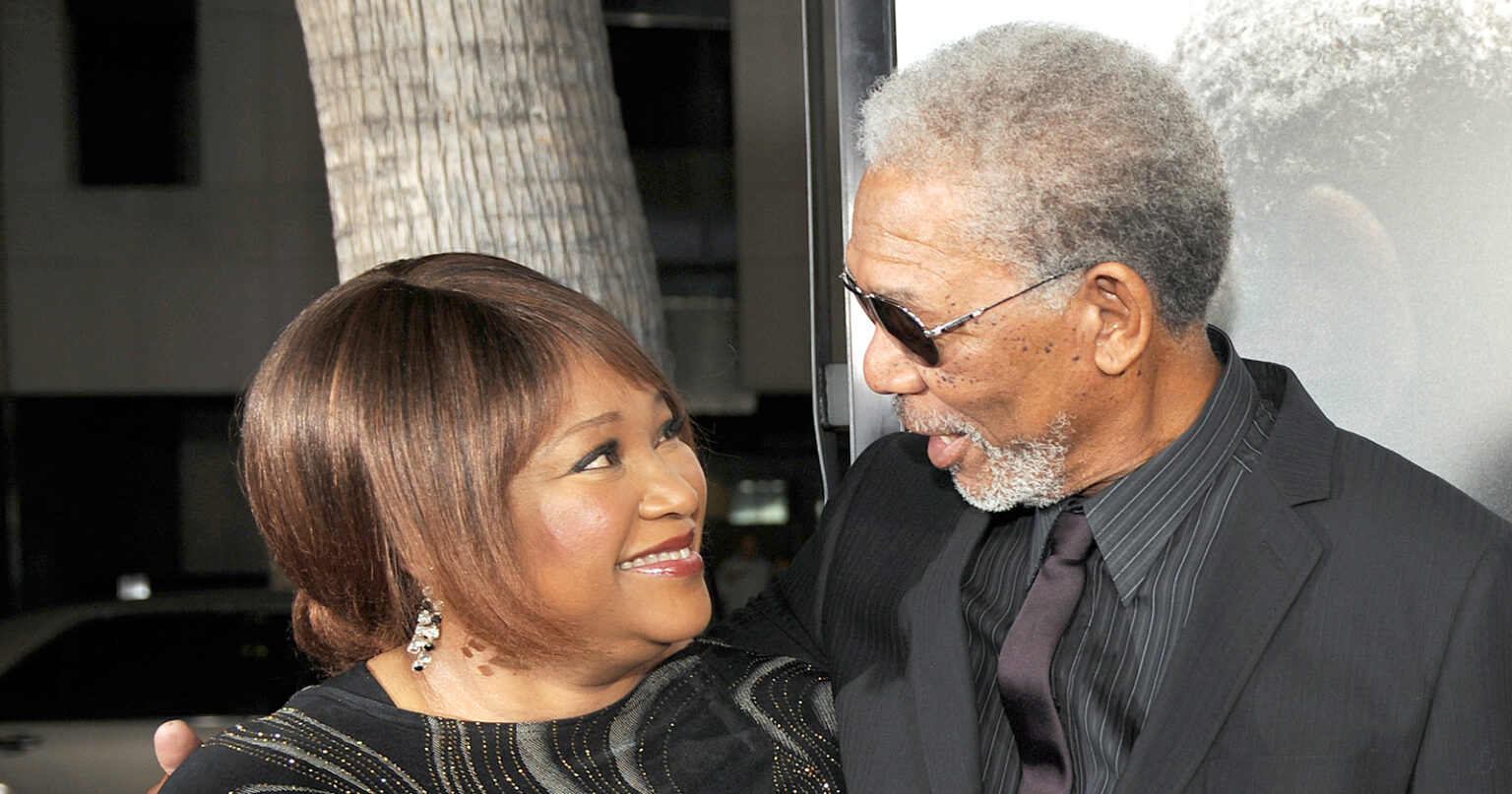
If Morgan Freeman, the Oscar-winning African-American actor, had his way there would be no Black History Month in the USA. “Ridiculous” is how Freeman, who has played Nelson Mandela, Malcolm X, and God in movies, describes it. Though his line of thinking is supported by many, there are many more who insist Black America still needs Black History Month, reports Leslie Goffe from New York.
Black History Month USA is a nationwide celebration recognised by the US government and observed by thousands of US schools and businesses, and by millions of African-Americans each February. Unlike its British counterpart, which is celebrated in October, Black History Month USA has been a fixture for 87 years – nearly a century.
But don’t tell the famous African-American Hollywood actor, Morgan Freeman. “Ridiculous” is how he describes the month-long celebration. “You are going to relegate my history to a month?”, Freeman protested when asked on US television a few years ago why he believed Black History Month (BHM) was ridiculous.
“Which month is White History Month?”, Freeman asked the reporter of European descent. Fuming, Freeman said, “I don’t want a Black History Month. Black history is American history.”
Well, he was both right and wrong. He was right when he said black history was an integral and inseparable part of American history. He was also right to say the history of Africans in America, from chattel slavery to the first black president, was infinitely too large, too extraordinarily complex, and just too damn rich, to be tackled in a single month; and the shortest month of the year, February, at that.
But Freeman – who is no Uncle Tom and has, in fact, long been a staunch defender of important black causes – was wrong to call for an end to Black History Month. However short or compressed the celebration might be, it is nonetheless an important month-long series of events that remind African-Americans of where they were yesterday, where they are today, and where they intend to be tomorrow.
Despite their increasing population, now said to be over 40 million, African-Americans are still considered a minority group in the larger American constellation, and they need events such as BHM to build solidarity among themselves and within the larger American society.
That is not to say Morgan Freeman does not have his supporters. There are many well-meaning African-Americans, and many not so well-meaning whites, who believe as Freeman does, that it is time to bring to a close the annual parade of important people and events in the history of black America.
Among those who want to call a halt is Trudy Bourgeois, an African-American entrepreneur. “Black History Month,” she says bluntly, “needs to go away.” It should have gone away a long time ago, she adds. “Are you shocked,” Bourgeois asks, “that I would say such a thing?”
And she is not alone. Clinton Yates, an African-American columnist at the Washington Post, confessed in a recent column that after years as an ardent adherent of Black History Month, he had begun to question its value.
“I wonder,” Yates wrote, “has Black History Month lost its purpose?” It had not, he concluded. But he is worried the celebration has “lost its way”. This view is supported by other people of African descent. Samuel Gebru, the director of an Ethiopian organisation in Massachusetts, says “Black History Month today is an anachronistic holiday that continues to isolate the history of African-Americans to one month – the shortest of the year.”
Big business takes over
The problems with Black History Month are many, its critics say. First, BHM should be celebrated every day, not just once a year. They say, and not without cause, that the month has been hijacked by big business, who use the event to target African-American consumers.
In February last year, Nike launched three BHM-themed sneakers, each pair costing around $150. This past BHM 2013, Nike debuted its special “Black History Month Product Collection”, which featured jackets, caps and sneakers with the initials “BHM” and “Be Bold, Be True” emblazoned on them.
Critics of BHM say the month-long celebration has not been bold or true in a long time. Their chief charge is that BHM is outdated. “Do African-Americans, in 2013, in a post-racial America, really need a remembrance of things past?” they ask. “What need do black people have of an event to puff up racial pride when there is a black man in the White House?”
But this is where they shoot themselves in the foot. They forget to add that this black man, Barack Obama, is in the White House only until 2016, when his term ends. And who knows how long it will be for another black man, or black woman, to get into the White House again, if there ever will be an again!
BHM’s job, therefore, is to accentuate the positive and eliminate the negative and latch on to the affirmative. And the most positive and affirmative of BHM tales usually require the mention of three black men: Daniel Hale Williams, Charles Drew, and Garret Morgan, who achieved enormous things against the odds.
For example, Dr Hale Williams, the son of a freed slave, performed the first successful open heart surgery operation in the USA, and Dr Charles Drew was the physician and surgeon who helped set up the first blood bank. Tragically, and most ironically, Dr Drew died after being injured in a car crash and being refused a blood transfusion by white doctors.
And let’s not forget Garret Morgan, whose father was a slave. Morgan invented the gas mask and the first traffic light. Black people have been buoyed by these sorts of BHM story for years.
The history
BHM started out as “Negro History Week” in 1926 and became “Black History Month” in 1976. Now it is increasingly known as “African-American History Month”. It did not come easily and so should not be surrendered easily. After all, the academic and activist, Carter G. Woodson, who came up with it – and who is referred to now as “the father of black history” – fought for years to win acknowledgment for his celebration of black pride.
After earning his doctorate at Harvard University in 1912, and becoming only the second black person to do so, Woodson moved to Washington DC, where, in 1915, he set up his Association for the Study of Negro Life and History. Unmarried and without children, he threw himself into his work.
In 1926, after much tweaking, Woodson launched his “Negro History Week”. The annual celebration would, he said, take place in the second week of February in order to coincide with the birthdays of “The Great Emancipator” Abraham Lincoln and the African-American abolitionist Frederick Douglass.
“The Negroes seized upon the idea as the thing upon which they had long been waiting,” a thrilled Woodson told a black newspaper in 1926. Of course, he was not the first to set out to educate the mis-educated. Other black historians and authors had tried before him, but their books mostly gathered dust on bookshelves, unread by the people they were intended for.
It took Woodson to make black history into a cause and not just a book project. He had been employed for a time as a professor at some black colleges, and he took the giant step down from the ivory tower to share his knowledge with everyday people.
Often struggling to pay his bills, Woodson was harsh in his criticism of the black professional class. They are, he said, “worthless in the development of their people.”
His “Negro History Week” was just what the African-American masses needed in 1926, a year in which the Ku Klux Klan was at its height and in which 23 black men were lynched. While some, like the African Blood Brotherhood, a militant, semi-secret organisation, called for an eye for an eye, Woodson, the revolutionary of the mind, told African-Americans to revolutionise their thinking.
“To handicap a student by teaching him that his black face is a curse and that his struggle to change his condition is hopeless” is, Woodson wrote in his groundbreaking 1933 book, The Mis-Education of the Negro, “the worst sort of lynching.”
He also wrote, tellingly, that “if you make a man feel that he is inferior, you do not have to compel him to accept an inferior status, for he will seek it himself.” If that man is made to believe that fate intended that he be an outcast then, Woodson said, “you do not have to order him to the back door. He will go without being told; and if there is no back door, his very nature will demand one.”
This is what made Carter G. Woodson, alongside Marcus Garvey and W.E.B. Du Bois, one of the towering black thinkers and activists of the early 20th century.
Now, having come up with the idea for “Negro History Week” himself, Woodson was determined to direct how African-Americans experienced it. He set themes he felt ought to be explored each year. In 1934, for example, his designated theme was: “Contribution of the Negro in Poetry, in Painting, in Sculpture and in Science.”
In 1937, the theme was: “American Negro History from the Time of Importation from Africa up to the Present Day.” In 1929, he had chosen “Possibility of Putting Negro History in the Curriculum” as the theme.
Woodson had no trouble convincing black churchmen to preach about black achievement in their sermons. Nor did he have trouble convincing the presidents of the 100 or so black colleges in the USA to put Negro history on their curriculum.
He failed miserably, however, in convincing the many schools and colleges in which whites were in the majority to open their doors and minds to black history. They shut their eyes to his teaching materials and closed their ears to his lectures.
The white man, they told the quiet black man of letters, was the measure of all things, and other races simply didn’t measure up. A white man, they told him, was the first man and Europe was the first continent.
Woodson countered this view in his writings and lectures. He told African-Americans that it was the African, not the European, who was the first man, and that Africa, not Europe, had been the first continent. Just as Eve had come from Adam’s rib, Woodson said, so the white man had come out of the black man, and had come, whether he liked it or not, out of Africa, too.
“If the white man wants to hold on to it,” Woodson once said, “let him do so; but the Negro, so far as he is able, should develop and carry out a programme of his own.”
This programme was Negro History Week, which got a boost in the 1940s and 1950s with the emergence of the Civil Rights Movement.
In the 1940s, Negro History Week found an ally in US President Harry Truman. He had won African-Americans over when the once racially-restricted jobs in the defence industry were offered to African-Americans. Truman won more praise when he pushed through landmark legislation de-segregating the US armed forces, and burnished his black credentials additionally, in 1946, when he became the first US president to give his support and sanction to Negro History Week.
Asked by the International Workers Order organisation what he thought about the annual celebration, Truman wrote in a January 1946 letter: “I am glad to hear that Negro History Week again will be celebrated. The achievements of the Negro have been remarkable. It is very essential that we have knowledge of the past of a people in order to understand their aims and aspirations for the future. I congratulate all those who seek to extend this knowledge. Their efforts are most praiseworthy.”
But though Truman seemed to be a supporter of Negro History Week, he was no fan of African-Americans. He often called blacks “niggers” and “coons” when with white friends and family in private, his associates revealed after his death.
“Harry is no more for nigger equality than any of us!”, the president’s sister, Mary Ann, told a white journalist around the same time in 1946 that Truman had been expressing his support for Negro History Week.
Other whites, too, seemed ready, in the 1940s, to relent – a little. The departments of education in two southern states, North Carolina and West Virginia, agreed to ask their schoolteachers to cooperate in the highlighting of black achievement during Negro History Week each February.
In the 1960s, with Black Power on the rise and the Civil Rights Movement (led by Martin Luther King) non-violently changing the face of America, Negro History Week got an even bigger boost.
Martin Luther King’s endorsement
In 1964, Martin Luther King mentioned Negro History Week prominently in the introduction to his book, Why We Can’t Wait. “Not all of history is recorded in the books supplied to schoolchildren in Harlem or Birmingham,” King wrote, pointing out that the textbooks that black children were required to read were routinely “censored by the white writers and purchasers of board of education books”.
King credited the organisers of Negro History Week with helping black youngsters discover that black men, like Crispus Attucks, who was the first martyr of the American Revolution, and Benjamin Banneker, who helped design the US Congress Capitol building in Washington DC yet got no credit for it, had done much for America.
King also credited Negro History Week with letting African-Americans know “how, for 200 years, without wages, black people, brought to this land in slave ships and in chains … helped … lift this nation from colonial obscurity to commanding influence in domestic commerce and world trade.”
If Negro History Week was good enough for Martin Luther King, Black History Month should be good enough for Morgan Freeman. After all, after Dr King’s endorsement, Negro History Week went from strength to strength, and in 1976, Woodson’s celebration of black achievement was granted federal recognition by the US Congress!
That year, the name was changed from Negro History Week to Black History Month. “We can seize the opportunity to honour the too-often neglected accomplishments of black Americans in every area of endeavour throughout our history,” Woodson said.
Since 1976, each American president has issued a Black History Month proclamation. And, interestingly, in honour of all the work that Dr Carter G. Woodson did to promote the study of African-American history, an ornament of him is placed on the White House Christmas tree every year.
By the time of his death in 1950, at the age of 74, city and state officials all across the United States had begun, each February, to issue proclamations announcing the arrival of Negro History Week.
So, can Black History Month be improved? Of course it can! Should it honour a more diverse group of African-Americans rather than celebrate the same old standbys every year? Of course it should!
African-Americans have not come as far as they think they have. They still have a very long way to go, and therefore they need the boost of pride that Black History Month provides every February, allowing them to endure the other 11 months of being black in America.