Journalist and social activist Grace Phiri recalls how Winnie Madikizela-Mandela not only literally saved her life but gave her a whole new direction, of service to others.
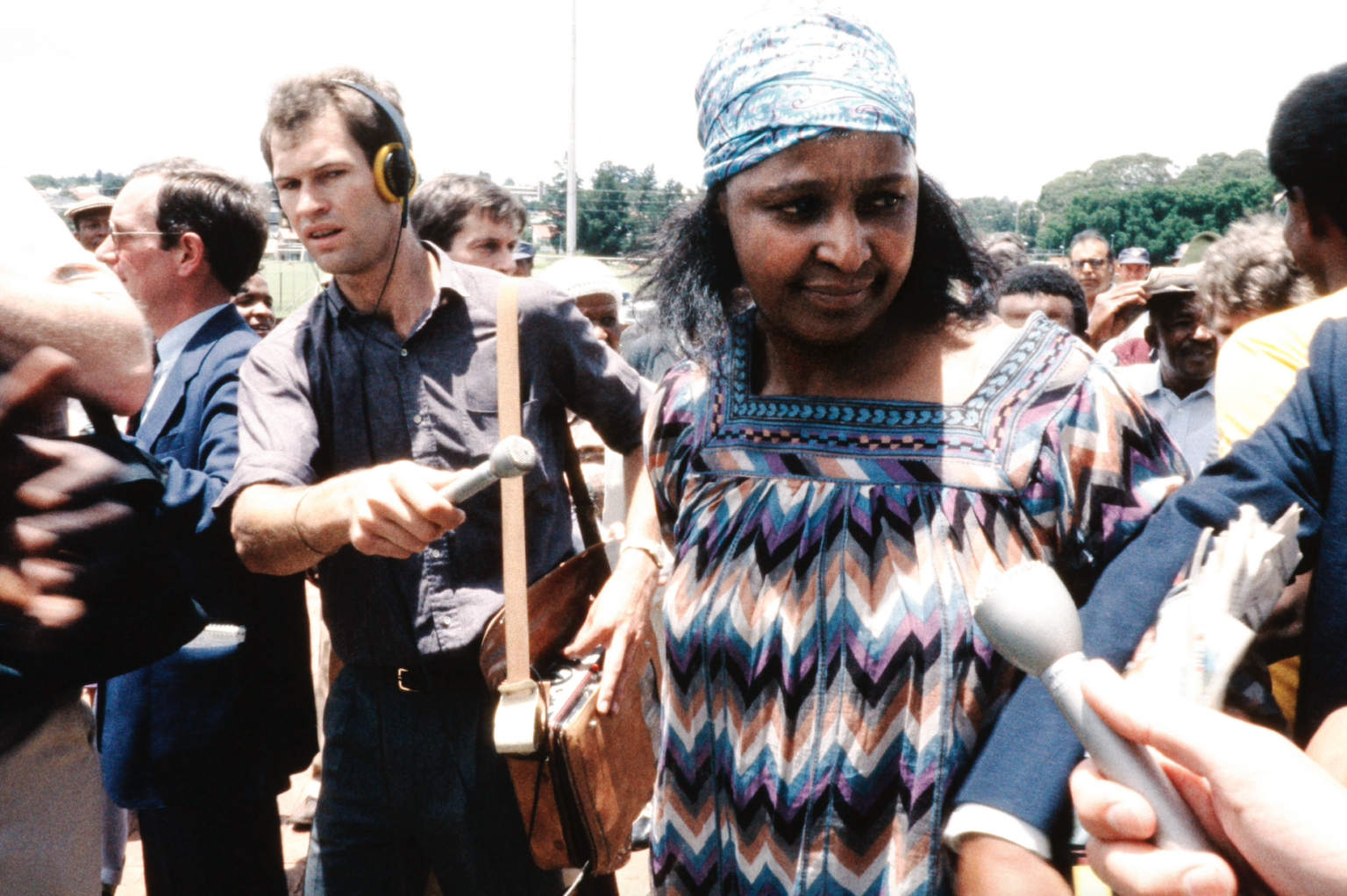
I got to know Mama Nomzamo Winifred Zanyiwe Madikizela-Mandela long before I met her. While I was a student journalist in Zambia, her name came up often among my comrades at our campus. So for me, it was thrilling when as Women’s Editor of The Sowetan newspaper I had the opportunity to interview her.
Winnie Mandela, as she was popularly known worldwide, was a woman of one thousand characters rolled into one. She was extremely powerful, beautiful, kind, knowledgeable, and well-connected world-wide; but sometimes she could be mean and also reserved. No one could have said that they knew her very well. Nevertheless, she exuded love for everybody, especially the downtrodden, vulnerable youth and women.
Before I met Winnie, I had interviewed Mama Albertina Sisulu, wife of the legendary Walter Sisulu, who as a thorn in the side of the apartheid regime had been jailed on Robben Island for more than 25 years. I had fallen in love with Mama Sisulu for her incredible charity work. It was Mama Sisulu who provided me with Winnie’s direct telephone number.
A few years later, I was literally dying as I lay helpless in a hospice. I wanted to talk to someone powerful, and Winnie Madikizela-Mandela was the obvious choice.
One telephone call by my doctor, and she was there – sitting beside my death-bed and speaking to me like a mother should. It was her visit that changed everything. I recovered and I now wanted to leave a legacy. With her help, I appeared on the Dr. Felicia Mabuza-Suttle show. This was a novel TV talk show, similar in some ways to the Oprah Winfrey Show and hugely popular and influential. Felicia picked it up from there and helped make my wish come true.
Soon I was meeting then President Thabo Mbeki’s team. Having accomplished my wish, Mama Winnie asked me a question I could not avoid: “What now?” I abandoned my then flourishing journalism career to work for charity, which included volunteering to be used as a guinea-pig for trials of the therapy consisting of antiretroviral drugs to suppress and prevent the spread of the HIV virus. Aids had taken hundreds of thousands of lives in Africa.
No one knew what the effect of the drugs would be but instead of dying, I became the first ‘guinea-pig’ to survive the process. I was now tagged the Legendary Pilot Researcher (see SABC 1 – Amazing Grace: 2008). I am now an expert in all the 29 related HIV and AIDS diseases.
A woman of virtue
Just before all this, Mama Winnie and a friend of mine, Professor Cosbie Mbele introduced me to Rev. Karen Daughtry, who helped many South Africans living in the US, and formed the organisation SASSA. Daughtry was ready to work with me if I didn’t choose to work with scientific medical researchers. I met Mama Karen again during Mama Winnie’s funeral celebrations in White City, Soweto.
There are things that the world does not know about Madikizela-Mandela. She and her sister in marriage, Graça Machel were very close to the extent that Graça often sought advice from ‘Ma mkhulu’ (big sister), and in return, Graça helped a lot financially, although it was never known.
Madikizela-Mandela was a woman of substance, a woman of virtue; therefore, she suffered silently. Even when they accused her of killing Stompie and many other issues, she just accepted her fate without complaint. But no matter what the world threw at her, and at times it did so with unspeakable cruelty and vileness, she was never broken. NA
Winnie Madikizela-Mandela’s words of fire
“They think that because they have put my husband on an island he will be forgotten. They are wrong. The harder they try to silence him, the louder I will become!” – 1962
“I am the product of the masses of my country and the product of my enemy.” – 1966
“To those who oppose us, we say, ‘Strike the woman, and you strike the rock’.” – 1966
“If you are to free yourselves you must break the chains of oppression yourselves. Only then can we express our dignity, only when we have liberated ourselves can we co-operate with other groups. Any acceptance of humiliation, indignity or insult is acceptance of inferiority.” – 1976
“There is no longer anything I can fear. There is nothing the government has not done to me. There isn’t any pain I haven’t known.” – 1987
“All what we fought for is not what is going on right now. It is a tragedy that he (Nelson) lived and saw what was happening; we cannot pretend South Africa is not in crisis, our country is in crisis and anyone who cannot see that is just bluffing themselves.” – 2017