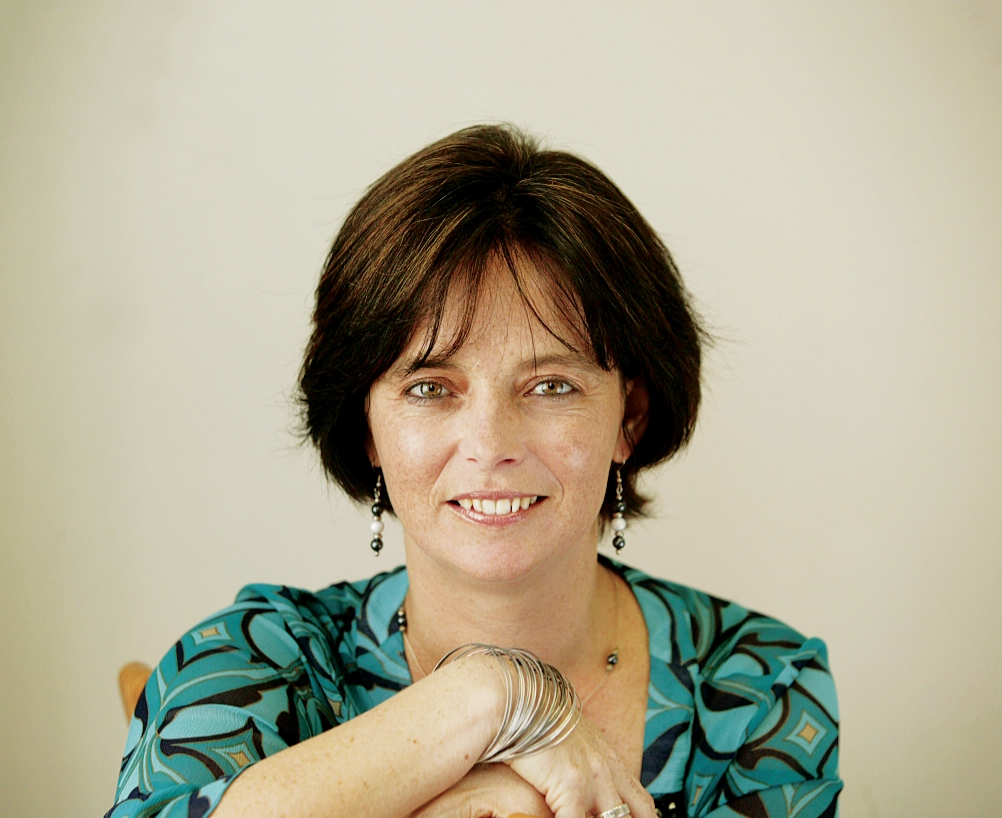
In the 20 years of black majority rule in South Africa, the exploits of black anti-apartheid fighters have justifiably been celebrated, but not so much the feats of white people who sacrificed all to help the blacks defeat the system. One such white person is Melanie Verwoerd . Her story, as told in her autobiography published in 2013, The Verwoerd Who Toyi-Toyied, is a gripping tale of audacity and heroism that deserves to be fêted. Osei Boateng reports.
For readers who are not sure of what the name Verwoerd is all about, it is part of the name of the South African prime minister Hendrik Verwoerd, who led the National Party government to officially institute the heinous apartheid system in the country, thus earning him the moniker “the father of apartheid”. Toyi-toyi, on the other hand, is the black South African dance which became synonymous with the anti-apartheid struggle. Dancing the toyi-toyi was therefore a taboo for the Verwoerd family. But not for Melanie, the wife of Verwoerd’s grandson, Wilhelm. She had a mind of her own.
Her activist streak (some would call it rebellion against injustice), started very early in her life. No wonder she rose to become an ANC member of parliament when she was just 27 years old, and later ambassador to Ireland when she was 34. She is a special woman.
She explains why her life took the route it did: “Since my earliest memories,” she writes in the book, “my head and my heart seem to have been in a tension-filled dialogue. My intellect, filled with the writings of Shakespeare, the history of colonial powers, and arts, music, and religion from worlds far away, is most comfortable in the thinking patterns of Europe. Of course, my white skin and the language I speak, make that even more evident. But something deep inside me has always rebelled against this European identity.
“Since I was very young, I have known that there is something else, something much deeper. Something that was formed by the red soil of Africa, the thunderstorms, the air, the harshness of the landscape, and the vast diversity of the continent’s people. With time, I have come to understand and accept that I stand with my feet in two worlds: in the Europe of my head and in the Africa of my heart.”
Born on 18 April 1967 in Pretoria, not many months after the assassination of Prime Minister Hendrik Verwoerd in parliament, Melanie remembers her family as being poor. Her grandparents, like most Afrikaners at the time, were extremely poor. Their house was basic, without running water or electricity.
“I was already at school [in the late 1970s] when they finally got running water and no longer had to collect it from the river every day. Even better, they had a water-borne sewage system installed, which meant that the long walk to the pit toilet and night pots under the beds were at last things of the past. It took many more years (until the late 1980s) before they got electricity.”
What makes Melanie special is that her roots should not have made her the progressive woman she became. “Like father, like son” is a natural order of things, but not in Melanie’s case. Her grandparents were racists, and Melanie remembers that they had a “complex relationship” with their farm workers.
“It was a racism born out of a sense of superiority on the one hand, and fear on the other. Yet at the same time, there was a close and almost loving relationship born out of Christian values shared with their workers,” Melanie writes.
“As it was a small farm, they only had one domestic worker, called Johanna. She and my grandmother would work side by side, talking like friends for hours. Yet at night, Johanna would go home to a little shack on the farm. I was upset and had an argument with my grandparents, telling them how I would change everything one day when I inherited the farm. They laughed at me, which drove me to angry tears, made worse by my being forbidden to go near Johanna’s house again.
“Yet ironically, it was my grandparents who laid the foundation that would lead me to enter liberation politics later on. Through my relationship with them, I learnt early on that education, wealth, and status told you little about a person.” However, years later, when she entered active politics and became a member of the ANC, her grandparents were disgusted with her political beliefs. As a girl growing up in Stellenbosch, the bastion of Afrikanerdom and by extension apartheid, Melanie was insulated from the other South Africa outside the white areas. Going into the “Coloured areas” was like a different world to her, even though, as she would discover years later, conditions in the Coloured areas were generally better than in the “African townships”. Her mother, Helena, also called Lenie, was always upset with the conditions in the Coloured and African townships and would talk endlessly about how wrong this was. It made a deep impression on Melanie.
The capital of Afrikanerdom
But Stellenbosch would not change. Class-conscious, snobbish and largely Afrikaans, the university town in the rolling mountains of the Western Cape, near Cape Town, was politically and ideologically strongly nationalist. With the help of the university, Stellenbosch would provide an intellectual justification for apartheid, and thus became the bastion of Afrikaner nationalism. To this day, at official events, Afrikaner speakers insist speaking Afrikaans first, before translation into English.
This is the environment that shaped the young Melanie, who, as a young girl focused on academia, ballet and Christianity.
Being in an all-white school, ballet group and neighbourhood isolated her and her sisters to a great extent from what was going on in the rest of the country. “The only impact we felt from the unrest elsewhere was the regular drills at school in case of a terrorist attack, which we all knew really meant a ‘black person’. Though instability grew and riots became more frequent in the 1980s, we were rarely aware of them, since the media was tightly controlled,” she recalls.
Through Christian activity at college, she met Wilhelm Verwoerd, a well-known theology student and grandson of the now murdered Prime Minister Hendrik Verwoerd, and they married on 29 December 1987.
A year before their marriage, Wilhelm had left to study at Britain’s premier university at Oxford. Melanie went to visit him at the end of 1986 and her life would change forever. While in England, she and Wilhelm met a young South African exile, Tshepiso Mashinini, whose brother, Tsietsi, had been one of the leaders in the 1976 Soweto uprisings.
A brilliant man, Tshepiso challenged Melanie and Wilhelm’s political views and told them about the other side of life in South Africa which they did not know. Tshepiso introduced them also to other South African exiles who also confirmed the things Tshepiso had told them.
“For hours they talked about their living conditions in South Africa, the struggle to get an education, and the police harassment they endured,” Melanie recounts. “Some even showed us the scars they carried from being tortured by the security police. They were our age and had grown up in the same country as us, yet our lives were worlds apart.
“Meeting Tshepiso had an enormous impact on me. I returned to South Africa a month later with my whole perception of reality changed. I looked at everything and everyone around me with new eyes – and with growing suspicion. I felt as if everyone in authority – the church, teachers, lecturers, and even my parents – had lied to me for years. I watched the TV news with disdain, thinking how none of it was the truth.”
Wilhelm, now ensconced in the challenging academic world of Oxford, helped Melanie’s re-education by sending her books and articles that were banned under the draconian censorship laws in South Africa. In order not to be caught, he would include photocopies of, for example, Donald Woods’ book, Biko, about the life of Steve Biko, or Mandela’s speech from the dock, between copies of philosophy articles. These books gradually opened Melanie’s mind and broke down the intellectual walls her apartheid education had put up.
Marriage
Melanie recalls how two days before their wedding on 29 December 1987, a crisis erupted. They had asked one of their philosophy professors who was also a theologian to lead the service, but since he was no longer a practising minister, he could not conduct the legal part of the ceremony. So they asked a friend, Sydney Davis, a minister in the nearby Coloured area, to officiate.
“When Wilhelm’s father found out that a ‘coloured man’ was to be part of a Verwoerd wedding, he exploded! He said that he would not attend, and would not allow Wilhelm’s mother to attend either. I was livid!” Melanie recounts. “I felt that, out of principle, we should not cave in. Yet, for his mother’s sake, Wilhelm convinced me otherwise.
“After the wedding, we moved into a flat the local council provided for low-income white families – for which we qualified, being students with almost no income. I had graduated a few days before the wedding … I was now deeply disillusioned with the church on political and gender grounds. I had lost all respect for its leaders and was seriously questioning my faith.”
In the middle of 1988, Wilhelm was invited to join a group on a clandestine trip to meet the ANC in Lusaka, capital of Zambia. Similar trips had previously resulted in the participants’ passports being withdrawn and them being held up to public ridicule, so the trip was to happen quickly.
On his return, Melanie recalls, Wilhelm – because of what he heard in Lusaka – became increasingly withdrawn, and he had arguments with his father and the extended family, challenging their apartheid views.
Even though she and Wilhelm’s political activities were very limited at this stage, Melanie says it became apparent that the apartheid government was aware of them. “In 1987,” she recollects, “Wilhelm and I dropped his grandmother, Betsie, at the airport in Cape Town. As the wife of a previous prime minister, she was entitled to use the VIP lounge for life.
“While we were waiting for her flight to depart, the door of the lounge opened and FW de Klerk, who was at the time the minister of national education and planning, walked in with a few staff members. He spotted Betsie and came over to greet her. She in turn introduced us to De Klerk. His eyes narrowed slightly when he heard our names.
“Yeees,” he said with a sigh, looking at us knowingly. “We know about these two.” Then he leaned forward and said in a threatening tone: “Be careful, you two, very careful!” He turned and left to board his plane before we could ask any questions.
Joining the ANC
But De Klerk’s warning did not deter Melanie from joining the ANC in Stellenbosch. She heard that there was an ANC branch in the “white” part of town. She wanted to do more and become more involved, so she cautiously made contact. The “branch” in the white area was made up of not more than 8 to 10 members. Melanie says she first wanted to see if she would fit in, and quickly became close to the driving forces in the branch.
But her decision to join the ANC finally was influenced by, as she calls them “two extraordinary Africans”: Nomajoni (Emily) Makwena, a domestic worker who became a friend and political mentor, and Nelson Mandela, whom she met at a private gathering in Stellenbosch in 1992.
Today, 20 years after the defeat of political apartheid, people forget when criticising the ANC for not doing much, what living conditions were for most black and coloured people before the ANC came to power.
Melanie remembers how Emily would take her to the black townships to meet her friends. She could not believe the conditions in which they were living and working. “They had no formal hours and had to be on call 24 hours a day,” Melanie writes. “Their average salary was less than R200 per month, and if anything broke, it was deducted from their pay. They rarely had leave (and often had to go with the family on holiday, to cook, clean and mind the children) and were not allowed to have partners or husbands stay over.”
Worse still, “their rooms had no hot water, sometimes no electricity, and just a toilet (with no basin or shower). Often there was only a mattress on the floor. The most distressing thing was that, if they became pregnant, they had to send their baby away to their family in the rural areas – they rarely saw them afterwards – while they were raising the white family’s children. I was appalled. It was the early 1990s, not the 1700s!”
Melanie was by now working at the library of the University of Stellenbosch. “What I found most baffling and infuriating,” she says, “was that I knew many [of the white] employers personally. They were mostly well-off, educated, middle-class women, well-known in Stellenbosch, who pretended to be defenders of human rights. These experiences caused more and more arguments between me and these women at social functions. The problem was that domestic workers, like farm workers, enjoyed little, if any, protection under the law. Something had to be done.”
Melanie and Emily decided to set up an organisation to defend the rights of domestic workers in Stellenbosch. They would negotiate a contract with the employers and monitor their conditions. “I started receiving calls from white women, but found the negotiations a sobering experience,” Melanie recalls. “I insisted on contracts, and that we would inspect the living conditions first. We also demanded decent wages, as recommended by the domestic workers’ union.
“We had a few successes, but for the most part our venture did not go down well, and word quickly spread that I was involved in Communist activities with ‘the blacks’. I was conscious that I was increasingly being pulled away from ‘my community’ and, like quicksand, sucked into the arms of another.
But it was only after a meeting with one of the most exceptional men ever to live that my life took a radical new turn.”
That meeting was with Mandela when he came to Stellenbosch in 1992 to address a private meeting with some progressive Afrikaners. The meeting caused a stir in the university town. Melanie and Wilhelm were introduced to Mandela at the meeting, and as Melanie recalls, “the moment Mandela heard the surname [Verwoerd], his eyes lit up. ‘Ah, I am so honoured to meet you,’ he said in a sincere, warm voice. My heart was racing. I had no doubt that we were in the presence of greatness.
“[But] how could he be honoured to meet us – especially with the surname? After all, it was Wilhelm’s grandfather, the architect of apartheid, the symbol of oppression, who had banned the ANC, and it was during his time as prime minister that Mandela was incarcerated.
“Wilhelm started to talk politics, and then tried to apologise for his family’s role in Mandela’s personal suffering. But Mandela stopped him. ‘No,’ he said, ‘you only need to remember that with the surname you both carry, you have a voice. People will listen to you. So you have to think carefully what to do with that power’.
“By now I was shaking,” Melanie confesses. “What an extraordinary man: no bitterness, no anger. That night I could not sleep; over and over I heard Mandela’s words: ‘You have a voice. People will listen. Think carefully what you do with that power’.”
Wilhelm’s father angry
The next day, the Afrikaans newspaper, Die Burger, ran a story on the “Verwoerd-Mandela meeting”. Before long, Wilhelm and Melanie were summoned by Wilhelm’s father, the eldest son and patriarch of the family who became the keeper of the Verwoerd legacy. When they arrived, Wilhelm was taken into his father’s study alone.
After a long time, he finally emerged. Melanie recalls: “I could see that he was tired and shaken, but also angry. His father had lectured him on his naivety, the danger of people such as Mandela, the need for separation of the races, and of course the need for loyalty to the family.”
But worse was to come. Melanie had been voted to the executive of the ANC branch in the township of Kayamandi, and because of her surname and command of the Afrikaans language, she was often asked to go and do battle with the local council on behalf of Kayamandi residents, to sort out various concerns such as the lack of water, sanitation and housing. Though she achieved some successes, she says “I sometimes felt [that] the anger at this white ‘traitor’ made the white officials even less cooperative.”
Up to this point, no one in the white community, apart from the ANC members, knew about her involvement in the ANC, as she and Wilhelm went to great lengths to hide it from Wilhelm’s parents. But one day the political journal, Die Sud-Afrikaan, published a short paragraph on its back page, saying a rumour had been making the rounds that there was a Verwoerd on the Stellenbosch ANC executive.
Later, the Sunday Times followed up the story, phoning Melanie for an interview. “This would be my baptism of fire with the media, and set in motion a series of events that would change my life,” Melanie recollects.
Somehow, Wilhelm’s parents thought it was only Melanie who had joined the ANC, so they only expressed their disapproval. But when the Sunday Times article appeared two days later, Wilhelm’s father, now furious, summoned them again. “He raged for what seemed like hours. Although he largely ignored me, it was clear that he felt I had misled Wilhelm. He called us traitors to the Afrikaner nation and a shame on the family name. Wilhelm tried to reason with him, but he would not listen.”
But with all the media coverage that focused more on Wilhelm than on Melanie, Wilhelm’s father decided to denounce them publicly, in a letter to the big Afrikaans newspaper, Die Burger, which was quickly picked up by the other Afrikaans publications in South Africa. And then letters and phone calls threatening to kill them started arriving at their house.
Spat on by white people
By now, Melanie was not welcome in Stellenbosch. None of their white friends would talk to them, and she was asked not to attend the mother-and-toddler groups. In town, people would hiss “traitor” at her, and she was frequently spat on.
They then received information from a professor at the University of Stellenbosch to warn them that they were on the hit list of a far-right organisation.During the 1994 election campaign, they agreed to security at public events, when the ANC felt that there was a specific threat.
Later both Wilhelm and Melanie would be invited by the ANC to speak at public forums, and when the 1994 elections finally came, the couple were asked to run as MPs. Melanie agreed but Wilhelm declined. In the end, Melanie was elected to represent a constituency in Stellenbosch. She was 27 years old.
Melanie loved the new challenges the job of an MP brought, but later it became difficult to balance her home responsibilities and work. It looked like no one had actually considered the toll parliamentary life took on women’s personal lives.
To Melanie, the most challenging part of serving her constituency was the work with farm workers. Stellenbosch has many hundreds of wine farms scattered around its environs. From the roads, it was easy to see the picturesque Cape Dutch-style farmhouses, surrounded by their lush vineyards, but it was impossible to spot the homes of the thousands of mainly coloured farm workers.
She says: “Behind the high dam walls or trees, there were literally thousands of labourers leading a meagre existence in grim shacks and hovels, secluded from the outside world. These labourers were the invisible machine that pumped out the gallons of wine destined for the tables of the privileged people of South Africa and Europe.
“By now there had been a lot of fuss in the newspapers about Wilhelm and me, the ‘traitor Verwoerds’, so most farmers knew who we were and many resented us. When I walked through town, these same farmers would spit at me.”
Helping farm workers
Melanie had to do something as an MP to improve the lot of farm workers. It was a priority. She “immediately discovered a secret world of abuse, exploitation, and squalor that was horrifying even by the standards of apartheid-era South Africa,” she writes.
“Traditionally, farm labourers would remain on the same farms for generations, working and raising their families, but despite this they had no legal land-tenure rights. Some farmers treated them as possessions, no more or less entitled than their sheep or cows, and would kick them off the land at any time they felt like it.”
As the ANC was determined to change this state of affairs, Mandela’s government passed a law to improve the rights of farm workers. Melanie now had the job of enforcing the law in Stellenbosch and its environs. But she met equally determined white farmers who remained defiantly loath to grant her access to their land and workers.
She devised a method to break the will of the farmers. “It was generally easier to talk to farm labourers at the places of work at night or weekends.” Melanie recalls. “I might now be a South African MP, but even so, Saturdays and Sundays regularly found me donning shabby clothes and a headscarf and blacking up my face with boot polish to fool any belligerent farmer who might spot me.”
She tells the story of one farmer who used to close all the gates and access roads to his farm every evening and at the weekend to prevent any visits from “terrorists”, as he called the ANC members.
“The previous week, a young female worker had suffered a ruptured appendix and the farmer had refused to unlock the gate for the ambulance that came to attend to her. The woman had died.” In the end, Melanie says, “It was a source of great personal satisfaction to me when that particular farmer was finally brought to justice: a brave journalist from the Argus accompanied me on a return night visit and exposed the whole story…
“Slowly but surely, farm workers became more aware of their rights and grew in confidence. My constituency office close to the Du Toit station [in Stellenbosch] increasingly saw rows of workers waiting patiently outside to see me. We started taking farmers to court and winning, and I became a real thorn in the farmers’ side.”
The in-laws in Orania
While doing all this, Melanie did not lose sight of the fact that her in-laws (Wilhelm’s relatives) were the driving force of the white-only enclave, Orania, in the Northern Cape Province. Together with a group of Afrikaners, they lived in and ran this settlement, which they bought as a dilapidated and abandoned town that had been a construction camp for a mega-dam. Their aim was to create an independent geographical area where Afrikaans and Afrikaner identity would be protected.
Melanie says: “Even though they claimed this was not based on race or racist stereotypes, and that anyone who defined themselves as Afrikaner and identified with Afrikaner ethnicity was welcome, it did of course attract only those white Afrikaners who were not comfortable living under a black government.
“Over the years they had also bought more than 7,000 hectares of adjacent agricultural land, to seek to become more self-sufficient … Large sections of Wilhelm’s extended family lived, and continue to live, there. At that stage, it included his grandmother, the wife of the former prime minister … I have complex feelings about Orania. Of course I do not agree with the principles it is founded upon. I find the argument that it is not racist or racially motivated disingenuous, and I think it is damaging to the image of Afrikaners both domestically and internationally.”
Even Mandela once visited Orania to have tea with Wilhelm’s grandmother, Betsie, the widow of Hendrik Verwoerd, who could not attend an event in Pretoria that Mandela had held for all the wives of former prime ministers and presidents. Betsie died on 2 March 2000 at the age of 98. Madiba sent his condolences and despatched the premier of the Northern Cape Province and two other ANC representatives to the funeral in Orania.
Mandela’s special touch with the people, Melanie says, led to a hilarious remark from an older ANC female MP who, on seeing the president in parliament to address the ANC caucus one Thursday, said: “Aah, I don’t understand why he went off with that Mozambican woman. I would have taken such good care of him. I would have had his supper ready and rubbed his feet.”
As the months went by, Melanie’s work as an MP brought her closer to Mandela, and one day after she had spoken in parliament on the occasion of the second centenary of the Boer War with the British, Mandela stood up to hug her. “Thank you,” he said softly. “You healed many hearts today.”
Bad trip to USA
Melanie remembers one particular bad point in her parliamentary life. She went on an official “foreign study visit” to the USA to study local government, federal government structures and the congressional system. She was the only white person on the trip.
“The organisers could not understand what I was doing there,” Melanie recollects. “Time and again, it was assumed that I was a secretary, or I was just ignored. Things became so bad that my ANC colleagues insisted they would cancel the rest of the trip if the situation did not improve.
“I learnt a few important lessons during this trip. Firstly, I felt first-hand what it is like to be excluded on the grounds of race. Secondly, I realised that in South Africa we were far ahead of the US when it came to the principle of non-racialism. We were living and practising inclusivity, whereas the debate in the States was clearly still an us-and them proposition. I returned to South Africa disillusioned and emotionally bruised.”
It came as no wonder that after Mandela retired as president and Thabo Mbeki took over, Melanie was not happy in parliament any more, and asked President Mbeki to consider her as ambassador to Ireland. Mbeki agreed. Melanie and the other newly appointed envoys, including Miriam Makeba, went through a month-long training course.
In March 2001, at the age of 34, Melanie and her husband Wilhelm, and their two little daughters boarded a plane in Cape Town to start the next phase of their lives – in Ireland. But little did she know that her marriage to Wilhelm would collapse while in Ireland, even though she served for just one ambassadorial term of 5 years.
The Verwoerd Who Toyi-Toyied by Melanie Verwoerd was published in 2013 by Tafelberg, an imprint of NB Publishers, Cape Town.