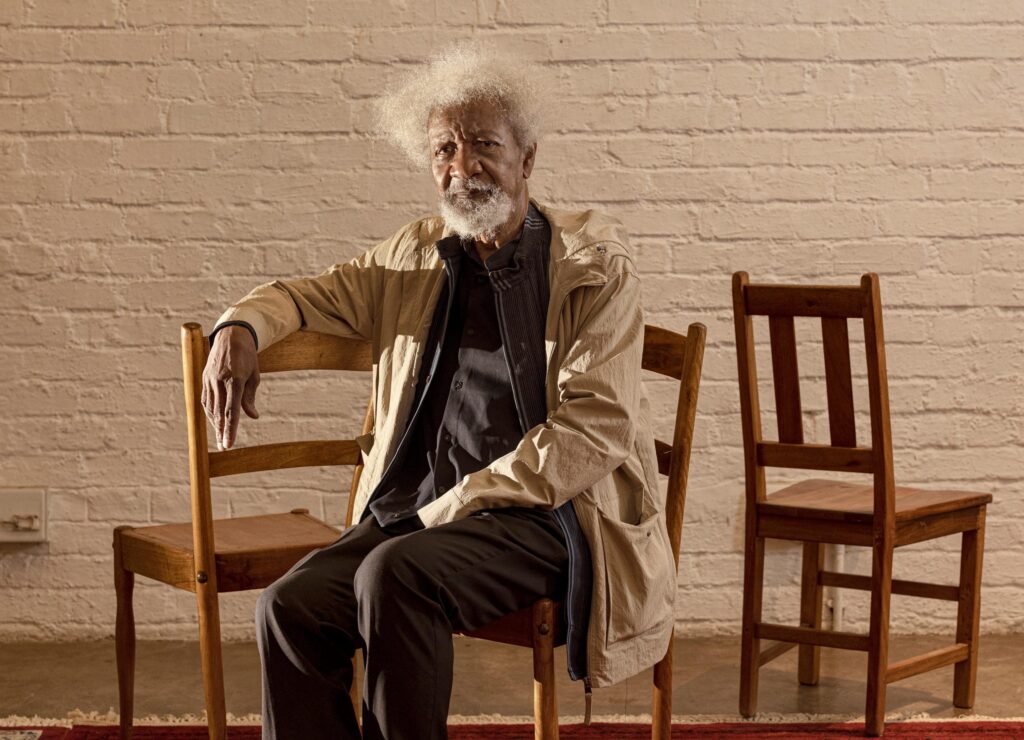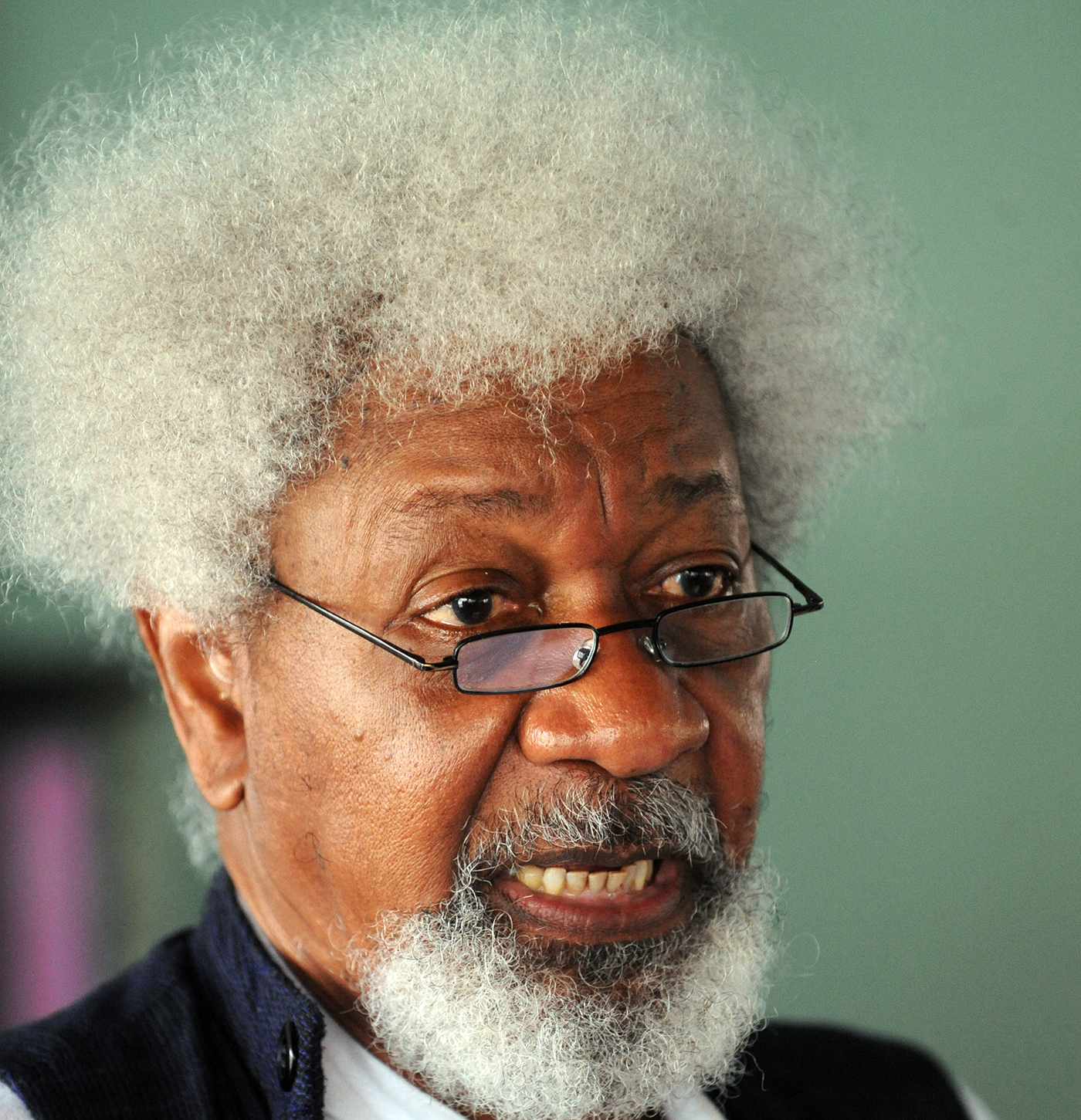
In Crucible of the Ages: Essays in Honour of Wole Soyinka at 80, Ivor Agyeman-Duah and Ogochwuku Promise have co-edited an anthology that contains highly stimulating essays by some of Africa’s stellar writers in honour of the 80th birthday of Professor Wole Soyinka, the first writer of black African descent to receive the Nobel Prize in Literature. This is reviewed for New African by Drs A.B. Assensoh and Yvette M. Alex-Assensoh.*
Many factors distinguish this 350-page collection from similar publications honouring literary giants and others, not least the weighty contributors, coupled to the fact that two prestigious publishers are producing this book. Nigeria’s Bookcraft publishes the collection under Crucible of the Ages: Essays in Honour of Wole Soyinka at 80, complimenting it with over forty mostly exclusive photos of Soyinka’s activities and encounters with global leaders in the last half-century, and the UK-based Ayebia Clarke Publishing Ltd is publishing its own version. In addition to the co-editors, award-winning writers have not only mastered Soyinka’s work but work with him in other capacities.
Divided into six sections and 30 chapters, it offers an excellent foreword by former Commonwealth Secretary-General, Chief Emeka Anyaoku, as well as useful introductory and biographical sections by the co-editors Ivor Agyeman-Duah and Ogochukwu Promise.
Section one of the book, “Salutory Musings for the Master’s Taste”, commences with an essay by Kenyan-born Professor Ngugi wa Thiong’o, “The Conscience of Africa”. His contention that Soyinka’s actions, over the years, have made him the conscience of Africa will be taken seriously by readers as it comes from an academic and fellow highly regarded novelist and playwright, who was invited in 2004 to help launch the Wole Soyinka Chair in Drama at Leeds University in the UK.
Nobel Laureate Nadine Gordimer’s “For Art and Life” addresses the essence of her friendship with Soyinka and their common distaste against one man’s domination over another, whether in the form of apartheid or post-colonial military dictatorships in Africa. Chapter Three, “Hallo Sefi”, was contributed by Sefi Atta, the Nigerian novelist living in the US whose Everything Good Will Come received the first Wole Soyinka Prize in Literature for Africa from The Lumina Foundation (which administers the bi-annual prize of $20,000) and who went on to win the PEN and NOMA awards.
Chapter Four is “Fragments from a Chest of Memories”, written by Margaret Busby, contributor to the early literary careers of several African writers through her long-standing experience at the publishing company Allison and Busby. Her essay details some of the diplomatic happenings that involved Professor Soyinka, including how he was persuaded to accept the New Statesman’s prestigious Jock Campbell Award.
With “A Man of Sheer Narrative Power”, in Chapter Six, Nobel Laureate Toni Morrison of Princeton University expresses her concerns about the tribulations and woes of fellow human beings. Born and raised in circumstances similar to those described by Soyinka in Ake and Isara, Morrison is also the first African-American woman to become a Nobel Laureate in Literature and tells us that Soyinka makes the world intelligible.
Section Two has a broad-frame title, “The Canvas is Universal: Philosophy, Literature and the Politics of Redemption”, and offers much in three chapters in which Soyinka’s topical play, Death and the King’s Horseman is thoroughly discussed by Ama Ata Aidoo, Henry Louis Gates, Jr. and Ato Quayson. They expertly dissect several aspects of the play, including the usefulness of proverbs. Audiences for the play capture what these reviewers have individually hinted at: colonialism. However, Soyinka, in an author’s note to Death and the King’s Horseman, has explained that allusion to colonial factors was a mere catalytic incident.
Section Three, “Harvest of Past Seasons: Memoirs, Conversations and Palavers”, contains eight chapters featuring conversations on Soyinka with Kwame Anthony Appiah, Ali Mazrui and Yemi Ogunbiyi, among other well-known writers. In sum, as Agyeman-Duah writes in his Introduction to this collection, the essays are derived from “direct conversations with Soyinka, and about him”. Readers will stumble on new insights from the chapters. In one, “A Master of His Trade”, for instance, the views of Princeton University philosophy professor Appiah – who recently moved to New York University – cover varied subjects, including slavery, Afro-centricism, jazz, and Soyinka’s generation of writers.
Another public subject discussed centres on the famous disagreement between Professor Soyinka and the Kenyan-born political scientist Ali A. Mazrui of State University, New York at Binghamton.
This was after the broadcast to a global audience of Mazrui’s The Africans: A Triple Heritage, a famous TV and radio series. In a review of The Man Died: Prison Notes of Wole Soyinka, Mazrui did, in fact, describe Soyinka’s 1971 book as being irrational, and say that it was written in anger; an observation which Agyeman-Duah believes might have triggered their sometimes strong public disagreements. This manifested in the pages of Transition magazine which their friends, Kwame Anthony Appiah and Henry Louis Gates, Jr, publish with Soyinka as the chair of the editorial board.
Niyi Coker Jr.’s essay is a result of a young man’s fascination with the style of his country’s top writer. Agyeman-Duah describes Coker as having studied “with Soyinka as a sorcerer’s apprentice. As the young always grow, he pays, through good reflection in revered and humorous candour, back to the master.”
Writing their essay about “Uncle” Wole, who was once a Fellow at the Institute of African Studies, University of Ghana, the daughters of Efua Sutherland provide a very touching perspective and closure. They knew that Soyinka had come out of prison for alleged sympathies for secessionist Biafra. “Uncle” Wole often discussed a lot of Pan-African literary issues as well as politics with their mother in the sprawling estate of the Sutherlands in Accra; the similarities between their families, as the two sisters share memories of the 1970s.
Section Four of Crucible of the Ages and Essays in Honour of Wole Soyinka at 80 is sub-titled “The Museum, African Art and Music”. Three chapters centre around museum and antiquarian concerns as well as music. Zagba Oyortey and Malcolm McLeod, alumni curators of the British Museum in London share in their co-authored essay, the effects of globalisation and modern museum administration. And John Collins, the well-known British musicologist, guitarist, percussionist and university professor, has a joint essay written with Agyeman-Duah, entitled “The Protestants from Abeokuta: Fela Anikulapo-Kuti and His Cousin”.
An epic essay of Africa’s art history from past to present is contributed to the volume by the recently deceased Ekpo Eyo, the globally respected Nigerian art historian. The section’s discussions of ancient and, indeed, contemporary trends in art, and music, is profound.
Thematically, section five is “Poetry for The Threshold” which is described as “intergenerational and mostly for the occasion”. There are five poems, including one from the Nobel Laureate of St. Lucia in the Eastern Caribbean, Derek Walcott, and work by Atukwei Okai, Abena Busia, Aderonke Adesola Adesanya, Toyin Falola and co-editor Ogochukwu Promise (an award-winning poet, whose prizes include seven from the Association of Nigerian Authors), who is also known for her painting expertise and as the founder and coordinator of The Lumina Foundation in Nigeria. Agyeman-Duah serves as an advisor to the Lumina Foundation, which also runs the “Get Africa Reading Project”, through a Mobile Library.
Section Six, “Tradition and Modernity of Governance” is the final section and has essays by distinguished leaders who express their admiration for Professor Soyinka. The first, with traditional implications, is by the Ashanti King, Otumfuo Osei Tutu II, who discusses partnerships that traditional leaders must forge with politicians. The author of the well-received memoir, My First Coup d’Etat, President John D. Mahama of Ghana, sees Soyinka as a moral-teaching writer, who can make one confront bitter circumstances.
The final chapter, “Africa’s Renaissance and the New Partnership for Development”, by former South African President, Thabo Mbeki is a challenge to Africans to get involved in 21st century developments, if they wish to survive.
With launches at the University of Oxford and also with The Royal African Society and the British Library in the UK, as well as in Nigeria, Ghana, South Africa and the US, the book will certainly dominate discussions and activities in the milestone celebrations.
*Assensoh is Professor Emeritus of Indiana University and Courtesy Professor Emeritus in the History Department of University of Oregon in Eugene, Oregon, where he serves as a Mentor in the Gabon-Oregon Transnational Research Center. A licensed Attorney in the States of Indiana and Oregon, Yvette M. Alex-Assensoh is Professor of Political Science and Vice-President of Equity and Inclusion at the University of Oregon.