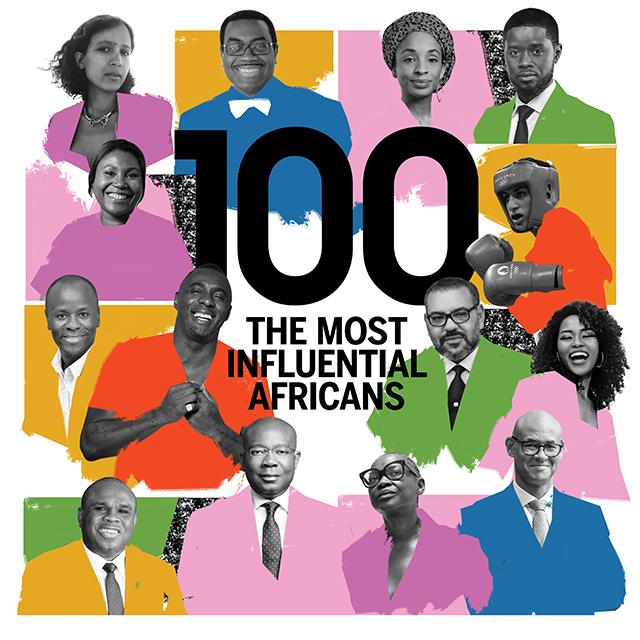
Africa is on the move. From politics to business to the arts, things are changing, being driven by innovators and visionaries, both good and bad. To reflect on a busy year for the continent, we profile the most influential Africans of 2014.
Isha Sesay, The anchor – Sierra Leone

As an anchor and correspondent for CNN International, Sierra Leone’s Isha Sesay has been on a mission to provide better coverage of Africa. This year, she ruffled feathers as she asked tough questions over Nigeria’s kidnapped Chibok schoolgirls, before criticising international reporting of the Ebola crisis for focussing on the handful of cases in the West rather than the thousands of cases in West Africa. To improve coverage, she helped set up Ebola Deeply, which aims to provide better context, clarity and understanding.
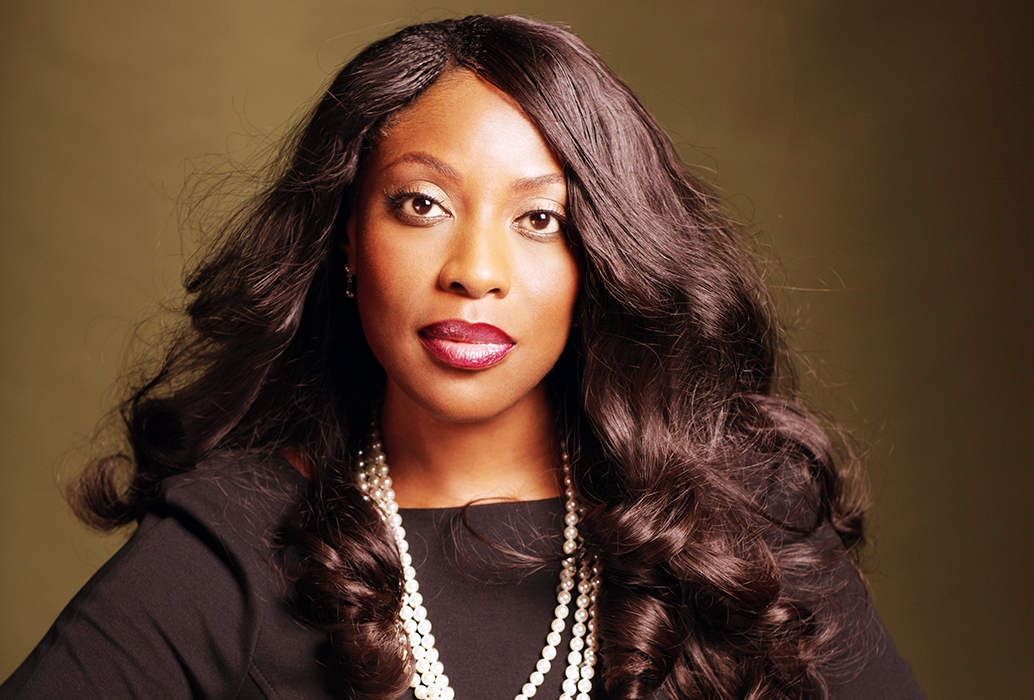
Mosunmola ‘Mo’ Abudu, The ‘African Oprah’ – Nigeria

Ebony Life Television CEO and day-time talk show host Mo Abudu is determined to erase the negative narrative long associated with Africa, so much so that she has built a media empire which is set to disseminate a wealth of original African content to the continent and beyond in order to combat it. This year, production on the African version of Desperate Housewives began, the result of a lucrative deal Mo struck with Disney. Fearless Mo is fast becoming a media mogul who the real Oprah may one day have to reckon with.
Redi Tlhabi, The radio heavyweight – South Africa

From hosting Talk Radio 702 and 567 Cape Talk, to writing columns for The Sunday Times, to anchoring television programmes, Redi Tlhabi knows how to talk to South Africans from a multitude of platforms. She’s spent some of this year embroiled in a dispute over the factual accuracy of her memoir Endings & Beginnings, but she has been as influential as ever, interviewing all the big political players in depth in the run-up to the South African elections.
Rafael Marques de Morais, The intrepid investigator – Angola

If getting under the skin of the powerful is a sign that a journalist is doing something right, then Rafael Marques de Morais must be doing a lot right. Despite facing constant intimidation and prison ever since he condemned government embezzlement in 1999, the investigative journalist has continued to expose high-level corruption, putting himself in the firing line of governmental ire, interrogation and legal action. In the face of high personal risk, Marques continues to fight for a better Angola.
Kwangu Liwewe, The woman who knows Africa – Zambia

This year, Kwangu Liwewe has covered the continent’s biggest stories, making a name for herself as a formidable woman in a male-dominated industry, as well as pushing the envelope for aspiring journalists. Liwewe is the executive producer and anchor of Africa 360, a current affairs show on eNCA, which broadcasts to Africa and the UK, as well as being the channel’s West Africa Bureau chief.
Solange Lusiku Nsimire, The fearless fighter – Democratic Republic of Congo

As the fearless editor of Le Souverain, an independent newspaper in South Kivu, Solange Nsimire has been threatened and intimidated countless times. She has had to go into hiding and, on one occasion, when a group of armed men invaded her home in search of her, she escaped by pretending to be a confused shoe-seller. But all this hasn’t diminished her resolve to challenge power, expose corruption and highlight abuse in the conflict-prone region. In an environment in which journalists are encouraged to stay quiet, Nsimire has the courage to speak up. “I like to swim against the current and see what’s going on the other side,” she says. “And that’s why I’m rarely tolerated.”
Anas Aremeyaw Anas, The namer, shamer and jailer – Ghana

In his native Ghana, and increasingly across the continent, the name Anas rings out with a mythic quality. Few know what the undercover journalist looks like, but his crusades to expose corruption and stand up for the most marginalised in society are renowned. On his mission to name, shame and jail, Anas has exposed cocoa smugglers, people traffickers, murderous witch doctors and many more. Long may we continue to hear his name but never see his face.
Chester Missing, The straight-talking puppet – South Africa

Chester Missing is a double Emmy Award- nominated social commentator, political interviewer, and comedian. He’s also a puppet. 2014 has seen him write a book and develop into an indispensable voice in South African society, speaking sometimes uncomfortable truths about power, race and white privilege, while humorously challenging the country’s political elite.
Tolu Ogunlesi, The journalist, comedy writer and poet – Nigeria

Award-winning writer, journalist and poet Tolu Ogunlesi has added another string to his bow. Writing for the satirical Nigerian political comedy show Ogas at the Top, he has adapted his political analysis and flair with words to poke fun at Nigeria’s ruling class. It’s very funny, but deadly serious work.
Ikenna Azuike, The joker – Nigeria

If Jon Stewart had an African compatriot, it would be the Nigerian/British satirical journalist Ikenna Azuike. Tackling the most pressing issues facing Africa in his YouTube show What’s Up Africa?, Azuike engages viewers with dynamic commentary and absurd skits, to look past the façade of African politics. If the current views on YouTube are anything to go by, What’s Up Africa? is destined to be a viral sensation in 2015.
Thabang Motsei, The African journalist in Moscow – South Africa

As a smart, and slightly rebellious, young girl growing up on the sweltering streets of Soweto, few would have predicted Thabang Motsei would end up living in in the swirling snow of Russia. But in her role as a correspondent and anchor for global news network RT (formerly known as Russia Today), that’s exactly what happened. Motsei is certainly not one to shy away from new challenges and this year not only had to confront the challenge of distilling Russian politics in a particularly complex and eventful year, but also got to document her adventures as she travelled across Siberia.
Godfrey ‘Gado’ Mwapwemba, The political cartoonist – Tanzania

With a career that spans over 20 years, Gado’s contribution to the art of satire is almost unparalleled. Not one to adhere to social boundaries, Gado’s cartoons have provoked readers to view current events through a different lens. His popular Kenyan political-satirical puppet show, XYZ, shows the same spirit, and is further testament to the power of humour as a tool for critiquing real-life issues and perceptions.
Jason Njoku, The man behind the Netflix of Africa – Nigeria

They say the simple ideas are often the best, and in iRoko TV, Jason Njoku has come up with a corker. iRoko TV combines the vast output of Nollywood, one of the world’s most productive film industries, with the rise of the Internet by digitalising films and making them accessible to subscribers across the world. It has been dubbed the “Netflix of Africa”, has millions of viewers, and seems set to get bigger and bigger.
Zapiro, The feared cartoonist – South Africa

Sometimes it requires long treatises to diagnose the maladies of a nation, but sometimes, with the right skilful hand and satirical eye, they can be summed up in an image. This is exactly what cartoonist Jonathan Shapiro, better known as Zapiro, has been doing for two decades, capturing, criticising and making fun of South Africa’s rich and powerful in the pages of the country’s biggest newspapers.
Ferial Haffajee, The free speech fighter – South Africa

As a former editor of South Africa’s Mail & Guardian and current editor of City Press, Ferial Haffajee has encountered more than her fair share of intimidation and controversy as she has fought to protect free speech and break important stories. In recognition of this impressive legacy, the unflappable editor was this year named as one of the recipients of the International Press Freedom Award by the Committee to Protect Journalists.
Trevor Ncube, The media mogul – Zimbabwe

Trevor Ncube believes that change has to start with a conversation, and as the man in charge of four newspapers in Zimbabwe and one of the biggest media organisations in South Africa, he is well-placed to facilitate that percolation of ideas. African media is getting bigger, louder, and ever more fearless, and the Zimbabwean media mogul is in pole position to help drive this trend.
Branko Brkic, The media maverick – South Africa

In the busy, boisterous and often blustery world of journalism, it is rare to encounter a genuine breath of fresh air. But that is exactly what the Daily Maverick has been. Steered by hands-on editor Branko Brkic, the South African online newspaper has gathered together some of the smartest, liveliest and feistiest contributors around and built a reputation for being the go-to place for insightful analysis and in-depth features.

Media under threat, Journalism is not a crime – Africa
In most African countries, freedom of the press is always under threat. Too often, we only hear about the difficulties facing our brave reporters when, for one reason or another, an individual or a group of journalists becomes a cause célèbre. But we should remember that the famous examples of imprisoned, harassed, and even killed journalists are just the tip of the iceberg. And why are journalists attacked so? Because the pen is mighty. Each crackdown on the media is really an expression of the influence of the press. If it weren’t important, it wouldn’t be so much under attack.
We remain in solidarity with all our courageous colleagues.