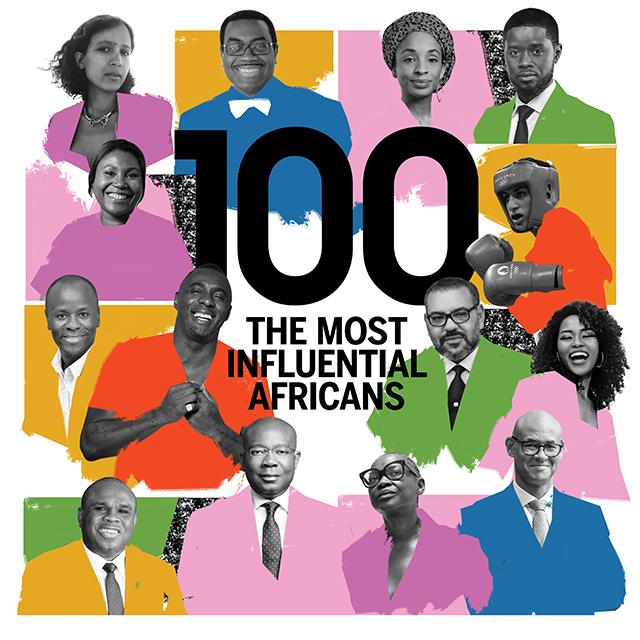
Africa is on the move. From politics to business to the arts, things are changing, being driven by innovators and visionaries, both good and bad. To reflect on a busy year for the continent, we profile the most influential Africans of 2014. Compiled and edited by reGina Jane Jere, James Schneider, James Wan, Jon Hayward and Wanjiru Kariuki.
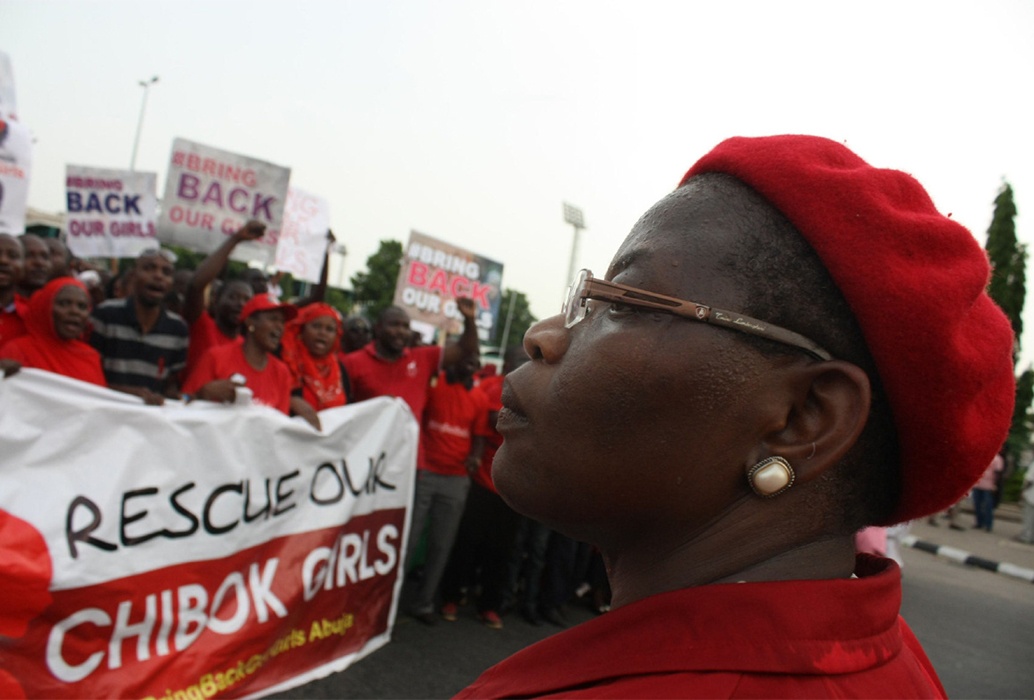
Obiageli Ezekwesili, #bringbackourgirls – Nigeria

On the night of 14-15 April, members of the Nigerian militant group Boko Haram stormed a girls’ secondary school in the town of Chibok, Borno State, and abducted over 200 schoolgirls.
Obiageli Ezekwesili heard about the kidnappings soon after, and immediately got involved. She was slated to speak at an UNESCO event in Port Harcourt, and when she took the stage, she called for solidarity and demanded that the government “bring back our girls”. One young man listening to the event tweeted her words, which soon went viral.
With Hadiza Bala Usman, Saudatu Mahdi and Maryam Uwais, Ezekwesili then officially formed Bring Back Our Girls and marched on Nigeria’s National Assembly. The movement maintained a daily presence in the capital Abuja with daily sit-ins at Unity Fountain.
Ezekwesili sees inequality as a major factor in the government’s poor response to the girls’ abduction. “These girls only suffered such aggravated anguish because of the social class they come from,” she says. “If these girls were the children of the elite, including myself, it wouldn’t have required and needed my having to go out on the street with other citizens for their anguish to be acknowledged.
“For me, it was basically a matter of voice. These people were without voice… So I made that vow like all the others that I would not stop being a voice for these girls until there is positive closure on the matter.”
While Bring Back Our Girls maintains that it is not a political platform, it has at times been treated as a hostile adversary by the government. But harsh words and counter movements have not deterred Ezekwesili. “I knew that I was putting myself out for all kinds of things to be thrown in my direction but I have my courage of conviction,” she says. “I haven’t done anything wrong and there’s nothing to defend.”
Eight months on, the Chibok girls have still not been rescued or returned home, but Ezekwesili continues to fight and remains hopeful. “We are expecting all of them to come back.”
(Words by Belinda Otas)
Kumi Naidoo, The climate warrior – South Africa

Ever since he was a teenager, protesting against apartheid through acts of civil disobedience, Kumi Naidoo has been unafraid to make trouble as he confronts injustice. Now, as the International Executive Director of Greenpeace, he can make plenty of noise as he confronts the growing problem of global climate change, an issue that will disproportionately affect Africa. Famous for his high-profile acts of protest and occupations of oil rigs, this year he led hundreds of thousands of demonstrators at the People’s Climate March, probably the largest climate change march in history, calling for the UN to “Listen to the People, not the Polluters”.
Ory Okolloh, The transparency advocate – Kenya

A passionate advocate of good governance and accountability in Africa, Ory Okolloh is well known as a co-creator of the Ushaidi platform, and Mzalendo, a website which acts as a watchdog for the Kenyan parliament. In 2014, Okolloh was announced as one of three trustees of the Millicom Foundation, which serves to support social innovators through financial and technical means, in a bid to foster a community of digital change-makers on the continent. Okolloh also serves as the director of investments for the Omidyar Network.
Mariéme Jamme, The tech activist – Senegal

CEO of Spot One Global Solutions and technology blogger, Mariéme Jamme is the woman behind the Jjiguène Tech Hub based in Senegal, a tech network that supports young women in Science, Engineering and Maths. As co-founder of Africa Gathering, a platform that engages social entrepreneurs and activists to pool their thoughts and provide practical solutions for Africa’s development, Jamme has inspired young African thinkers and innovators. This year’s event, a special edition held at London’s Southbank Centre, featured a variety of debates, presentations and workshops on the theme of: “Africa is Rising for Who?”
Yara Sallam, The protester – Egypt

This October, Yara Sallam, the Egyptian human rights activist and winner of the African Shield Human Rights Defender Award was sentenced to three years in jail. Sallam, alongside 22 other activists, was charged for demonstrating against a law passed last year that makes demonstrations without police authorisation illegal and punishes violators with imprisonment. The arrest of the protesters sparked a mass hunger strike by other activists who called on the government to release their colleagues and repeal the protest law.
Edna Adan Ismail , The fighter – Somaliland

Throughout her 77 years, Edna Anan Ismail has always been pitted against huge forces, but the Somalilander has nevertheless won more than her fair share of battles. She was Somalia’s first midwife, Somaliland’s first female foreign minister and, through her determination and the money she acquired from cashing in her World Health Organisation pension, she founded the country’s first-ever maternity hospital.Every year she picks a battle for a fairer world; 2014 was no different as she campaigned against gender-based violence and FGM.
Denis Mukwege, The doctor – Democratic Republic of Congo

When sexual violence is used as a weapon of war in eastern Congo, its aim is to destroy all hope, shame victims and tear apart communities. Dr Denis Mukwege’s Panzi Hospital, which has treated tens of thousands of women subjected to horrific sexual violence, cannot end the impunity that allows these brutal acts to continue. But with its fearless staff, led by Mukwege, the Bukavu hospital provides treatment in a region where it is desperately needed. This year, the European Parliament recognised this work by awarding Mukwege the Sakharov Prize.
Biram Dah Abeid, Malcolm X of anti-slavery – Mauritania

Biram Dah Abeid is a freedom fighter at the frontline of the struggle against modern day slavery and its vestiges in Mauritania. His homeland has the highest rates of slavery in the world and Dah Abeid, himself a descendent of slaves, is determined to finish the practice off for good. To this end, the winner of the UN Prize for Human Rights runs an organisation of popular struggle, IRA Mauritania (Initiative for the Resurgence of the Abolitionist Movement in Mauritania), and ran for president in elections held earlier this year.
Noëlla Musunka Coursaris, The model turned humanitarian, Democratic Republic of Congo

Noëlla Musunka Coursaris may be a professional model but her passion lies in promoting education, particularly that of girls, in her homeland of DRC. Founder of the Georges Malaika Foundation, which has built a free accredited school for over 180 girls in Kalebuka, Coursaris has used her status to provide for girls whose circumstances are not so different to her own when she was young. In 2014, she continued to develop her school, as well as speaking, advocating and fundraising for women affected by war in her home country at various international forums. She is also involved in the “Women Helping Women” initiative, which enhances access to clean water.
Pierre Claver Mbonimpa, The imprisoned prison reformer – Burundi

For nearly two decades, Pierre Claver Mbonimpa has been one of Burundi’s foremost defenders of human rights and, in particular, prisoners’ rights. This is dangerous work to be involved with, and this May he paid the cost when he was arrested on charges of endangering state security. With many believing the charges were politically motivated, protesters took to the streets en masse while several international organisations called for his release. In September, he was released provisionally on health grounds, but his struggle continues.
Leymah Gbowee, The peace warrior – Liberia

In 2003, after 14 years of conflict in Liberia, Leymah Gbowee led a group of women, united across religious and ethnic divides, to demand peace. In Monrovia, they protested, picketed and prayed, and eventually played a key role in the removal of Charles Taylor. Since then, she has continued to demonstrate that same determination and courage as head of Women Peace and Security Network Africa, promoting the role of women in leadership and peacebuilding.
Mo Ibrahim, The good governance guy – Sudan

The Sudanese billionaire may have made his money through the African telecommunications company Celtel, which he sold for $3.4 billion in 2005, but he has made his name through the Mo Ibrahim Foundation. Established to support good governance, the foundation publishes an annual Index of African Governance and awards a multi-million-dollar Prize for Achievement in African Leadership. He says candidly what others may only think.
Joseph Mathunjwa, The strike leader – South Africa

The first half of this year saw South Africa’s platinum sector grind to a halt as workers,led by the Association of Mineworkers and Construction Union (AMCU) and its head Joseph Mathunjwa, went out on an extended strike. Since the Marikana mine massacre of August 2012, industrial relations in the sector have taken on a huge political and national importance. After months on strike, the workers won an average pay increase of 8% per year for three years. With the rise of the Economic Freedom Fighters and Numsa dropping support for the ANC, Mathunjwa will prove a crucial force in the emerging political and labour opposition to the ANC government.
Jay Naidoo, The union father figure and campaigner – South Africa

A common theme in South African society is former trade unionists with political connections getting rich. Jay Naidoo is an exception. Cosatu’s founding General Secretary and later minister for Reconstruction and Development under Mandela, has not cashed in and left public life. He is a hugely respected international figure, chairing the Global Alliance for Improved Nutrition, as well as sitting on the boards of a number of international organisations. But events have been dragging his attention back to domestic issues as his beloved Cosatu tears itself apart over political support for the government. He could have a big role to play as a mediator between parties or in what emerges from the fallout.
Irvin Jim, The union radical challenging the ANC – South Africa

South Africa’s largest trade union, the National Union of Metalworkers of South Africa (Numsa), has dropped the African National Congress (ANC). In turn, the Congress of Trade Unions of South Africa, which is allied to the ANC, has expelled Numsa (see more here). Irvin Jim, the fiery general secretary, is plotting a new political course for Numsa and with it large sections of South Africa’s working class. This course is explicitly socialist, pro-poor and opposed to the ANC government. Jim’s name is likely to be one you will be hearing a lot of in 2015.