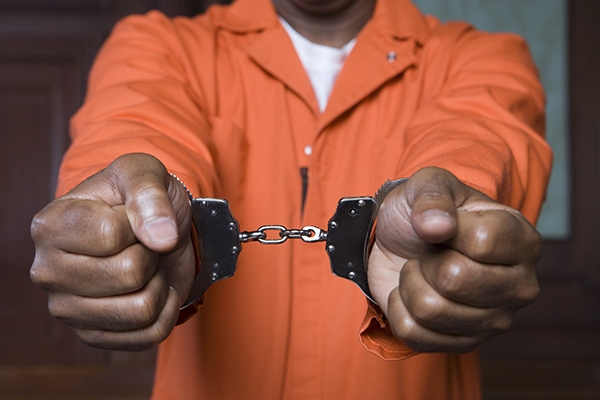
Below are the ugly statistics showing the racial disparities in incarceration in the USA, which disproportionately affects African-Americans.
• African-Americans make up 13.1% of the total US population of 313,914,040 (2012 estimate).
Racial disparities in incarceration
• African-Americans now constitute nearly one million of the total 2.3 million US prison population.
• African-Americans are incarcerated at nearly six times the rate of whites.
• Together, in 2008, African-Americans and Hispanics comprised 58% of all prisoners in the USA, even though African-Americans and Hispanics make up approximately 25% of the US population.
• According to the report, Unlocking America, if African-Americans and Hispanics were incarcerated at the same rates as whites, today’s prison and jail (remand) populations would decline by approximately 50%.
• One in six African-American men had been incarcerated by 2001. If current trends continue, 1 in 3 African-American males born today can expect to spend time in prison during his lifetime.
• One in 100 African-American women are in prison.
• Nationwide, African-Americans represent 26% of juvenile arrests, 44% of the youth who are detained, 46% of the youth who are judicially waived to criminal court, and 58% of the youth admitted to state prisons, according to the Center on Juvenile and Criminal Justice.
Drug sentencing disparities
• 14 million whites and 2.6 million African-Americans report using an illicit drug. It means 5 times as many whites are using drugs as African-Americans, yet African-Americans are sent to prison for drug offences at 10 times the rate of whites.
• African-Americans represent 12% of the total population of drug users, but 38% of those arrested for drug offences, and 59% of those in state prisons for a drug offence.
• African-Americans serve virtually as much time in prison for a drug offence (58.7 months) as whites do for a violent offence (61.7 months), according to the NGO, Sentencing Project.
From the NAACP Criminal Justice Fact Sheet
• An analysis of 297 DNA exonerations reveals minorities make up approximately 70% of those proven innocent through DNA testing. Similarly, African-Americans represent the vast majority of these exonerations – 63% of those exonerated by DNA testing.
• Despite numerous studies depicting similar levels of participation by whites, African-Americans, and Hispanics in non-violent crimes (notably around drugs, weapon possession and speeding), Bureau of Justice statistics show that minorities are arrested and incarcerated at higher rates for these crimes. Because minority community areas are seen as high crime neighbourhoods, the police focus on these. Not surprisingly, minorities are besieged with recurrent police contact, leading to extensive criminal records for even minor non-violent crimes.
From The Innocence Project/Black Agenda Report
• Mass incarceration has led to 2.3 million people being held in prisons across the country, of which almost one million are African-American and about half a million Latino (or Hispanic).
• Why is this happening? The skyrocketing incarceration rates in the US began in the 1970s, in the aftermath of the urban rebellions of the 1960s which spearheaded the development of a revolutionary movement that rocked the US government back on its heels, and as the process of searching for greater profit margins was driving the shift of manufacturing out of the US to countries around the world.
From one end, the US rulers felt a need to exert greater control over black youth to ensure they would not be in a position to spark another round of uprisings and all that could mean. At the same time, the shift of manufacturing was leaving growing numbers of young black people without legitimate means to survive and raise families.
• A prison industrial complex? It was at this point that the Nixon administration launched two wars – one on drugs, and the other on crime. Both these wars were to be waged primarily in African-American communities. Later, in the 1980s, the US Congress passed laws that disproportionately targeted people in the inner cities. What we had here was a combination of conscious government policies and the very operation of the US capitalist system that led to the mass incarceration of today.
• How conscious were these policies? Nixon is reported to have said at a cabinet meeting in the early 70s: “The problem is the blacks, and we have to devise a solution that doesn’t acknowledge that this is what we’re dealing with.” And as the de-industrialisation of the US proceeded, the ruling class was increasingly confronted with large numbers of black and Latino youths, who the system offered no future. The solution to this problem was heightened racial profiling – stop and frisk, gang injunctions, etc – that served as a pipeline to prison for so many black youths.