According to the World Health Organisation (WHO), the number of deaths attributable to Ebola Virus Disease in West Africa was over 700 by the beginning of August with scores of infected and others suspected to be carrying the killer virus. Curtis Abraham reports.
It came without warning. There was no mass dying of apes or antelopes in the lush Upper Guinean forest in the southern part of the West African country. There were no rebel fighters or soldiers returning from the forested battlefields in the Congo River Basin, as was the case with some previous outbreaks of the deadly Ebola Virus Disease (EVD) in East and Central Africa.
Instead it was the local delicacy of fruit bats that is suspected to be the origins of this current epidemic. Bats are reportedly the natural reservoir of the pathogen.
Confirmed cases of EVD and a number of deaths have also occurred in neighbouring Liberia and Sierra Leone.
But could some of the recent deaths and suffering in West Africa have been avoided? Some scientists answer in the affirmative. Ebola Virus Disease is one of the world’s most lethal diseases and outbreaks occur primarily in remote villages in Central and West Africa, near tropical rainforests. EVD is what experts called a filovirus disease; emerging pathogens that cause viral hemorrhagic fevers.
The infection is transmitted by direct contact with the blood, body fluids and tissues of infected animals or people, and its symptoms include high fever, debilitating fatigue, and uncontrollable bleeding from the eyes, the nose, and the mouth.
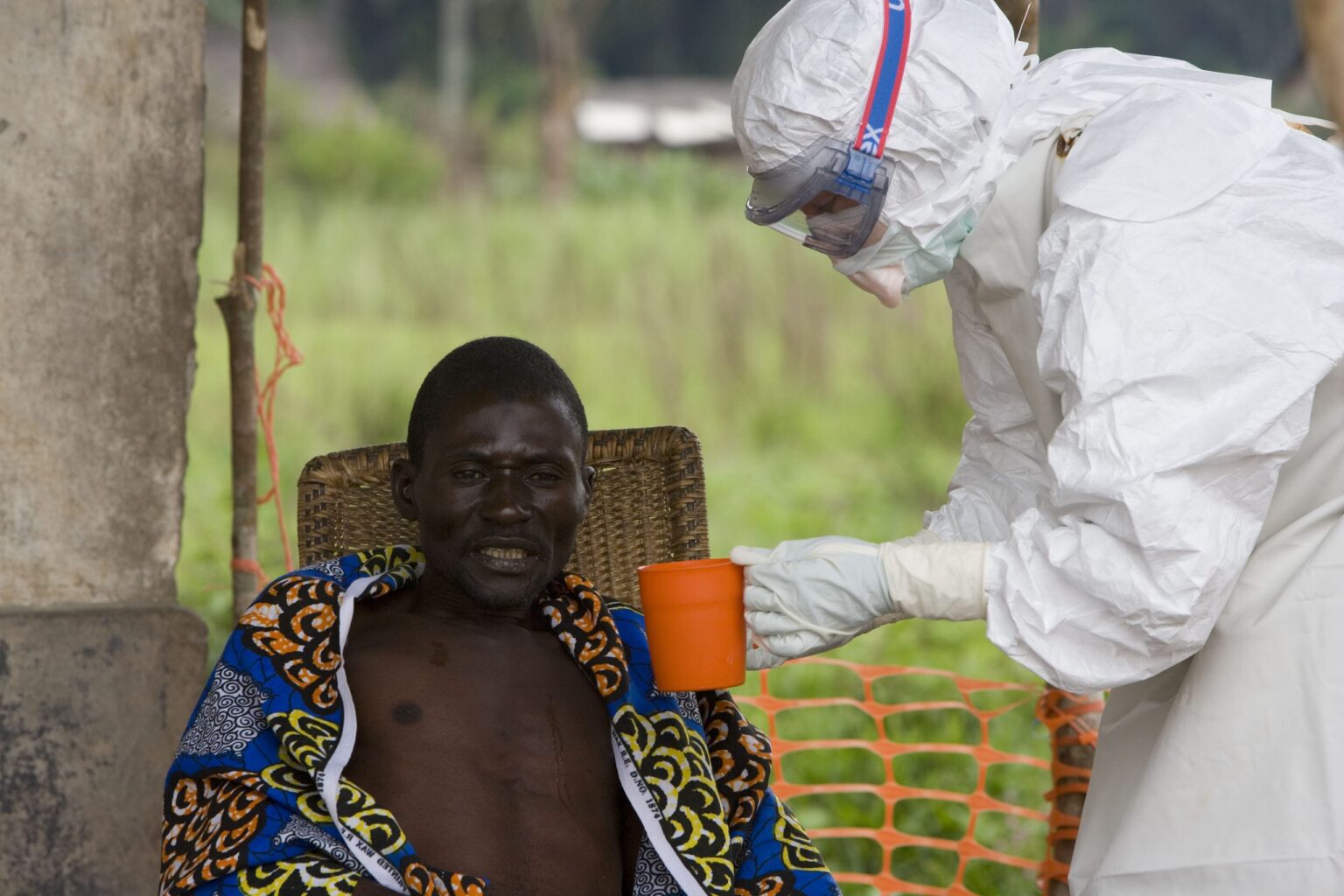
Health care workers can only provide supportive care in isolation. Doctors in white spacesuits administering rehydration salts and fluids, nutritious food, and isolation, are used to prevent the spread of the disease.
No cure is available but several vaccines are being tested, although none are available for clinical use. Medical charities such as Medicin Sans Frontières (MSF), can only provide supportive care. The US government has stepped up interest in infectious diseases such as EVD because of their potential use as weapons of mass destruction by terrorist organisations, state-sponsored actors and simply deranged individuals (the 2001 anthrax attacks killed five and infected 17 others and are widely suspected to be the work of a single individual).
EVD is classified by the US Center for Disease Control and Prevention (CDC) as a Category A bioterrorism agent.
Biomedical researchers working with the US Army Medical Research Institute for Infectious Diseases (USAMRIID) and partly funded by the US Department of Defense’s (DoD) Joint Project Manager Transformational Medical Technologies (JPM-TMT) Office, have been developing preventative and curative drugs to combat any possible bioterror threat from EVD and other viruses.
However, despite lobbying from scientists before this latest outbreak, the drugs have not been put to the test. One leading candidate is TKM-Ebola, an anti-Ebola viral therapeutic, developed by the Canadian pharmaceutical company Tekmira under a contract with the US Department of Defense’s JPM-MCS. TKM-Ebola, at its current stage of development, will not be effective in curtailing the spread of the infection, only reducing the likelihood of dying from the disease once you have already become infectious to others. However, by providing an incentive for people to go to the centres, say some experts, it will indirectly help prevent the further spread of the infection.
TKM-Ebola has shown a 100% success rate in monkeys. Back in mid-January, Tekmira announced that it has dosed the first subject in a Phase I human clinical trial of TKM-Ebola. The study was meant to evaluate the safety, determination of a safe dosage range, and identify any possible side effects as TKM-Ebola is absorbed in the body of healthy adult subjects. In March, the US Food and Drug Administration granted TKM-Ebola fast track status to speed up the drug’s development.
Dr Ian MacLachlan, Tekmira’s Chief Technical Officer, announced in a paper presented at the 17th Annual Meeting of the American Society of Gene and Cell Therapy in Washington, DC, that the company had successfully completed the single ascending dose portion of the TKM-Ebola Phase I Clinical Trial in healthy human volunteers and that there were no ill effects.
Tekmira expects to complete the Phase I clinical study later this year. Some scientists see the current West Africa outbreak of EVD as a unique opportunity to greatly advance the search for a cure and the vaccine is being stockpiled by the World Health Organisation (WHO) for use in emergencies.
“The primary objective of employing TKM-Ebola would be to further the clinical development of this agent,” says Dirk Haussecker, a biologist and medical consultant. “This outbreak is the best-case scenario to test this agent in actually infected patients with a side effect being that it would provide an incentive to people to be isolated.”
TKM-Ebola is not the only promising drug on the horizon. Several groups of biomedical researchers have already identified 150 or so neutralising antibodies against the Zaire strain of the virus, the strain responsible for the current outbreak. Some of these anti-Ebola virus antibodies have been used in cocktails and successfully administered to non-human primates. The monkeys survived in spite of being given lethal doses of EVD two days prior to being fed the cocktail.
While TKM-Ebola is a virus-specific drug that, so far, has limited broad-spectrum antiviral potential (most of the proposed Ebola treatments target a single strain of the virus) researchers at the USAMRIID and North Carolina-based BioCryst Pharmaceuticals have been working on a small molecule with broad antiviral activity.
The compound is called BCX4430 and it blocks the replication of RNA viruses like Ebola and Marburg. BCX4430 has been shown to protect primates against Marburg virus and shielded rodents from Marburg and Ebola virus infections. It has also been demonstrated to be effective against Yellow Fever virus infection.
“As it is becoming clear now, dying in isolation, surrounded by healthcare workers resembling aliens in space suits without the prospect of medical innovation is neither attractive to patients nor their families,” says Dirk Haussecker.
No wonder the relatives of some half dozen patients infected with EVD in Sierra Leone snatched their kin out from the isolation wards and, presumably, returned to their ancestral villages for better care. (Not surprisingly, one report said that the death toll in Sierra Leone doubled in a week.) Perhaps worse for the patient’s loved ones, is knowing that not everybody suspected of having Ebola has it and by putting them together with others that do, you expose them to it.
Then there is the issue of cost. Clinical trials are usually conducted in several phases that are very costly. According to Joseph Dimasi of the Tufts Center for the Study of Drug Development, the average cost of bringing a drug through trails is about $1.3bn.
Pharmaceutical companies are, first and foremost, businesses whose aim it is to turn a healthy profit and keep their shareholders happy. So the prospect of them financing a drug like TKM-Ebola for mainly rural Africans is a long shot.
Who will purchase it in sufficient quantities from the drug companies to make money? The financial incentive is simply not there for big pharma. Many observers, however, believe that it is within the capabilities of the US government to help fast- track drugs such as TKM-Ebola because of their heavy involvement in its development. British journalist Jessica Hatcher recently pointed out that the anti-malaria drug Mefloquine (Larium) was fast-tracked to the market thanks to the efforts of the US Defense Department and a pharmaceutical company (the military became involved because US troops contracted malaria during the Vietnam War).
However, as other experts have pointed out, such a strategy is not without its risks. Pharmaceutical companies are not allowed to use unlicensed drugs. Despite the validation thus far in monkeys, TKM-Ebola could still turn out to have more risks than benefits, and most would prefer to err on the side of caution.
But contrary to popular Western media images, Africans are not simply helpless victims of the EVD and other infectious and contagious diseases, but are proactive in stemming the spread of the disease at its onset.
American anthropologist Barry S. Hewlett, author of the book Ebola: Culture and Politics –The Anthropology of an Emerging Disease has shown that local populations have long been aware of the disease and have their own cultural logic to explain it and social protocols to deal with it.
These include practices of isolation and care that have proved so effective that agencies such as the WHO have incorporated them into their response strategies. In fact, some experts are warning that global efforts to curb the spread of potentially deadly emerging zoonotic diseases (illnesses that jump from wild animals to humans) as well as re-emerging contagious and infectious ailments such as tuberculosis and leprosy in Africa, need a strategy rethink. Public health officials involved in international development are turning a blind eye to ethno-medical models for disease control and prevention that exists in Africa.
If effective intervention is to be achieved, say researchers, then an awareness and understanding of these indigenous strategies can play a practical role in containing and preventing diseases that are presently killing millions on the African continent and have the potential to affect global health.
This negative attitude towards indigenous notions of infectious/contagious diseases stems largely from the assumption that African health beliefs are primarily based on witchcraft, sorcery or black magic. Edward C. Green and other researchers have indeed found this to be true in the realm of mental illness in sub-Saharan Africa (perhaps due to a superficial likeness between spirit possession and symptoms of some mental illnesses) but curiously not so when it comes to infectious diseases.
Western notions of how Africans deal with illness are to blame. Among the culprits have been contemporary anthropologists as well as some of the most famous ethnographers of the early 20th century. These scholars were, consciously or unconsciously, largely ignoring the evidence, which pointed to the fact that infectious diseases were looked upon by sub-Saharan Africa as having naturalistic and not supernatural origins.
Edward Green, an American medical anthropologist at the Johns Hopkins Bloomberg School of Public Health, and author of Indigenous Theories of Contagious Diseases (ITC), sees considerable parallels between indigenous notions in Africa and modern biomedicine.
“Mystical contagion” is a belief that people become ill as a result of contact with or contamination by a substance or essence considered dangerous because it is unclean or impure; and environmental dangers whereby elements in the environment, including the air one breathes, are believed to cause or spread illness.
Such mysterious and exotic explanations as ITC, says Green, are simply indigenous African interpretations of the causes and logically related treatments of infectious and contagious diseases, which are expressed in a distinctly non-Western idiom using cultural metaphors or symbols.
Once these symbols and metaphors are decoded, Green maintains, we then discover that they are addressing the same health promotion and disease prevention issues we find in Western biomedicine.
Pioneering field studies of EVD epidemics by Professor Hewlett and his colleagues at Washington State University were conducted with the first systematic medical anthropological field study of an EVD epidemic in northern Uganda, between August 2000 and January 2001. He then led a team of medical anthropologists into the rainforests of the Republic of Congo during the December 2002-June 2003 EVD outbreak.
These studies illustrate how ordinary Africans perceive epidemic diseases as naturalistic in origin and are linked with notions of contagion and pollution but not the supernatural. Furthermore, they also reveal that these communities had formal or semi-formal “indigenous protocols” for dealing with deadly EVD epidemics, which were independent of Western biomedical influence.
More importantly, they show how international epidemic control teams can apply indigenous knowledge to control and eradication efforts. Take, for example, the EVD outbreak in northern Uganda. At the time it was one of the largest EVD outbreaks on the continent. There were 224 deaths from 425 infected cases, a case fatality rate of 53%.
When EVD first occurred many people treated the symptoms as a regular illness and sought a variety of biomedical cures such as antibiotics and local herbs. However, by early October, a little over a month from the start of the plague, the Acholi community began to realise that this was no ordinary illness.
A dramatic shift in cultural models took place and the people began to classify the EVD outbreak as an epidemic illness. The indigenous protocol for its prevention and control was kick-started and quite different from the treatment and control of other illnesses.
This particular protocol included the identification of homes of EVD victims. EVD patients were also isolated and kept a distance of at least 100 metres from the home of others and with visitors strictly forbidden. Strict limitations were placed on people’s movements, they were dissuaded from venturing to other’s houses and villages, and had dietary and sexual restrictions put on them to control the deadly disease. Furthermore, the Acholi recognised that mothers to be and young children were particularly vulnerable.
Somewhat less formalised than the Acholi model, during the 2003 outbreak of EVD in the Mbomo and Kelle sub-districts of the Republic of Congo, near the border with Gabon, 129 people died out of a total 143 cases – a 90% fatality rate.
As in the Acholi model, the Congolese indigenous communities also emphasised the identification and isolation of infected and affected households as well as the need for special attention towards keeping children safe from infection and the use of culture in communicating the message of EVD prevention.
The various ethnic groups in DRCongo affected by the EVD outbreak were also able to distinguish the natural from the supernatural. When Hewlett and his wife Bonnie, also a medical anthropologist, arrived in the affected area of Mbomo, most of the Congolese there indicated that EVD was an epidemic illness, which they called opepe ekono, and not sorcery. Locals told Hewlett’s team that they knew epidemic illnesses were transmitted by contact with infected individuals.
During such epidemics, national and international healthcare workers worry that traditional funeral and burial practices such as washing and dressing the dead body and love touches contributed to the spread of the outbreak. However, African communities such as the Acholi had no qualms about modifying their funeral and burial customs. Hewlett reported: “Even the burying of victims at the airfield, while a bit dramatic for some, was consistent with burying epidemic victims outside or at the edge of the village.”
Many aid agencies are still unaware that traditional cultural practices across Africa offer what Western medics would consider to be effective means of disease control and prevention.
“Western medical science has long dismissed African indigenous medical theories as superstitious gibberish, unworthy of consideration,” says Green.
Health care workers need to be aware that such cultural models exist, says Hewlett. He believes that once these positive aspects are identified, epidemic control teams can build upon them and implement health education messages. It’s a simple idea, yet there is potentially much to be gained.
But by the beginning of August, not only had Nigeria’s largest airline, Arik Air as well as Asky Air, cancelled flights from Liberia and Sierra Leone (after a passenger from Liberia collapsed at Lagos airport, later dying in hospital from Ebola), but CÔte d’Ivoire had blocked the return of 400 Ivorians who wanted to return from Liberia to escape the epidemic. Nigeria has put all its entry points on red alert.
Dr Sheik Umar Khan of Sierra Leone, and prominent Liberian doctor Samuel Brisbane both lost their battle against the virus they contracted.
Dozens of local health workers and two American medics in Liberia have also died, including a US missionary, highlighting the dangers faced by those trying to halt the disease’s spread in West Africa.
When New African asked Dr Julius Lutwama of Uganda’s Virus Research Institute whether or not untested and unlicensed Ebola drugs like TKM-Ebola should be used in this outbreak, he said: “My conviction is that, if I am on my death bed and there is something that might alleviate my quick death in a condition where nothing conventional is approved, I would go for what is available.”