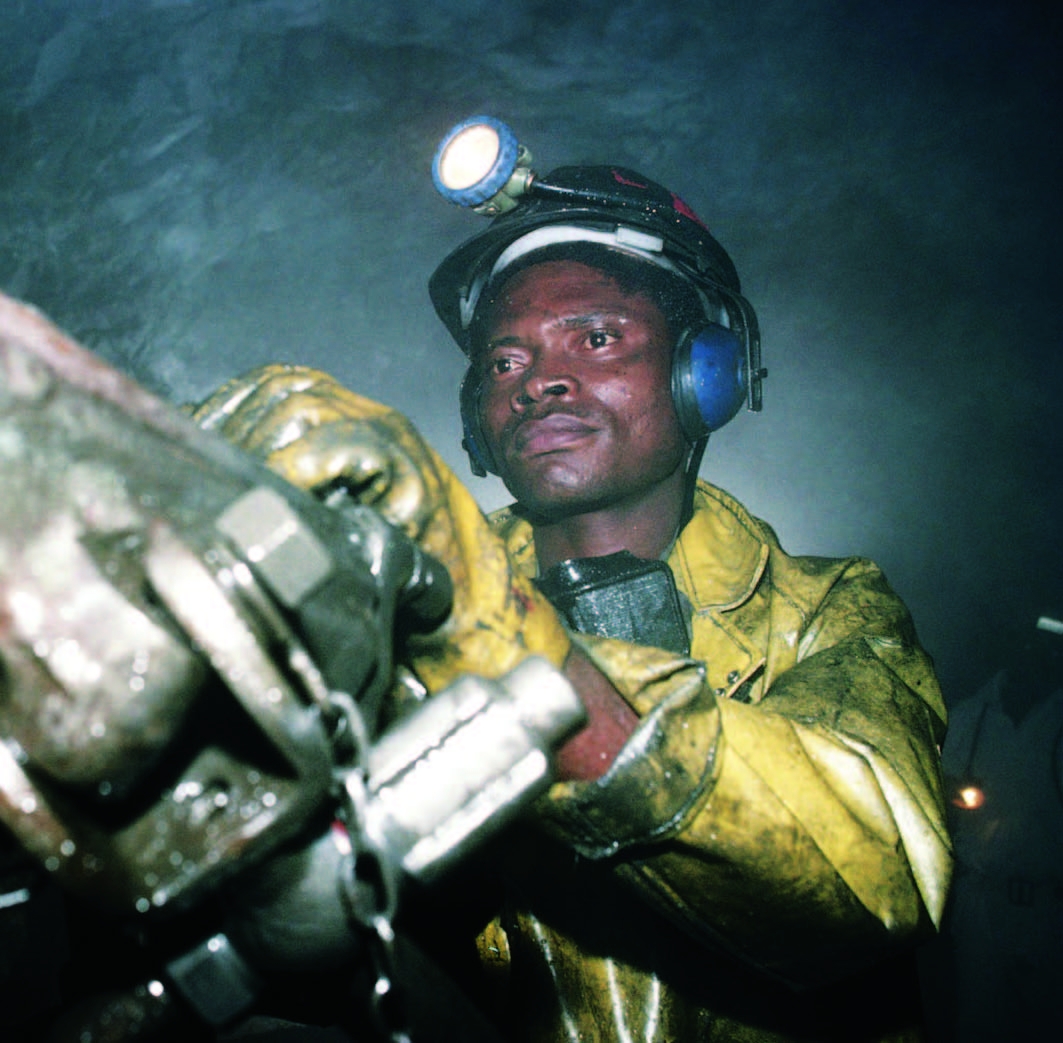
Members of Ghana’s new parliament are amazed that up to 100% of earnings by foreign mining companies operating in the country are lodged in offshore accounts – and this is all backed by Ghanaian law! Now MPs want the law changed immediately! Femi Akomolafe reports from Accra.
Ghana’s President John Dramani Mahama, pained by how little the country gets from its natural resources, told the UN General Assembly this September that the country could not continue to be exporters of raw materials and primary produce. “We need to add value to our exports. We cannot continue to export raw cocoa beans in Ghana. What we need instead is to process more of those beans into value-added products.”
The president went on: “We cannot continue to export unrefined gold. We need to add value to our gold exports. We cannot continue to export oil and gas. We need to integrate that industry into our economy. We need to process petroleum products and produce power with the gas.
“We cannot continue to export bauxite and then in return import alumina to feed our local aluminium smelter. We need to work towards creating an integrated bauxite and aluminium industry in Ghana… As a president and a father, I owe it to my children – my sons and my daughter – and all the children of Ghana to create for them a country where they can walk with their dignity intact and their heads held high and stand shoulder to shoulder with the children of Europe, South America, Asia, North America and the rest of the world.”
It was a nice speech, more so coming as it does in the wake of a UN Africa Report, which said the continent loses $63bn yearly from illegal tax evasion and exploitative practices by multinational corporations operating on the continent.
So President Mahama was right to suggest the need for Ghana to change gear. But a few weeks before his speech, the head of policy monitoring and evaluation in President Mahama’s own office, Dr Tony Aidoo, had appeared to deflate the president’s UN speech when he said that he was quite surprised that people were expressing surprise at revelations in the media that some foreign mining companies in Ghana retain virtually all their earnings in offshore accounts.
That situation, according to Dr Aidoo, has always been the case in the past. Ghana’s mineral resources are exploited by multinational companies to the detriment of the nation’s development.
Dr Aidoo singled out the country’s first president, Dr Kwame Nkrumah, and the military leader General I.K. Acheampong (1972-78) who made some real efforts to increase the national stake in mining ventures. Apart from these two leaders, all those others that followed had sat on their hands as the country’s resources had been exploited for a song. Dr Aidoo told the Accra-based Radio Gold that he would rather the minerals remained untapped in the ground so that local mining techniques, even if primitive, could be employed to exploit them. If that meant only 5% of the minerals were exploited, he said, it would be far better for the country than the current situation where Ghanaians themselves did not benefit from their God-given resources.
Dr Aidoo was reacting on the radio programme to comments made on the same platform by the former minister for lands and natural resources, Mike Allen Hamah, who said a law passed in 2003, under President John Kufuor’s government, had paved the way for the naked rape of Ghana’s resources. Surprisingly, 10 years after the enactment of that law, it still remained on the statute books in its original form, after initial attempts to review it had failed.
The Ghana Mineworkers Union described Aidoo and Hamah’s revelations as a wake-up call to restore sanity in the country’s mining industry.
But that was not all. Following hard on Aidoo and Hamah’s revelations came another shocker! The Public Accounts Committee of Ghana’s new parliament (which was elected into power last December) was reported to have expressed “shock” after discovering that mining agreements signed by various Ghanaian governments in the past and ratified by parliament were heavily skewed in favour of foreign mining companies. According to local media reports, “members of the Public Accounts Committee are amazed that so much of the earnings from gold mined in Ghana is lodged in offshore accounts. And all these transactions are backed by Ghana’s law!” Explaining how this had happened, Ben Aryee, the chief executive of Ghana’s Minerals Commission, said the country’s Minerals and Mining Law 1986, PNDC Law 153, passed under the military government headed by Flt-Lt Jerry Rawlings, provided that a retention account agreement be signed by the Ministry of Finance and Economic Planning, the Bank of Ghana, and applicant mining firms.
But in 1996, the democratically-elected government of President Jerry Rawlings (which came into power in 1992 following his election as a “civilian” president after he ditched his military uniform), passed a new Mineral and Mining Law which amended the 1986 law to, in some cases, stipulate that 20% of a mining company’s earnings be kept in Ghana.
Aryee said parliament itself had to take the blame for the mess in the mining sector because it passed the 1996 law without serious review. But Ghana’s new parliament is reported to have been “stunned” to find that the Canadian mining giant, Newmont, signed an agreement with the Ghanaian government that allows a full 100% of the company’s earnings in Ghana to be kept abroad. One MP wondered how one of the mining agreements, signed on 17 December 2003, was ratified by parliament on 23 December 2003 – in a mere five days! This was curious, he said, because under the parliamentary system, ratification of laws does not happen in just five days.
Another MP said he “was shocked that parliament could pass such an Act”, a remark which prompted Atta Akyea, the MP for Akim Abuakwa South and vice-chairman of the parliamentary Public Accounts Committee, to describe Ghana’s mining regulatory regime as “pernicious, arbitrary, discriminatory, [and] weird.”
Akyea said there were a lot of gaps in the current Mining and Minerals Act and urged MPs to review it as a matter of urgency, questioning how a mining company could retain 100% of its earnings offshore while 100% of damages to the environment were left to the local communities to deal with. He said water bodies had been rendered useless to communities, and land that could be used for agriculture had been destroyed by mining activities.
Contributing to the debate, another MP said the Ghanaian people were not privy to these agreements because they were confidential. She, however, recommended that the retention of mining earnings offshore should be capped at 50%.
But according to one political commentator: “Rather than continue the unprofitable neo-colonial policy of granting tax holidays and allowing foreign companies to keep 100% of their profit in offshore accounts, President Mahama should send all his ministers to Zimbabwe to learn how to own majority shares of Ghana’s resources.” Zimbabwe’s indigenisation and economic empowerment programme requires the country to own 51% shares in any non-indigenously-owned mining venture with a net value of more than $1m.