Is education, from primary school through to university, designed to produce well-rounded, thoughtful individuals with an interest in the world around them; or a form of training for the world of work? Most of us would agree that it should embody elements of both but there are real fears that much of the education on offer in Africa is not adequately preparing young people for work. Neil Ford examines the issues.
Many African economies are currently growing strongly, particularly in comparison with the industrialised world, and the continental economy as a whole is expected to grow by about 6% this year. However, much of this growth is based on high export revenues.
Sub-Saharan Africa is now in a position to compete with other emerging markets in some labour-intensive industries. Wage costs in India and China are rising in the manufacturing, IT, pharmaceutical and call-centre sectors. Mauritius is now able to compete for such inward investment and although few other African countries have yet managed to attract investors on a large scale, they could do so in the future with a sufficiently educated and trained workforce.
Yet report after report highlights the problem of youth unemployment on the continent. The population of Africa has grown very rapidly over the past 50 years, so that each generation is much larger than its predecessor and there are now twice as many people under the age of 28 as over it. This means that employment must grow at an ever-faster rate but it is estimated that about 71% of Sub-Saharan Africa’s working age population lacks full-time, formal employment. Un- and underemployment feeds poverty and events in North Africa during 2011 demonstrate that they can also fuel social and political unrest.
The International Labour Organisation (ILO) presented the findings of its research into African employment at the World Economic Forumin Addis Ababa in May. ILO deputy regional director for Africa Judica Amri-Lawson said: “Improving the employability of young people, putting in place pro-employment macroeconomic policies, providing finance and venture capital and public works schemes, as well as investing in quality jobs are key to transforming Africa’s growth story into shared opportunities for present and future generations. The promotion of youth employment must address both the supply and demand side constraints of the labour markets.”
More job seekers
Most analysis of the job market in African countries focuses on the demand side of the equation. An estimated 10m young people enter the continent’s workforce every year and there are not nearly enough jobs to absorb them. Many people continue to work on an informal basis, selling agricultural or manufactured goods on a local basis, earning relatively little and paying no taxes. Yet more are underemployed, working in agriculture or tourism on a seasonal basis but without paid work for much of the year.
The recent World Bank report Youth employment in Africa: What to do when informal is normal highlights an often underreported issue. Most children leaving school enter informal employment and so their primary school education should prepare them with the skills to confront an uncertain future, including money management and arithmetic. To take one example, formal employment grew at an average rate of 7.3% a year in Uganda between 1992 and 2005 but this still leaves just 21% of the workforce in formal positions, rising to a projected 26% by 2020.
The World Bank argues that the productivity and earnings of the majority of young people who will be employed in informal farms and household enterprises can be increased by:
Demand side measures, such as better infrastructure and business climate, that lower the costs of production and hence increase the demand for labour;
Supply side measures that improve the skills of workers. In the case of farms, agricultural development is already geared towards increasing agricultural productivity. This will result in higher incomes, but lower demand for labour in agriculture. This emphasis on promoting skills development and basic educational skills is repeated across the continent. South African state-run schools have cut back on perceived marginal subjects such as art and music, in order to focus on literacy, maths and IT skills.
In May, Ghana’s minister for employment, Moses Asaga, blamed the type of education provided by private universities for the high level of graduate unemployment in the country. Just 6% of Ghanaians currently go on to university but Asaga believes that privately owned universities are admitting and passing students who do not possess the required academic skills. Other critics argue that African universities are churning out too many history and literature students and too few with science and technology degrees.
Many of the technology and medical graduates that do emerge leave their home country to earn greater financial rewards in Europe, North America or even other parts of Africa. Such courses are far more expensive to run per capita and it is understandable that universities and governments are reluctant to fund students who quickly move abroad.
International migration can help to spread skills but at present the direction of migration is far too much from developing to industrialised countries. However, sustained strong economic growth over the next few years could see the direction of movement change. There has already been a wave of immigration by skilled graduates from struggling Portugal to booming Angola.
Despite government promises to increase the rate of job creation, unemployment remains a huge problem in South Africa. The proportion of people out of work and claiming benefits jumped from 23.9% to 25.2% in the first quarter of this year, while the total rate of unemployment increased from 35.4% to 36.6%. Business Unity South Africa (Busa) identified several potential solutions for the problem. A spokesperson argued: “Busa believes that if unemployment in South Africa is to be successfully reduced, back to basics education, skills development, inclusive wage setting and improved state capacity and infrastructure remain top priorities.”
Appropriate education
Figures from government agency Statistics SA reveal that 60% of the 4.53m people out of work in March this year had not passed their matriculation exams. The deputy director general of Statistics SA, Kefiloe Masiteng, commented: “We’re worried about this trend. The education sector is not producing enough people who can be absorbed into the labour market. There is a high level of unskilled workers who can’t get jobs.” The construction industry shed 71,000 jobs in the first quarter, suggesting that the government’s infrastructure programme has not yet had an effect on the labour market.
While the emphasis in South Africa is firmly on producing more highly skilled young people, in the rest of the continent there is a clamour for appropriate education. Utilities in Tanzania complain that there are an insufficient number of potential electricians, plumbers and other technical employees. Most young people leaving school have insufficient education to take up apprenticeships, while their more academically-minded counterparts have inappropriate degrees and do not look beyond office employment.
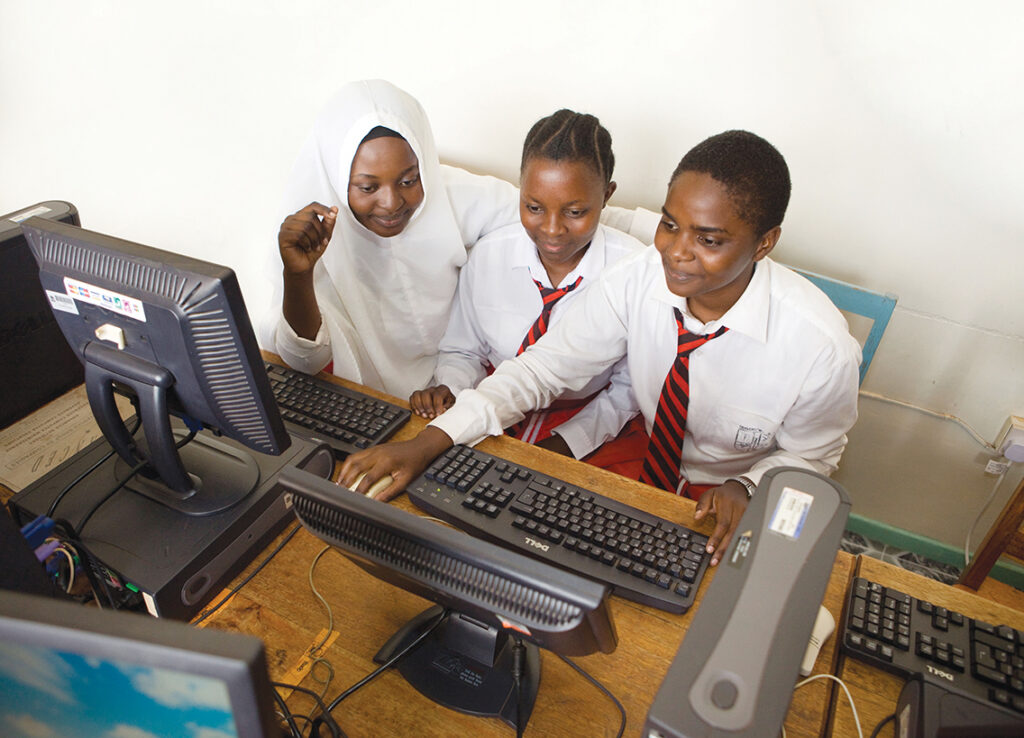
The biggest challenge to improving the standard of education is financial. Class sizes of 60-70 pupils are still common in Tanzania, Nigeria and elsewhere; the age-old problem of a lack of textbooks has been replaced by a lack of internet access; and classrooms are often rundown and badly equipped.
Programmes such as the $100 laptop and mobile internet access offer hope for the future but most parts of Africa need many more teachers. A survey in Tanzania found that 50% of seventh grade pupils could not read English – the language of secondary education; 20% could not read Kiswahili; and 30% could not multiply. Much of the blame was placed on Tanzanian teachers, who spent too little time teaching and who often had poor maths and language skills themselves.
The best way of improving the quality of teachers is obviously through the education system, so there can be no easy fix to the problems of African education. Yet a curriculum more closely aligned with the needs of new entrants to the labour market must surely be a good place to start.