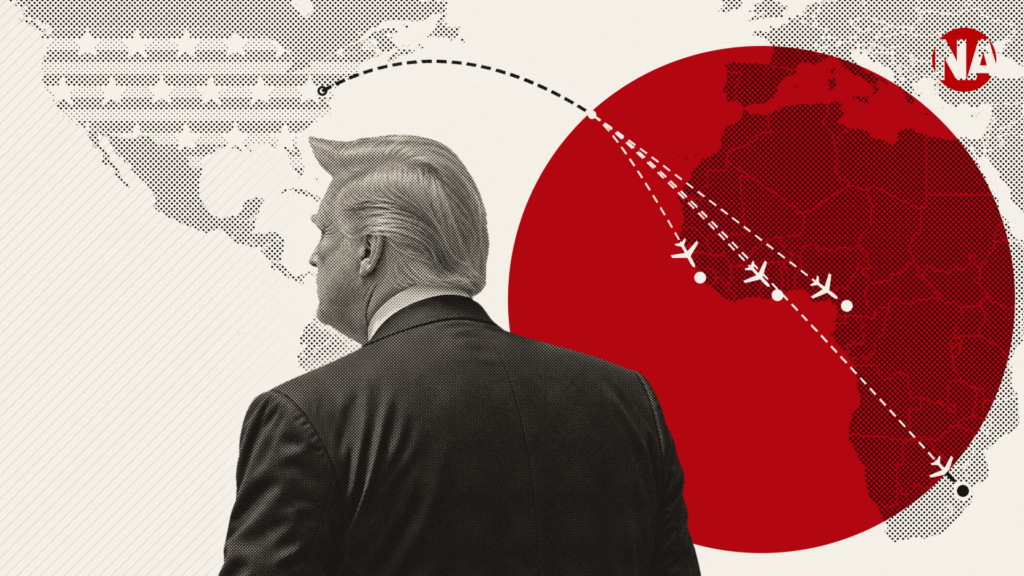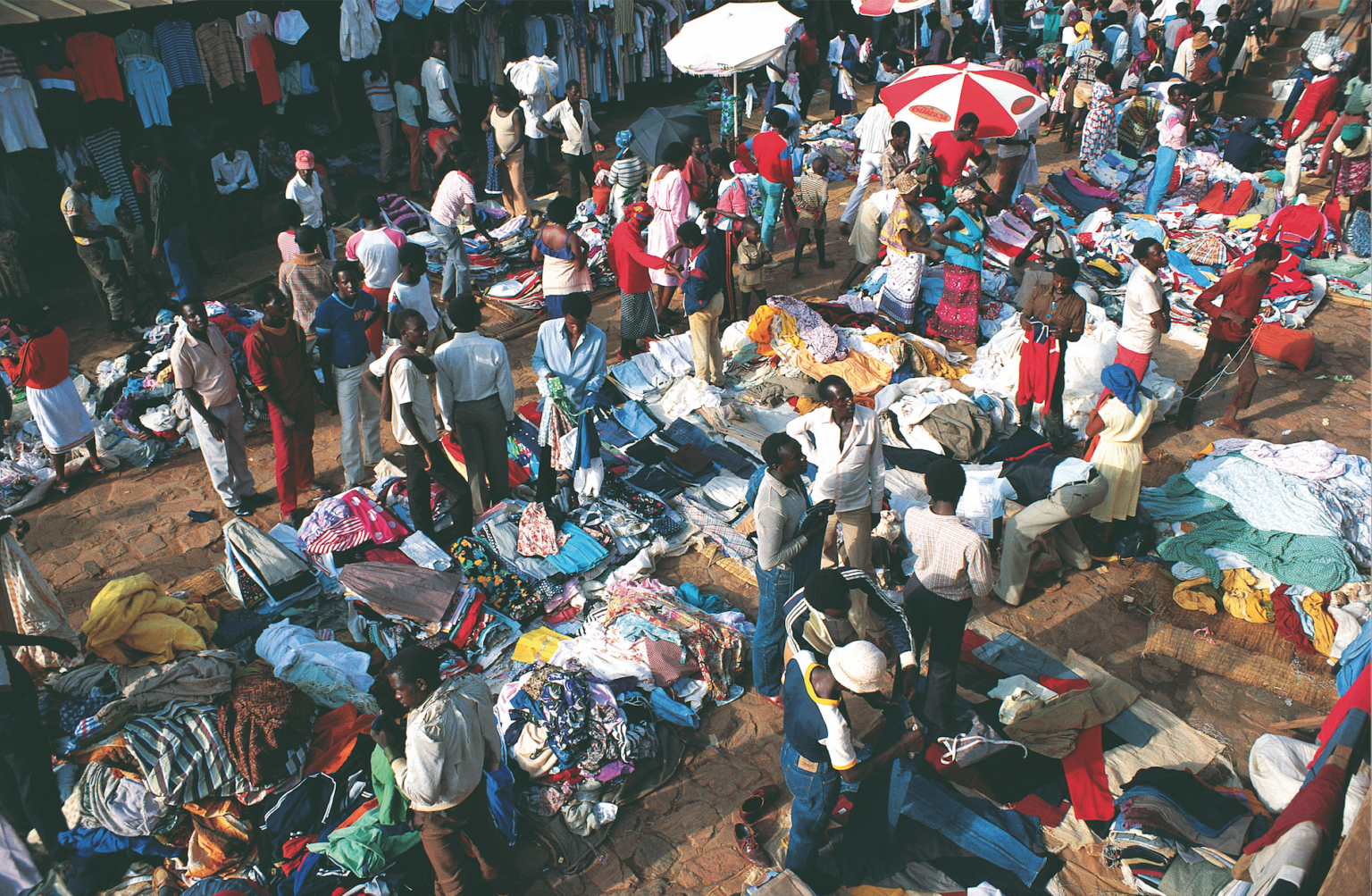
Rwanda’s President Paul Kagame has stood up to US President Donald Trump’s threat of ending Rwanda’s inclusion in the AGOA pact unless the country reverses its new tariff on second-hand clothing imports. While most East African countries want to do away with importing second-hand clothing, so far, only Rwanda has stuck to its guns. Farhiya Ali Ahmed reports.
A stand-off between President Paul Kagame of Rwanda and President Donald Trump of the US has become a cause for introspection and has intensified debates on the African continent’s future trade choices and decisions. The impasse is fundamentally about the trade deal AGOA (African Growth Opportunity Act) but has become an indecorous affair over second-hand clothing that many in diplomatic corridors say is typical of the American president.
In a letter written on 29 March, the Trump administration announced that “Rwanda’s duty-free status for apparel will end in 60 days if no corrective actions are taken”. The duty-free status was part of the benefits of being a signatory to AGOA. Trump’s marching orders were in reaction to Rwanda’s decision to raise tariffs on US second-hand clothing, with the plan of eventually phasing them out.
AGOA allows beneficiary countries in sub-Saharan Africa, including Rwanda, to export their products to the US duty-free. It was enacted in 2000 and renewed in 2015 to run to 2025.
East African countries had resolved to raise tariffs on the second-hand clothing imports in a bid to boost local manufacturing. Tanzania and Uganda agreed to raise tariffs from $0.20 to $0.40 per kilo last year, saying that the hike was a fiscal decision reflecting realignment with the current value. Rwanda raised its tariff from $0.20 to $2.50 per kilo, to take effect for one year only.
Following calls and pressure by US business associations and government agencies, Kenya, Tanzania and Uganda abandoned the joint position, for fear of losing the economic benefits that accrue under AGOA. President Kagame refused to back down.
In the wake of Trump’s announcement, the Rwandan government released a statement asserting that the US had the right to withdraw the benefits but that Rwanda would not reverse its decision to restrict imports of used clothes and shoes, known locally as mitumba.
“The notification by the United States on suspension of duty-free status for Rwandan apparel products under the African Growth and Opportunity Act (AGOA) follows a decision by East African countries to raise tariffs on second-hand clothing imports, in order to promote local manufacturing capacity”, read the US statement.
Rwanda’s policy choice has won support among citizens and local businesses, as well from other African nationals, who say Kagame is once again emerging as the African leader standing up for the continent. Acts such as the recent signing of a Continental Free Trade Agreement, at the last AU Summit held in Kigali, under the chairmanship of President Kagame, as well as the advancement of visa-free entry for all Africans, have seen President Kagame widely commended across the continent.
Admiration does not however translate to public political support as President Kagame has been left to stand alone to face what is seen as an intimidating move in Trump’s global trade with China. Official requests to the AU spokesperson for comments have even gone unanswered, giving credence to the claim by those in the know that many are afraid to be perceived as standing against the US administration and siding with Rwanda’s Paul Kagame.
An official close to the behind-the-scenes parleys has said that some African leaders feel that Rwanda can afford to walk away as its exports under AGOA amount to only $1.2m. For Kenya, East Africa’s biggest clothing market, exports run to the tune of $389m in comparison.
AGOA not a handout
The agreement, however, is not a hand-out, as many would make it appear. While the total exports from Rwanda, Tanzania and Uganda in 2016 amounted to $43.7m, US exports into Rwanda, Tanzania and Uganda totalled $281m. For Rwanda’s $1.2m gained under AGOA in the same year, US exports into Rwanda amounted to an overwhelming $73m-worth of goods, including capital goods and medicines.
To further add to attempts to correct the distorted view of a lopsided benefit to African countries under AGOA, Rwanda and East African officials are in a bid to snuff out the perception of Africa as being a dumping ground for inferior and sub-standard items.
Olivier Nduhungirehe, Rwanda’s State Minister for Foreign Affairs, Cooperation and East African Community, has been at pains to appeal to the US on many occasions to look into the clothing they are exporting into Rwanda and the East African Community, and to ensure maximum hygiene precautions and refrain from exporting underwear, leggings and similar items. In the US, lawmakers and lobbyists have cautioned the Trump administration over the effects of his policy choice. According to US media reports, the Secondary Materials and Recycled Textiles Association has lobbied the government, warning that a ban on the second-hand clothing going into Africa would cost 40,000 US jobs and negatively impact the environment, with thousands of kilos of textile waste ending up in landfill sites.
For Africans who took to social media after the announcement of Trump’s suspension of Rwanda, the stance taken by Kagame was a matter of dignity. Others pointed out that at its heart, Trump’s position reflected his ‘America First’ economic nationalism policies and it should not be taken personally.
Leaps in self-reliance
Moreover, Kigali’s outlook is based on generally positive developments that underscore the region’s leaps forward in self-reliance and economic growth.
Rwanda is ranked second in sub-Saharan Africa in the World Bank’s 2018 Doing Business report, and has been praised by the Bank for carrying out the most business-friendly reforms in the region in the past 15 years. The country recently commemorated the 24th anniversary of the genocide that took more than a million lives.
A determination by the continent to improve local industries has also seen a rise in manufacturing and an increase in the consumption of domestically produced items. Notable examples are South Africa’s ‘Local is Lekker’ and ‘Proudly SA’ drives which have encouraged an internal focus on locally produced apparel. Ethiopia’s revitalisation of local industries has made it an important centre for apparel sourcing. Senegal’s injection of over $142m to resurrect the country’s largest textile factory is also reaping rewards for the country.
While previous negative public statements by President Trump may be inflating the outcry over Rwanda’s rising tariffs and its suspension from AGOA, Deputy US Trade Representative C. J. Mahoney advises in a statement that the position by Trump “underscores his commitment to enforcing our trade laws and ensuring fairness in our trade relationships”.
A silver lining to the stand-off over the used clothing debacle has been the renewed and refocused calls for the African continent’s self-reliance by citizens, field specialists and leaders. NA