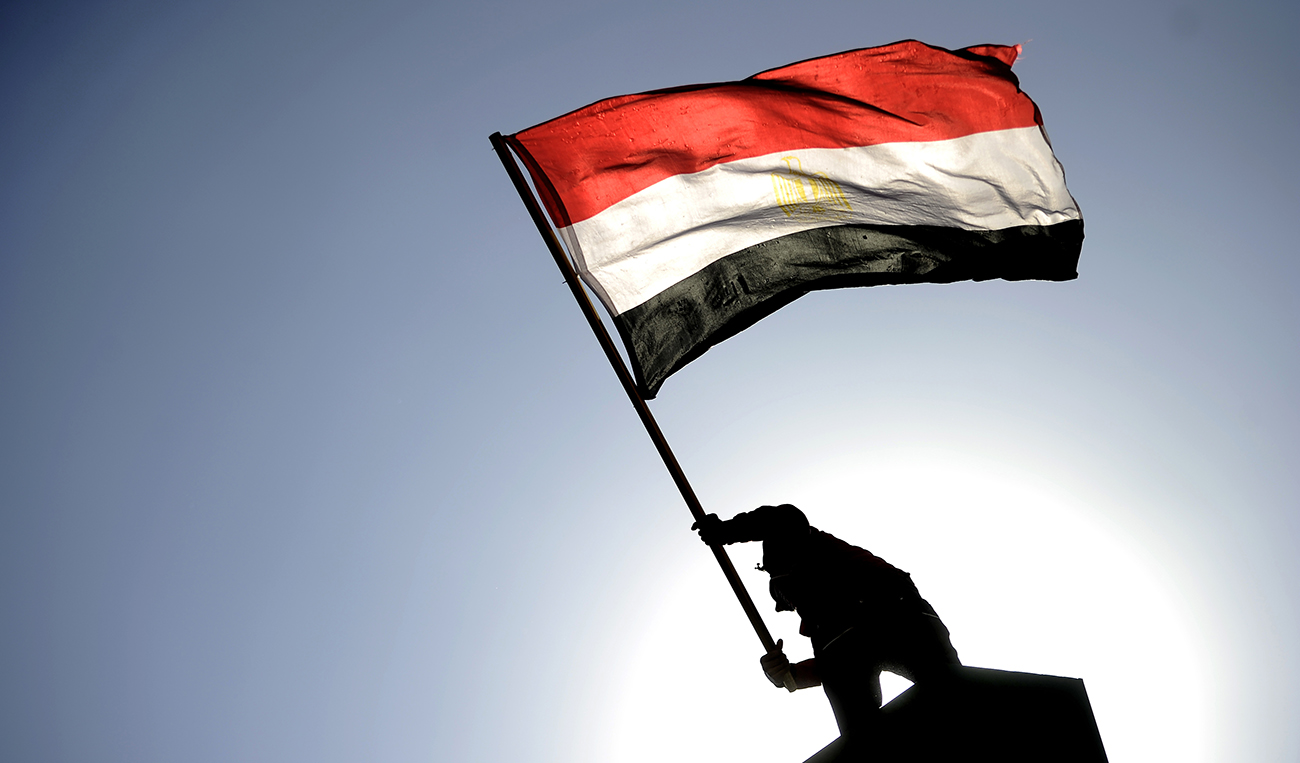
Having managed to overthrow two governments in 30 months, Egyptians discovered they have even more mass power to direct their national affairs, forcing the army to break its long-held vow not to get involved in politics. Adel Darwish examines a nation whose much-touted people’s revolution has pulled the country apart rather than unify it.
A tale of two Egypt’s is unfolding just weeks after masses of Egyptians – between 18 and 35 million (according to police/protestors figures, which is at least threefold the number who overthrew President Hosni Mubarak’s government in February 2011) – took to the streets all over the country in what is now described by anti-Morsi supporters as a “June 30 Revolution”.
President Mohammed Morsi, who came to power after what was said to be Egypt’s freest democratic elections in 2012, was ousted by army generals on 5 July 2013 when he failed to meet their 48-hour ultimatum to resolve the crisis engendered by the countrywide protests. After siding with the “majority” of the country’s population, who wanted President Morsi out, the army generals took a backseat, while reportedly whispering directions to the nervously cautious driver, Chief Justice Adly Mansour (acting as an interim president according to the national constitution, which stipulates that the Supreme Constitutional Court rules the state until a new president is elected).
Within a week, however, Chief Justice Mansour moved to a passenger seat, handing the wheel to Prime Minister Dr Hazem el-Beblawi, an independent-minded reformist and pro-free market international banker, to form a national unity interim government until elections are held next February. Helped by the acting vice president, the former UN International Atomic Energy Agency chief, Dr Mohammed el-Baradei, Dr Beblawi formed a cabinet of technocrats and specialists whose ages ranged from 30 years to 77 years.
News of five women and three Christians in the cabinet (a first since the country’s 1952 military coup that gave the army a say in national politics) caused celebrations in Tahrir Square, the birthplace of the demonstrations that overthrew the governments of former Presidents Hosni Mubarak and Morsi. Seven miles away, thousands of Muslim Brotherhood (MB) supporters, bussed in from all over Egypt, packed Rabaah Mosque Square, where a week earlier nervous, sleep-deprived young army conscripts manning the barriers at the Republican Guard HQ, a stone’s-throw from the mosque, panicked at the sight of an angry MB mob charging at them. The young soldiers killed 53 MB protestors and injured 200, including two policemen and two soldiers. They claim the mob was throwing fire-bombs and firing shotguns, although the MB claim the police fired tear-gas first.
The MB supporters believed that Egypt’s first freely-elected Islamist president, Mohammed Morsi, ousted on 5 July by the army, was held behind the soldiers’ line.
The other Egypt was living the nightmare that Egyptians only saw on television screens and in foreign correspondents’ reports. Several terrorist attacks claimed the lives of unarmed border-guards, traffic police and civil servants in Northern Sinai. On 14 July, terrorists fired a rocket-propelled grenade at a shift workers’ transport bus in el-Arish, killing four people and seriously injuring 14 others.
Because a 1979 Israeli-Egyptian peace treaty limits the number of troops each side can deploy near the border, Egyptian troops in Sinai became overstretched. Besides shutting down smuggling tunnels between Rafah and Gaza (border-guards keep catching Hamas fighters red-handed), and chasing suspected terrorists, the army had to guard various MB-run centres as angry relatives of the victims of the bus attack vowed revenge. A couple of days earlier, Mohammed al-Beltagi, an MB leader, told al-Jazeera that “troubles in Sinai could be halted within an hour of reinstating Morsi”. Not a vote-winner with relatives of terror victims.
Mistakes in office
Instead of acknowledging their mistakes in office, which alienated a large percentage of the population (Morsi was accused of “akhwanat” or Brotherhoodisation of the country, by appointing Soviet-style MB commissar at every level of the Egyptian bureaucracy, affecting the lives of millions of people who, for 60 years, had been dependent on the state-run economy and services), the Muslim Brotherhood labelled the anti-Morsi majority as being paid by the Fulool (the ruminants of Mubarak’s government), sending defiant messages and ordering their youth organisation to disrupt traffic in Cairo and other major cities.
This increased the number of demonstrators rejecting MB ideology and politics beyond Egypt’s borders. What started as a pebble snowballed down the Egyptian hillside, and began to flatten the growing crops of political Islam in the valleys of North Africa. Only three months earlier, previously unknown young liberal and Egyptian nationalist activists launched Tamarud (a rebellion), emulating the Russian 1919 revolution by collecting signatures that formed the core of an anti-Islamist regime petition. The Tamarud protestors called on Morsi to resign and hold a fresh presidential election.
They cited “unlawful” amendments to the constitution made by Morsi, which in turn, was legally contested (the MB sent its supporters to lay siege to the Supreme Constitutional Court and prevent the judges from ruling on charges against Morsi). The Tamarud demonstrators collected 23 million signatories, three times the votes which put Morsi in office. The Tamarud action was supported by the Salvation Front led by Dr el-Baradei, and other leaders of secular and nationalist parties. Even the former secretary general of the Arab League, Dr Amr Mousa, joined the fray, calling nationwide mass rallies on 30 June demanding Morsi’s resignation.
The genie, however, was out of the bottle, with the momentum no longer in the hands of the Tamarud/ SF politicians when millions of people flooded the streets on Friday 28 June, not just in the cities but also in the countryside. They now had a single-word demand – “Irhal” (go for good) – which was first chanted against Mubarak 30 months earlier.
As night fell on 30 June, and with millions of people still on the streets, the army gave all politicians, including Morsi, 48 hours to “start a dialogue to form a national unity government”, or the military would come up with a road-map to get out of the crisis. All, including ultra orthodox Islamist salafis and leaders of both Christian (Coptic) Church and Muslim (Azhar) mosques, joined the road-map talks.
The Muslim Brotherhood stayed away while Morsi made a defiant speech attacking protestors (evidently the majority of Egyptians) as “illegitimate counter revolution elements”. When the chief of the army, Gen Abdulfatah el-Sisi’s appeal to Morsi (which was the third in as many days) to form an inclusive administration fell on deaf ears, the army hosted an impressive panel representing all political trends and religious leaders to present the road map declaring Morsi “irrelevant”.
The end of political Islam?
On 17 July, the army-backed prime minister, Beblawi, ignored Islamist salafists’ objections and swore in his inclusive cabinet reflecting the majority of Egyptians’ rejection of political Islam.
“The new Egyptian political establishment and the army made a strategic decision to go with a majority of 80 per cent of Egyptians who reject the Islamisation of the country and political Islam,” observed Dr Mamoun Fandy, a political scientist at Georgetown University in the USA.
Muslim Brotherhood support took a nose-dive to “single digits”, according to Dr James Zogby, a pollster from the Arab American Research Institute, AARI, down from 22 per cent six months previously and 39 per cent at the time of electing Morsi in June 2012. The Islamist vote peaked at 54 per cent in November 2011, letting MB and salafists gain two thirds of the seats in the People’s Assembly (Egyptian parliament). “But these circumstances are unlikely to be repeated in our lifetime,” Dr Zogby said. In normal circumstances it is unlikely that Islamists could win an outright majority in free parliamentary elections.
British intelligence reports between 1998-2005 put the Muslim Brotherhood’s core voters in Egypt at between 12 and 14 per cent (and a maximum 18 per cent of the population in the countryside). In the November 2011 election, the first free polls since the 1952 coup, the MB vote was trebled by three new blocs. A bit over 10 per cent of voters were sympathisers charmed by a well-financed MB propaganda machine presenting a romantic picture of their suffering in Mubarak’s prisons. Another 10 to 12 per cent of voters were won over when they compared corruption by Mubarak’s officials to the MB’s quick welfare service after disasters.
A similar percentage from the 2011 Tahrir demonstrations that overthrew Mubarak believed the secular candidate, the former Prime Minister Ahmed Shafiq, was a Mubarak man, so they held their noses and voted for Morsi who won by a margin of 680,000 votes (out of 50.9 million registered voters). The three blocs changed their mind (losing the MB 70 per cent of their votes) after a year of Morsi’s Islamisation of Egypt (his appointment of a member of the group which massacred 58 tourists and five Egyptians in 1997, was a case in point). Matters were made worse for the MB when Egyptian newspapers published reports of the Muslim Brothers Global Organisation’s secret plans to destabilise Egypt, as discussed in secret meetings in Turkey.
Regardless of the pinhead dance argument (about the ouster of Morsi, whether it was a coup or the army responded to a revolution by the people), the MB setback in Egypt caused ripples in the region. It sent the gurus and prophets of political Islam into a panicked fight for their survival, in the places where they gained power after the 2011 upset of the apple-cart like Tunisia, or in places where anarchy is propelling them towards power like Libya and Syria, or where they previously appeared secure like Sudan and Gaza.
In June, the MB suffered a blow in the United Arab Emirates after the arrest and trial of their sleeper cells. Within days of the 30 June protests reclaiming Egypt, Tamarud Tunis emerged in Tunisia, where the first wave of the uprising in North Africa took place in 2010, claiming over a million and a half signatures on a petition to overthrow Ennahda, an Islamist movement offshoot of the MB led by Rachid al-Ghannouchi, a member of the MB Global Organisation (MBGO) who chaired one of several secret meetings in Turkey.
Upon his return to Tunis, Ghannouchi made a statement threatening opponents with “drowning in a sea of blood” if they dare go down the Egyptian Tamarud route. Days later, a leader of an opposition party, Mohamed Brahmi, was gunned down in front of his family. The Tunisian government was quick to denounce the killing (Ennahda having the most to lose from further instability in the country, with the murder discrediting their government credentials), although many blame them for the degeneration of law and order in the country.
The main aim of the MBGO’s strategy is to urge America to put pressure on the Egyptian Army, and to enlist support from Turkey and Qatar, emphasising that Morsi was the legitimate president and deposing him an attack on democratic legitimacy.
Battle royal
On Egypt’s streets, a battle royal is being fought by the majority of Egyptians (with army backing) to reclaim their destiny after toppling what they denounced as “a fascist theocracy in the making” on the one side, and the numerically lesser but quite effective MB’s violent supporters. The latter get sympathetic coverage in the Western media which dislike military coups while being obsessed with the Turkish Islamic government model (also the vision of the American administration). The Western media sees the MB and its members as “moderates”, marking the essential middle phase between 60 years of military-backed autocracy and the Turkish model of Islam co-existing with democracy.
The MB, intelligence sources say, has now mobilised the maximum number of people it could muster, so support would eventually dwindle. In an unprecedented departure from its normal schedule since its launch, the Qatari-owned al-Jazeera devoted several hours to covering Egypt during a visit by the US undersecretary of state, William Burns, to Cairo.
The Egyptian police say Tanzeem Sirri(Secret Apparatus, a violent underground organisation established by the MB in the 1930s) and the MB youth caused massive travel and traffic disruption to three main roads connecting central and west Cairo to the airport and the main highway from Suez and Ismailya; and that 16 soldiers and border guards were killed and over 60 injured in terrorist attacks on border posts, and on the el-Arish Airport and other state-run services in Northern Sinai. However, over the month of protests so far, most casualties have been MB victims, so the security forces are far from reproach in recent activities.
The MB’s “fightback” strategy is causing a headache to ordinary Egyptians, but it is far from a scenario of the kind predicted by some Western TV reporters and other left-wing media, of an Algerian or Syrian-style civil war, for which the conditions are non-existent by Egypt’s demographic realities. There is no geographic sectarian segregation or balkanisation in a nation largely made up of one ethnic group (nilotic) who have lived within the same borders for several millennia. Christians and Muslims share the same multiple dwellings in urban and coastal areas, and live on the same farms by economic necessity due to complex rules of alternate irrigation.
The two per cent Arab population living in Sinai and the eastern desert have a different, Bedouin way of life, making them seldom notice the colours nailed to Cairo’s mast. The MB has called for an intefada (a non-Egyptian word first used by Palestinians for their uprising against Israeli occupation) which could usher in sporadic terrorist attacks by sleeper cells made up of a few hundred Hamas activists who, Egypt security sources claim, were given Egyptian ID cards by the Morsi government. The worst outcome, says an interior minister source, would be a repeat of the 1990s Muslim Brotherhood’s affiliated /splinter groups’ isolated terror attacks against tourist sites. The 1990s campaign was successfully contained by Mubarak’s police, who lost a few dozen killed in action, with the tourism industry losing hundreds of millions of dollars. “This time we are better prepared,” the source told New African.
The MB seem unwilling to engage in a reconciliatory dialogue. They rejected the mediation efforts of Alistair Burt, the UK’s Under Secretary of State for Foreign and Commonwealth Affairs, to join Dr Beblawi’s government. The rejection of Dr Beblawi’s repeated offers of cabinet posts, can only be understood as a temporary tactic to increase tension in the country, covered at their Turkey meeting, in the hope of American intervention bending the will of the army.
This unwise calculation, says a senior Western diplomat in Cairo, would further alienate Egyptian voters and reduce the MB’s ability to get enough seats to make a significant impact in the next parliament. The MB’s self-isolation might please secularists, nationalists, women’s groups, minorities and Christian activists; but in reality it might drive them underground, resorting to their old terror tactics of the 1930s and 1940s, which culminated in the MB’s horrific burning of central Cairo in January 1952. That landmark event, many historians believe, became the launch-pad for Colonel Nasser and General Mohammed Naguib’s coup six months later, which placed Egypt in the still-evident embrace of the military.