Since February, the Nigerian and other regional armies have beaten back Islamic militant group Boko Haram. Although not gone for good, the militants are a shadow of their former selves. Max Siollun explains the rapid turnaround in the Nigerian military’s fortunes and asks whether it can be sustained under new leadership.
Only four months ago Boko Haram seemed unstoppable. The group occupied an area bigger than Rwanda in northeastern Nigeria. A resident of a city under attack by Boko Haram described it as “a mortuary for the uncooperative and prison for the conquered”.
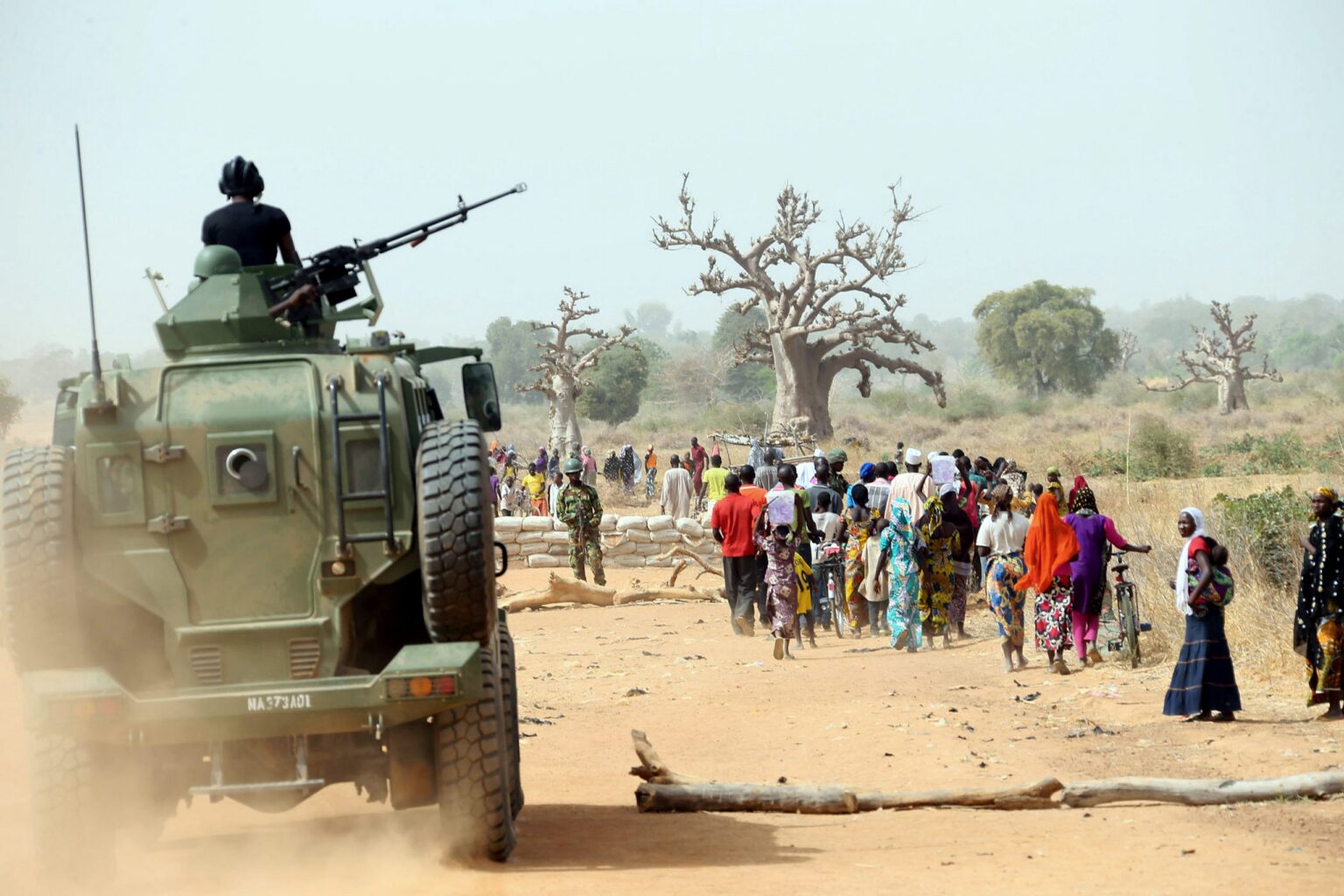
Yet, in less than three months the Nigerian army has done what it failed to do for the last six years, dislodging Boko Haram from all of the major towns and cities that it overran, and freeing nearly 1,000 kidnapped women and children.
How did an army that just months ago was accused of being in disarray, dogged by allegations of corruption, infiltration by Boko Haram, and of retreating from fighting the group, stage such a remarkable turnaround?
Several factors simultaneously coalesced to turn the battlefield momentum in the army’s favour.
In the January issue of New African, I argued, “Ending this insurgency will also require a regional solution. Nigeria cannot do this alone.” The challenge was how Nigeria could form a military coalition with neighbours that it has had military clashes with, like Cameroon and Chad.
Boko Haram did Nigeria a favour when it disturbed a hornet’s nest by capturing Nigeria-Chad border towns and engaged in cross-border raids that disrupted trade routes vital to landlocked Chad. Nigeria’s neighbour now had an economic incentive to fight Boko Haram.
Boko Haram also antagonised Cameroon and Niger with cross-border raids and recruitment in both countries. Boko Haram found itself in the crosshairs of an unlikely Multi-National Joint Task Force (MNJTF) military coalition between Nigeria, Cameroon, Chad, and Niger. Instead of facing one army, Boko Haram was confronted by four. The group lost the luxury of retreating to bases across the border before returning to Nigeria to wreak further havoc.
Tactical errors
Boko Haram also made tactical errors. It became more ambitious by seizing and holding territory, rather than sticking to previously successful hit and run guerrilla tactics. This shift in strategy stretched Boko Haram’s resources; forcing the group to fight a more conventional battle that Nigeria’s military are trained for. The army has had the challenge of fighting Boko Haram with inadequate or dated weapons. The Chief of Army Staff, Lt-General Kenneth Minimah, admitted that “the equipment the Nigerian army had was old, aging, obsolete equipment” and that “It is also common knowledge that the Nigerian troops were running from battle”.
According to the National Security Adviser, Lt-Colonel Sambo Dasuki, Nigeria “hit brick walls here and there” when it tried to buy newer weapons from Britain and America. Nigeria instead went shopping elsewhere. The government contracted a Czech company to refurbish and supply the army with second- hand T72 battle tanks from Hungary, bought MI-17 helicopters from Russia, and fearsome MI-35 attack helicopters from Belarus. The MI-35s, in particular, are a game-changing aerial weapon that one source described as “basically a flying tank”.
Nigeria’s soldiers received not only upgraded weaponry but also new management. Four months ago, Major-General Lamidi Adeosun was appointed as the new General Officer commanding the 7 Division, which leads Nigeria’s battle with Boko Haram. Adeosun was fortunate to arrive just in time to inherit the upgraded weaponry.
Adeosun also inherited troops who had been taught to fear their Chief of Army Staff more than they feared Boko Haram. Fighting spirit was reinforced by Minimah’s ruthless decision to order court martials that sentenced over sixty soldiers to death for mutiny against Adeosun’s predecessor and for refusing to fight against Boko Haram. Soldiers decided to stand and fight, rather than retreat and risk being court-martialled and executed. Adeosun also brought new tactics. A special forces unit, 72 Strike Force Battalion, implemented his new aggressive policy of “relentless pursuit” of Boko Haram. South African private military company Specialised Tasks, Training, Equipment and Protection (STTEP) reinforced the battalion with training and technical expertise. STTEP is headed by Eeben Barlow, a retired South African special forces officer who helped found the infamous private military company Executive Outcomes, which has engaged in conflicts in several African countries including Angola and Sierra Leone.
Elections and insurgency
Nothing energises a government like an election. Boko Haram’s threat to disrupt Nigeria’s recently concluded elections gave the government a firm political will to prioritise tackling the insurgency. In the end the government did the right things, but too late to save it from defeat in the elections.
President Muhammadu Buhari was elected partially on a mandate to “lead from the front” and take the fight to Boko Haram.
However, former President Jonathan did much of what Buhari promised to do if elected. In some ways, the roles of Buhari and Jonathan have been swapped. Buhari is the tough general who is supposed to subdue Boko Haram using military force, Jonathan the deal-making politician with a track record of maintaining negotiated armistice deals with militants, as he did with Niger Delta militants. It remains to be seen whether Buhari will have the tactical dexterity to not only maintain the military momentum, but also to find a long-term solution to the conflict.
It would be a mistake to think that the insurgency has ended. Nigeria has been here before. A military crackdown in 2009 severely battered Boko Haram but served only to provoke the group into lashing out with more intense mass casualty attacks. While the army has proved that it can pin Boko Haram on the ropes, delivering a knockout blow will be more challenging. The best the army can do is to degrade Boko Haram to its 2010 capabilities, when the group launched some attacks but didn’t threaten national security.
Incoming Nigerian presidents have a track record of retiring senior military officers inherited from their predecessors, and appointing new security leaders they trust. Dasuki and the Minister of Defence Lt-General Aliyu Mohammed are sure to lose their jobs. Both men were key figures in the military coup that overthrew Buhari in 1985. The heads of the army, air force, and navy are also likely to lose their jobs now Buhari has arrived. Their replacements will have to decide whether to change or keep the tactics of their predecessors.
Another open question is whether the Buhari government will deepen the military alliance with Nigeria’s neighbours. Greater cooperation would entail more systematic intelligence sharing, early warning stations, and permanently authorising their troops to enter each other’s territories in “hot pursuit” of Boko Haram fighters. Nigerian pride means that long-term maintenance of the MNJTF is unlikely. Even if the MNJTF lasts, Nigeria’s desire to command and control the coalition is likely to cause friction with the other MNJTF members.
The army is finally playing its role. The stage is set for the government to demonstrate it has learned from 2009 and that it can end as well as engage in conflict.