The much anticipated single gauge train from Nairobi to Mombasa falls short in one crucial area – customer satisfaction. By Nick Rosen
I was very much looking forward to travelling on the relatively new SG train connecting Nairobi and Mombasa in Kenya but found the experience marred by issues similar to the ones raised in the recent New African editorial on passenger travails at the Jomo Kenyatta International Airport in Nairobi.
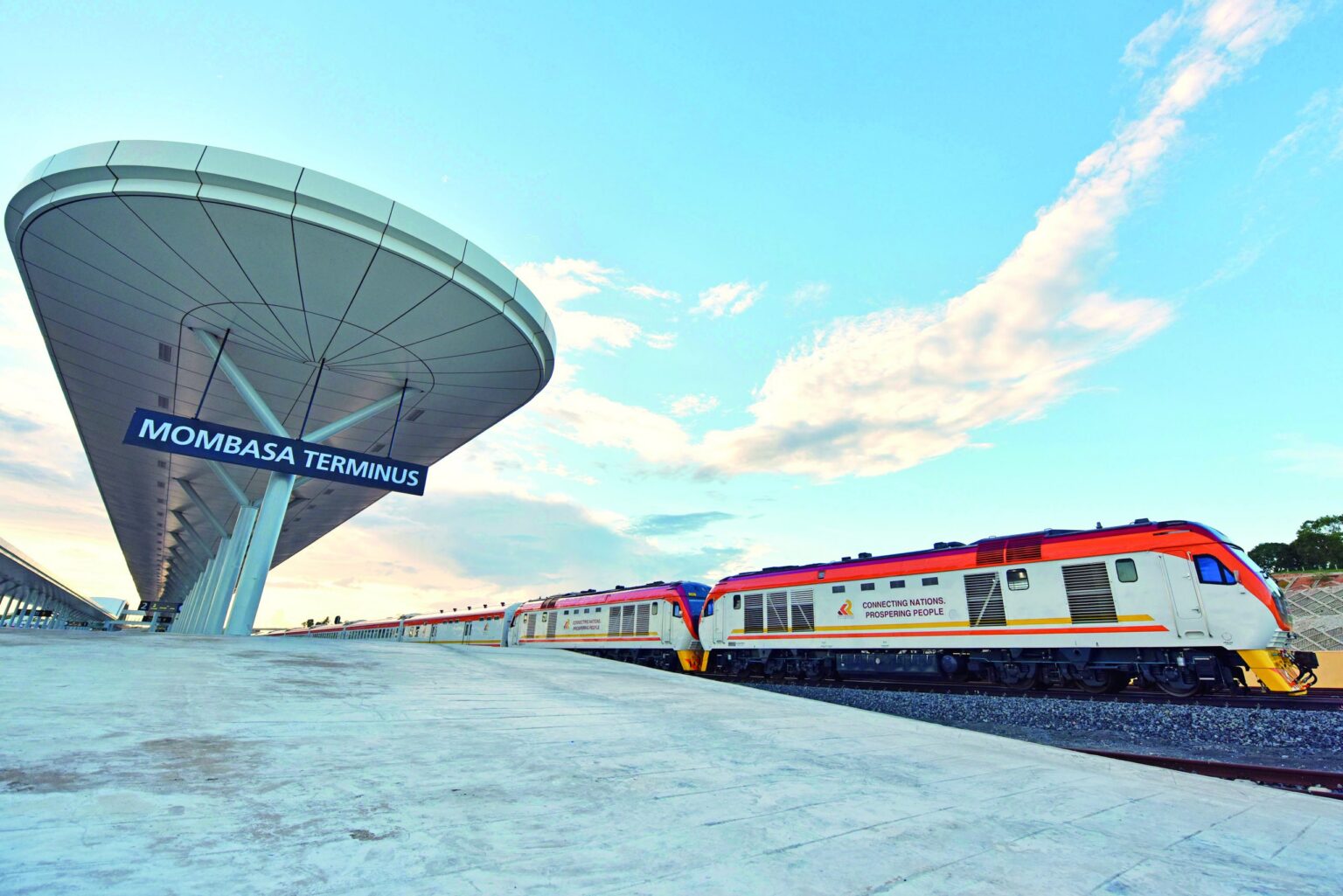
The new Mombasa to Nairobi railway line (replacing the old one built in the early 20th century, nicknamed the Lunatic Express) is a nice piece of engineering, and a slow way to travel around Kenya, but it’s also a huge missed opportunity.
For example, what on earth made the planners locate both termini an hour outside the centre of town? Not only that, but both are situated next to the airports in the two cities, where the new route offers the least possible additional choice to travel-weary Kenyans and foreign visitors alike.
The beauty of train journeys is supposed to be that you are transported fast and in comfort from city centre to city centre without involving a tiring and expensive cab ride. Perhaps over time that omission will be rectified. At the Nairobi end, at least there is a commuter train into the Central Business District – but why does it run only twice a day? What does that say about Kenya’s readiness to do business?
The first thing you notice when you arrive at Mombasa station is the sheer user-hostility of the whole concept. Railway stations around Africa, and around the world, traditionally teem with life – the hustle and bustle of families, traders, friends, all augmented by food stalls, and local transport options.
But Mombasa station is a dead place. The nearest stalls are at least half a kilometre away – even those consist of just a couple of water-sellers, who might be chased off at a moment’s notice. There is no local bus that I could find and tuk-tuks aren’t allowed in. Never mind food stalls – there is no food or drink of any kind available anywhere in the station, just lots of uniformed officials standing around pointlessly.
As a frequent visitor to Shanghai I can confirm that this is all very much in the Chinese style. The SG system, after all, was designed and constructed by the Chinese.
Then there is a miserable and tiring security process – three separate bag scans, each requiring you to pick up your bags, carry them a hundred metres or so, then place them on a carousel, then pick them up again, before going on to the next one. And that is after a cursory search of your vehicle at the entry gate, which has mainly been erected to keep out peddlers.
At least the first bag check has the charm of a spaniel and labrador to keep passengers amused. Presumably the animals are trained to sniff for explosives and drugs, and you would have thought the dogs plus the baggage scan and the frisking of each and every person, would be enough, but no – the bags are scanned two more times.
Once you have been grudgingly admitted to the brand-new, purpose- built station, there is absolutely nothing to do but wait. Because of the distance from town, and the multi-layered security measures, almost all passengers arrive at least 20-30 minutes early. Not knowing what to expect, I had arrived at 6.15am for the 7.15 train.
There is an information video playing on dozens of separate screens, all at slightly different times, to advise you not to steal any chain link fencing from around the railway line or station. To do so would cause the needless deaths of farm animals, according to the video. The screams of the animals come first out of one TV, then another, then a third, preventing anyone from concentrating on anything other than the surroundings.
Unsurprisingly, there were almost no other passengers on the Wednesday morning when I took my ride. That was fortunate because the one small toilet for each gender could not have handled a large crowd.
How can a brand-new toilet facility be quite so unpleasant? It had been designed to be as uncomfortable as possible. To start with there was only one roll of toilet paper to be shared amongst all the cubicles. Yes, you did read that last sentence correctly. In this giant new terminus with its hard metal seating, and not even a coffee machine, there was one roll of toilet paper in the sink area.
However, there is no indication of this before you enter the cubicle and since most people would expect to find the paper next to the toilet, I imagine it must have led to a lot of embarrassment over the months since the station opened.
There was one small, and strangely rather old and battered hand-drier – the sort that blow hot air. It was broken. There is another toilet for travellers, but it is not for the general public.
World of difference
There is of course a very large and comfortable VIP area – for those who wish to inspect it, it is just before you get to the gent’s toilets, and as the door is left unlocked you can just walk in. There are vast leather armchairs – the sort you might expect in a gentlemen’s club – and small brasserie-style metal tables and chairs, as well as a coffee machine and a much nicer toilet.
Finally the train was called. Amongst all the officials waiting to order me this way and that, take my ticket, inspect my bags, I saw one Chinese official standing with a rather arrogant expression just by the ticket barrier. The security badge hanging from the lanyard around his neck identified him as one of the management cadre working for the Chinese train operator.
I asked him if he was aware the hand-drier in the gent’s toilets was not working. “Yes,” he said, “it’s a power problem. “ And when will it be fixed, I asked. “In about a week,” he said rather dismissively. I asked him whether he felt this was not a rather low standard of service, and he had the grace to look uncomfortable.
There was a tiny selection of snacks available for sale on the train, but not for the first half hour. The staff all stayed locked in carriage No. 1 at the front of the train, chatting to each other. But eventually they came out and started serving muffins, yoghurt, low-quality tea (in Kenya of all places!), instant coffee and tins of lukewarm beer and soda.
As a first-time visitor to Kenya I was shocked at the way the railway was foisted on the local economy. It would seem that in all the planning to construct this much-needed railway system, the needs of the paying customers came last, if they were considered at all. NA