Few countries in the world have had such a chequered as well as traumatic experience as the Democratic Republic of the Congo (DRC). This vast, sprawling country at the heart of the continent defies easy interpretation but a new documentary attempts to provide a useful guide. Beverly Andrews reports.
Why do some countries seem destined to be mired in conflict whilst others are not? This is a question posed in the excellent documentary, This is Congo, directed by Daniel McCabe.
This is Congo tells its compelling story through four very different individuals: a former rebel fighter, now a member of the government; a patriotic and charismatic military commander; a female mineral dealer; and a compassionate and ultimately hopeful displaced tailor.
Each sees the conflict from an entirely different perspective and all lament how this mineral-rich paradise has been turned into a killing zone. Although their lives never actually intersect, we see how the conflict has shaped all their lives. The film offers a rare and timely Congolese perspective on this endless war, a perspective which at many times during its 90 minutes, points a knowing finger at the real culprits – the various outside players, not simply from the West but also from the DRC’s neighbouring states, who all have their own reasons to keep this war going. One of the interviewees, the former rebel fighter in the government, keeps his identity hidden and his words are read by an actor. He takes the viewer on a historical journey of the DRC, placing many of its present problems in context.
We learn that perhaps the Congo’s main curse has, ironically, been its abundance of natural resources. This is treasure that has attracted some of the world’s greediest and most ruthless, bent on exploiting it without any consideration of the consequences for those who actually live in the country.
This exploitation began with the Arabs, who set out to enslave the Congo’s inhabitants in order to take hold of the country’s ivory trade. They were eventually replaced by the troops of Belgium’s King Leopold, who acquired the country at the Berlin Conference of 1885, making it his own personal property and enacting one of the most brutal colonial regimes anywhere in the world; millions died through disease and physical exploitation in his quest to produce ever more rubber, while many were mutilated.
The country became the Republic of Congo at independence in 1960 but was soon to plunge into violence and turmoil as the President, Joseph Kasa-Vubu and the Prime Minister, Patrice Lumumba fell out. Moise Tshombe, egged on and supported by Belgium and the US, sought to hive away the mineral-rich Katanga Province from the rest of the country. Lumumba turned to the Soviet Union for help – triggering a series of responses from the US, Britain and Belgium that culminated in him being brutally beaten to death.
In the chaos that followed, army commander Joseph-Désiré Mobutu took over power, with US and Western blessings, renamed the country Zaire and remained in place for over 30 years before being overthrown by Laurent Kabila in 1997. Kabila was shot dead in 2001 and succeeded by his son, Joseph, the current head of state.
Heart-warming resilience
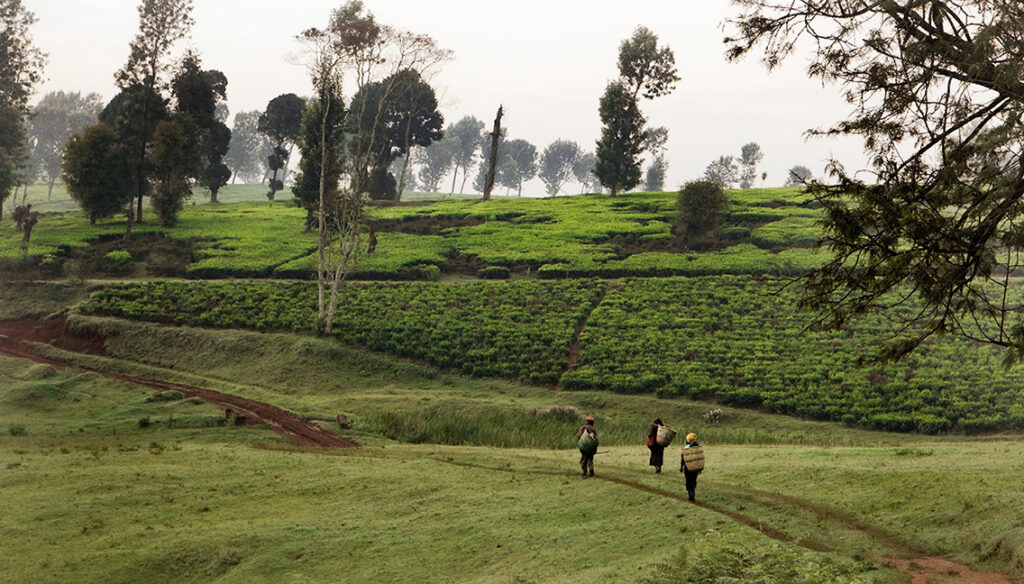
The film, however, does not dwell only on the more negative aspects of the country but also shines a light on the resilience of its people. Mama Romance, the gem dealer, says her driving motivation is not to enrich herself but to provide a university education for her children. She undertakes dangerous monthly trips, illegally crossing into neighbouring countries in order to sell gems found in the country’s many rivers.
She says: “if the country would simply make this legal, then it would be so much easier for me,” but she points out that given the option of watching her children starve or breaking the law, the choice she has to make is obvious. Having done this for 10 years now, she can proudly boast that one of her sons is a university graduate and all her other children are
now in school, set to follow his example.
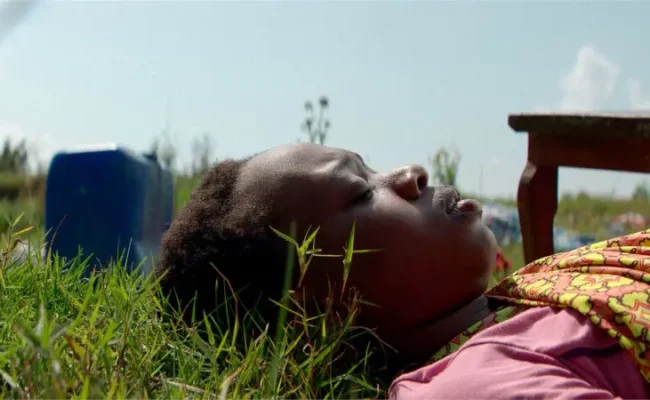
Hakiza Nyantaba, the tailor, has spent a number of years in refugee camps, shuttling to a new one with his family every time a peace treaty is broken and conflict erupts yet again. But seeing him carefully mending a garment with his precious sewing machine, in the middle of a crowded displacement camp, is somehow a symbol of hope and not despair.
He gives an articulate perspective on the country’s current problems, stating that the people often feel caught between two equally unpleasant forces: a government which is corrupt and an army which is undisciplined, and exploitative rebel forces who often show no mercy to civilians in their quest for power – often funded by foreign powers. Yet he remains optimistic that somehow the country will find its way out of its current political cul de sac and achieve a lasting peace.
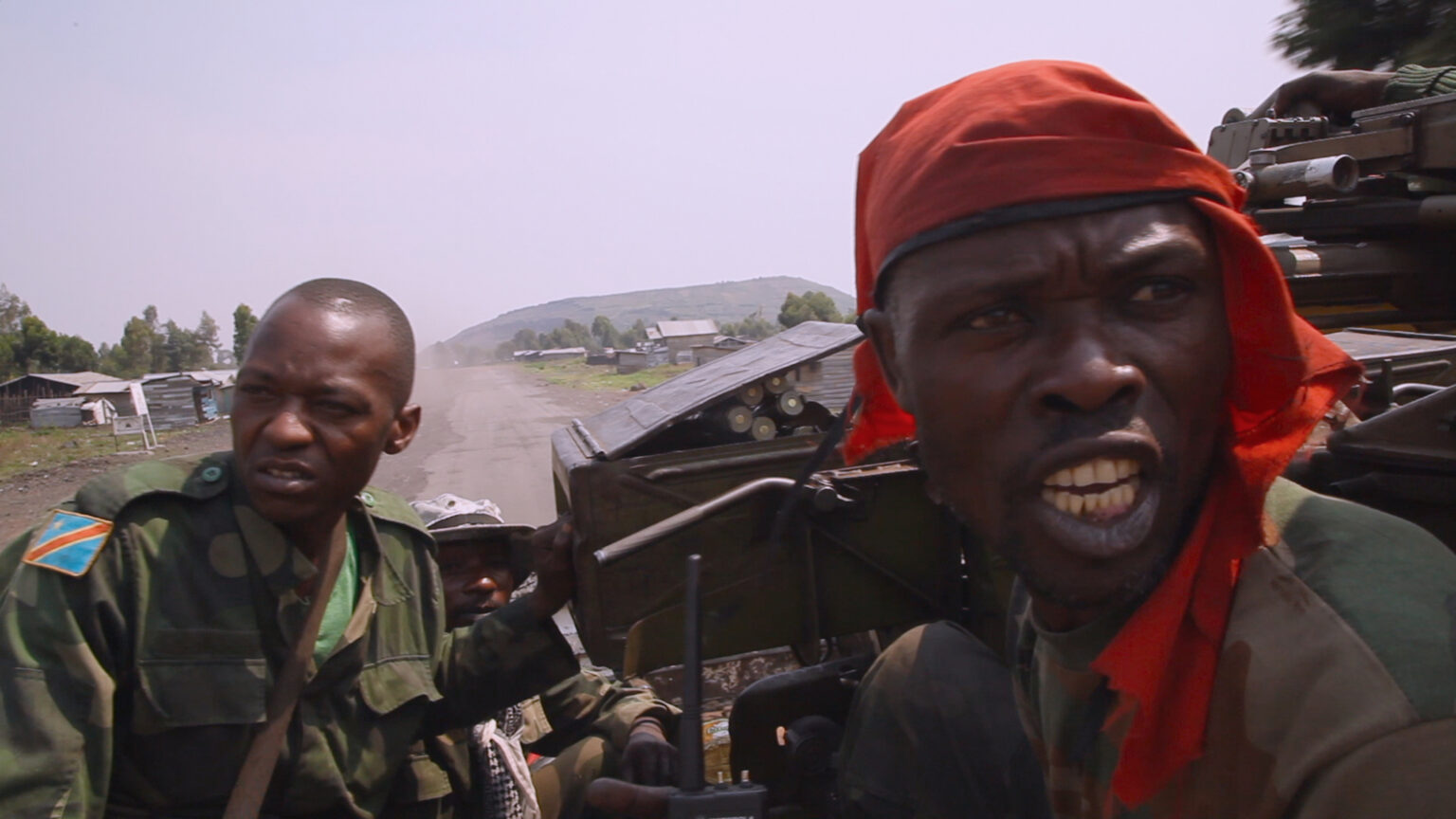
Colonel ‘Kasongo’ Mamadou is an enigma. A boyish-looking, smiling military commander, he seems to genuinely want to return to a simple life of farming with his family and above all he appears to love his country. And yet the film shows he does not hesitate to punish a subordinate (his crime we never discover), who he has quite brutally beaten in front of him while he sits quietly shaving. Can a commander who has witnessed and in many cases ordered such violence really be an architect of peace in the DRC? A glimmer of hope appears towards the end of this often harrowing documentary, when the army finally defeats M23, one of the country’s most deadly rebel units. Civilians literally dance in the streets with joy at the prospect of a final end to this long-running conflict.
Mama Romance prepares her eldest daughter for her wedding to a local preacher. She is so happy she has to constantly wipe away her tears. Hakiza Nyantaba and his family return to his bullet-strewn home. He doesn’t even wait for things to completely stabilise in his beloved country. He remarks that there are people who have been living in the camp for over 10 years and he has no intention of being one of them. His eyes twinkle when he walks into their fragile house. He looks at the bullet holes in the walls but shrugs, as if to say the important thing is they are home.
Colonel Kasongo Mamadou is greeted on the streets as a conquering hero after the government’s victory over the rebels. But this joy is sadly short-lived as in the next frame we find out that he was assassinated, not by outside powers but by those in his own army who were jealous of his command. We also find out that President Kabila subsequently cancels the upcoming elections, extending indefinitely his already long 15-year term in office. NA
*This is Congo is part of this year’s Human Rights Watch Film Festival, which is touring the world.