From Nollywood to Cannes, African film-makers and shakers are revealing their diverse stories. Alecia McKenzie talks to some of the leading characters.
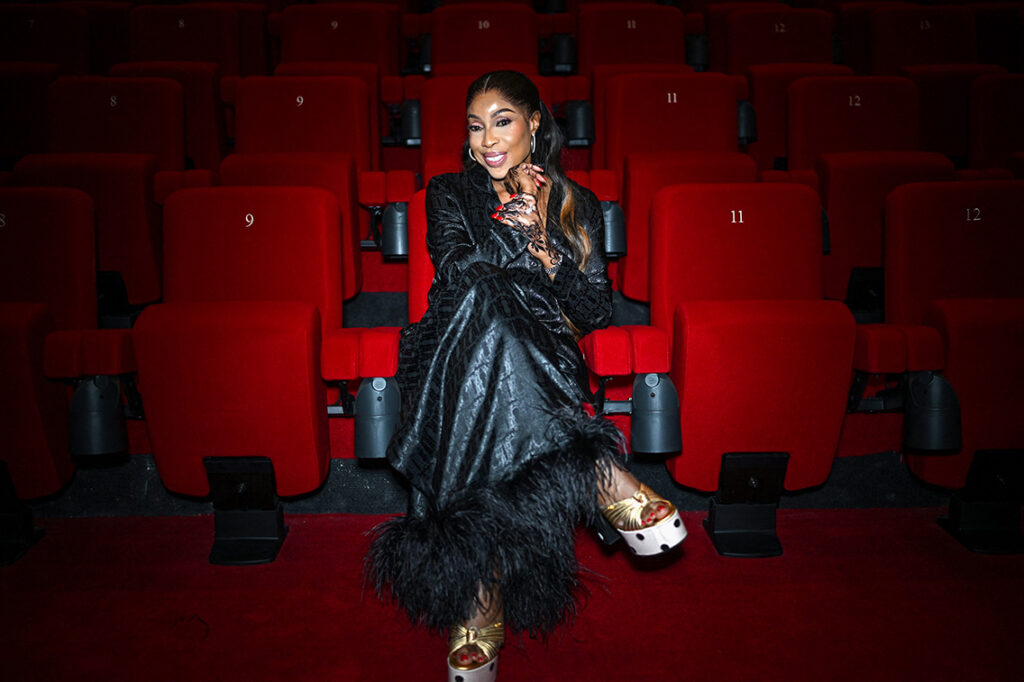
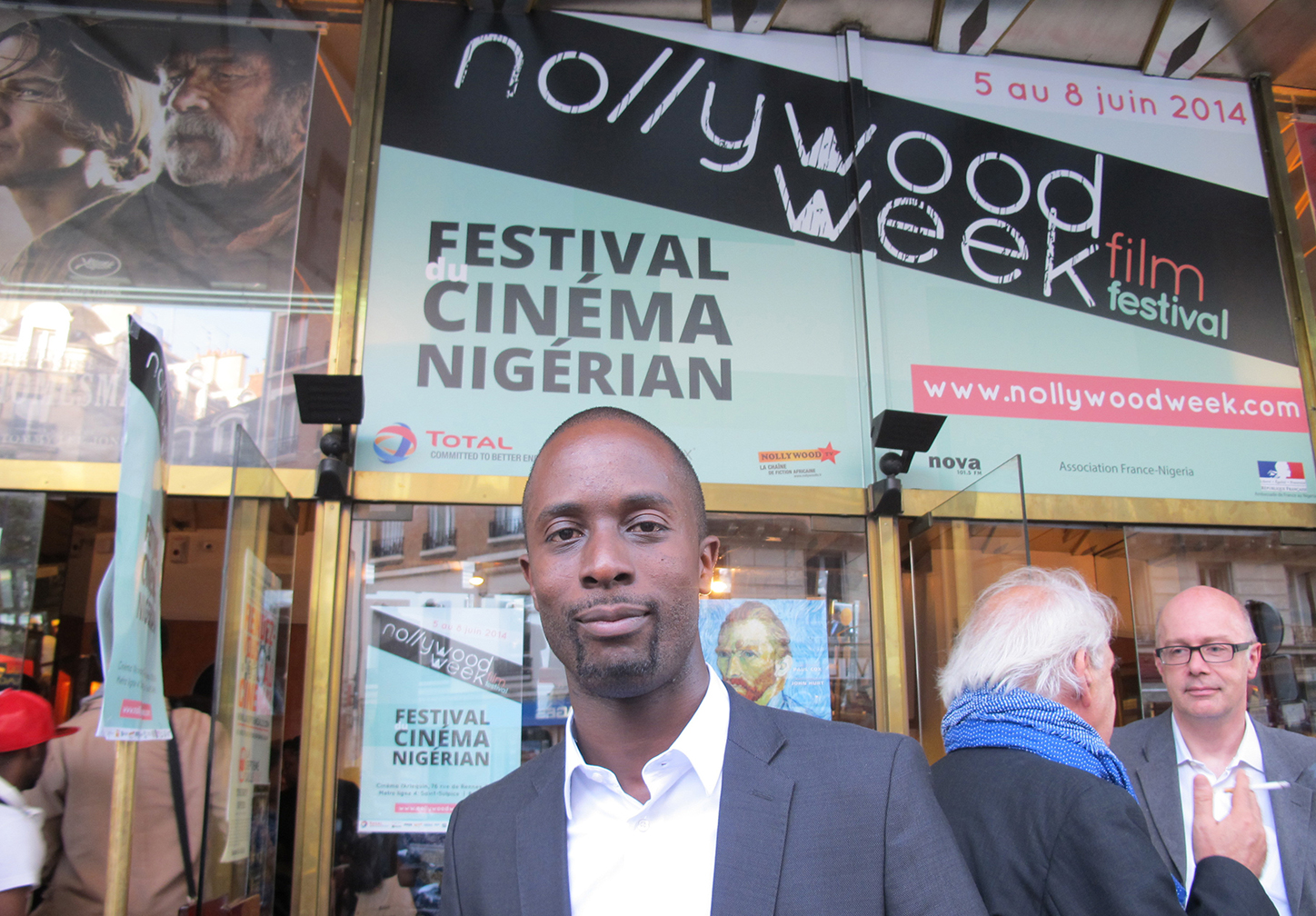
The beautiful people were out in force on a balmy June evening in Paris, as one of the newest film festivals in the French city opened its doors. Head-turning stars such as Omoni Oboli, young African-French professionals dressed to the max, and ultra-cool artistic types with a variety of interesting hairstyles, were all on hand for the launch of the second Nollywood Week film festival.
Serge Noukoué, a tall young man in an elegant suit, introduced the opening film in French and English. The festival, born in 2013, is Noukoué’s baby, and a resounding success at just one year old.
He did not expect it to become so popular in such a short time, but it seems that everyone has their eyes on the Nigerian film industry, or Nollywood, these days.
In Cannes, where two African films were in the official festival selection, the elephant on the beach was Nollywood. Filmmakers said that other African countries need to learn from what is happening in Nigeria, where the film industry now employs thousands of people and is the fastest growing sector of the economy, worth an estimated $5bn.
Nollywood has become the world’s second-largest film industry, after India’s Bollywood, producing more than 1,500 films each year. But experts in the movie sector stress that African directors need to avoid the danger of a single plotline – to paraphrase the title of a speech made by Nigerian author Chimamanda Ngozi Adichie – as Nollywood is not without its problems, including issues with quality and pirating.
“We all need to do what Nigeria is doing, but in our own way,” says Souleymane Cissé, a Malian director whose film Yeelen won the Jury Prize at the 1987 Cannes festival. Cissé is director of the Union of Creators and Entrepreneurs of Cinema and Audiovisual Arts of Western Africa (UCECAO), and he dismisses widespread criticism about the lack of quality in Nollywood films. “Out of quantity comes quality,” he says.
That is a sentiment with which festival director Noukoué agrees. “I’ve been watching Nollywood films for 10 years now, and every time I read something, it’s always about the quantity of films and the lack of quality,” he told New African in an interview.
“I do acknowledge that some of the films are put together very quickly and are not so great, but at the same time, I’ve been very aware that there are quality films that deserve to be seen by everybody.”
He said the idea for his festival came out of frustration with the “difficulty of having access to quality Nollywood films in France in general” and also from “hearing every year at Cannes that African cinema is dying and that African filmmakers need help”.
Noukoué said he could not understand this oft-repeated story at the world’s most prestigious film festival when across the African continent and in the Diaspora, people are watching Nollywood movies and call for more productions.
“These are the kind of things that really pushed me to start this festival because I wanted to show that the reality was different, that a lot of movies are produced and a lot of them are good films,” he added.
“For me, what is lacking is distribution, awareness, marketing and promotion, and I just wanted to contribute to African films having a better platform because many are taking strength from the Nigerian story.”
The other side
But while Nollywood has become an inspiration for some filmmakers, it might not be the road for others, judging by the African movies selected for Cannes in 2014.
The films included the profound, moving and beautifully shot Timbuktu, by Mauritanian director Abderrahmane Sissako, and this does not quite fit the mould of Nollywood, or even Hollywood for that matter.
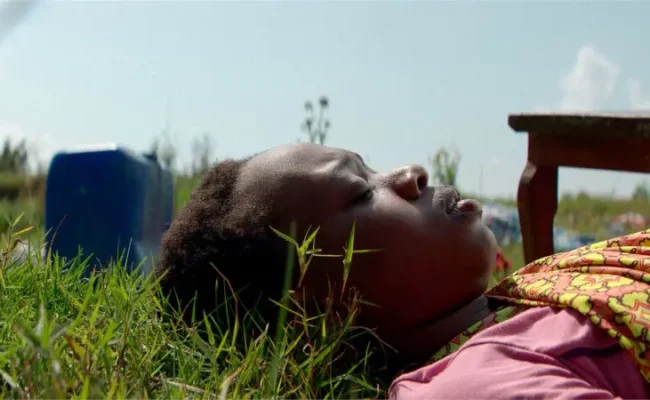
The film tells the poignant story of a family in the north of Mali who suffer from the region’s occupation by religious extremists. The newcomers have banned music, beer, smoking and even football, and they often target women whom they command to dress and behave in certain ways. Those women who dare to speak out are swiftly punished, but people still manage to resist, even in silence.
After its screening on the second day of the Cannes Film Festival, Timbuktu received glowing reviews and many who viewed it said the images would stay with them for a long time. Critics were thus surprised when the film was shut out of the festival’s top awards. Writing in a French newspaper, one journalist just could not fathom how Timbuktu had received “zero, nada” when the work had a “rare elegance, seriousness, power and modesty”.
The Jury described Timbuktu as a strong yet nuanced denunciation of an extremist interpretation of religion
The film did receive the prize of the independent Ecumenical Jury, a body comprising Christian movie professionals, but the general opinion was that it should have been more highly rewarded.
The Ecumenical Jury praised the film’s “high artistic achievement and its humour and restraint”, describing the work as “a strong yet nuanced denunciation of an extremist interpretation of religion”. The Jury said that while it offered a “critique of intolerance” the film also draws attention to the “humanity inherent in each person” as even the extremists are shown to have many dimensions to their character.
“Human beings don’t just comprise one dimension,” Sissako told reporters. “It’s not all or nothing. Everybody is complex. You have both good and evil. It’s important to realise that a jihadist is a human being, who at a given point in his life has made a certain choice. What you need to do is to make these people appear human. They are fragile at the same time. A person who treats people badly may sometimes be wracked by doubt.”
His kind of film can be contrasted with the one-dimensional aspects of many of Nollywood’s productions, or even with the vast number of second-rate Hollywood films that do exist. Sissako, like several other African filmmakers, seems to have more in common with artists who are moved to produce a work not necessarily for mass appeal but because of something deeper.
The director himself said he was motivated to make Timbuktu because of an “unspeakable crime” that took place during the occupation of northern Mali, when the young parents of two children were stoned to death for the “transgression” of not being married.
“The video of their killing, which was posted online by the perpetrators, is horrific. The woman dies struck by the first stone, while the man lets out a hollow rasp of a cry,” Sissako said in the introduction to his work. “I am in no way trying to use shock value to promote a film. I can’t say I didn’t know and, now that I do, I must testify in the hopes that no child will ever again have to learn their parents died because they loved each other.”
At a press conference in Cannes, following the screening, he broke down in tears and was applauded sympathetically by those present.
“Maybe I’m crying in the place of all these people who’ve experienced these things … who truly suffered,” he said when he composed himself.
“The real courage is to be found among the people who lived this on a daily basis, not only for one or two days but for a long time. And they waged a silent combat, which is a real combat by humans – and that’s where the optimism lies in the film.”
Asked if anyone else could have made Timbuktu, Sissako, who spent part of his childhood in Mali, said he felt it was up to him because of his background.
“When it’s your job to be a filmmaker, when you can do it, you have to spare no effort, you have to go even beyond what you thought you were capable of, to take risks (not physical risks, of course), even if you fail,” he told journalists.
“I belong to that world, I belong to the Sahel, I belong to Africa, so it behooves me to tell these stories. I don’t see how a Swiss or someone from Finland or elsewhere could this. They are close to other stories, to other events, which they will depict in their films. What is very important is to depict the reality that one lives.”
Perhaps the atrocities currently taking place in northern Nigeria may one day be analysed or described in film, but at the moment that crisis seems remote from Nollywood. For some other African directors, war is an ever-present theme, however.
Which brings us to the second film that was in the official category at Cannes: Run by Ivorian director Philippe Lacôte. A week after the festival ended, Lacôte spoke to New African in Paris, over a couple of glasses of Belgian beer, in a small brasserie close to the Eiffel Tower.
He spoke about African cinema, and here again, Nollywood was the giant at the next table, looking on and smiling. “My mother in the Ivory Coast watches Nollywood television, and when I ask her why, she says it’s because the films show people like her,” Lacôte confided.
Like Noukoué and Cissé, Lacôte said that he disagreed with those who slammed Nollywood for a lack of quality. Yet, his movie Run generally goes against the Nollywood grain, showing as it does the toll of conflict on populations as well as the effects of nationalism and racism among Africans themselves.
The film’s main character is a troubled young man who has a dream of becoming a “rainmaker” (someone possessing the gift of bringing about rainfall) – but who ends up joining a militant gang and eventually killing his country’s prime minister.His life is thus lived on the run.
For 42-year-old Lacôte, whose father is French and mother Ivorian, Côte d’Ivoire and its tragic wars are where he draws his inspiration from.
But he is also an international director, fluent in French and English, who has lived in several countries.
He emphasises that he didn’t want to make “a French film” in Africa. “Côte d’Ivoire currently has no cinema industry, so you have to bring in everything,” he says.
“But I wanted to work with an African crew; and 80% of my crew was African, not only Ivorians but also from Senegal, Burkina Faso and other countries. There are a lot of good technicians in Africa with a lot of experience from other films.”
Making Run was still difficult, however, because of political sensitivity. “It’s not easy to focus on a political subject, especially when so many people have lost family members in the conflict. But I’ve previously made a documentary about the near-civil war, and it’s my way of working. As a filmmaker, I think we have something to contribute about politics,” he adds.
Funding and the future
Even if the overall story is a touch uneven, the fact that Lacôte’s first feature-length film is Côte d’Ivoire’s first entry at Cannes (shown in the festival’s “Un Certain Regard” category) gives an indication of its originality. But Lacôte is already working on other projects and is determined to help restore the glory days of Ivorian filmmaking. The country now has only two cinemas but it was once a leader of West African movies, and Run may help to revive the industry and boost the aspirations of younger directors.
The film was produced on a budget of $2.1m, and Lacôte says he’s lucky to have a dynamic French producer who works on all his films. But in this instance, he also benefited from a $150,000 grant from the Ivorian government’s new film fund, which is the first such official financing of a movie.
Sissako’s Timbuktu also received support from the Mauritanian government, in the shape of the military providing security while the film was being shot. But many African directors have a tough time getting any kind of government support or funding for their films. According to Cissé, who travelled to Cannes this year to support Sissako, African filmmakers have a harder time than most to get their films made and then to attain international distribution.
“Financing is still a huge problem,” he said. “Even low-budget films have to fight for funding, and there hasn’t been any political willingness to help because in Africa one doesn’t believe that cinema is an art and an industry.”
Except, apparently, in Nigeria. As festival director Noukoué says, there is no refuting the fact that movie-making is an industry in Nigeria, and that is why Nollywood is so important. “It is huge,” he says. “We’re talking about one million jobs that Nollywood has created, not just direct jobs but also indirect jobs. And it’s a great opportunity for other countries to take a look at what Nigerians are doing in terms of Nollywood and apply it in their own countries.
“Making films is of course a costly business and one of the problems in Francophone Africa is that the funding is mostly available from overseas, coming from the European Union, from France, or other places, which is not sustainable. In Nigeria, that’s not the case, and filmmakers have to hustle and do things on their own.”
Most of Nollywood’s films are self-funded, which is one reason for quality being an issue, but things are changing rapidly, judging from the eight films shown at the Nollywood Week Film Festival. The movies comprised various genres, ranging from romantic comedies with slapstick situations to psychological thrillers and book adaptations.
The selection included Half of a Yellow Sun, based on Adichie’s bestselling novel and the highest-budget film to date in Nigeria, while the opening night featured Being Mrs Elliott, an unusual love story with various twists and turns that had viewers at the Arlequin Cinema on Paris’ Left Bank, laughing out loud.
Omoni Oboli, who wrote, produced, directed and starred in Being Mrs Elliott, says that the industry is changing faster than outsiders realise.
“Honestly speaking, we’ve had some low-quality films over the years, but all that is changing,” says the award-winning actress and director.
“We have serious filmmakers who pay attention to detail and who have decided that we’re going to make this world-class. We’re definitely improving; we’re not where we want to be, but very far from where we were. Do we still have those low-quality movies? Yes, we do; but even Hollywood does.”
Oboli, who is part of a growing group of women directors, was able to get funding for Being Mrs Elliott, and her film “thanks” the sponsors by having product placements in several scenes. She herself plays two roles, and cast her sons for the children’s parts. This is how Nigerian inventiveness continues to get movies made, she says. “Nollywood is a passion,” Oboli told New African. “And the future is bright.”