As Beverly Andrews writes, directors working in Africa and throughout the diaspora, have often found international distribution very difficult to come by. To help remedy this lack, London’s British Film Institute is currently running a celebration of African Cinema, to highlight some of the films.
Africa’s greatest filmmakers are virtually unknown in the west and by extension even in Africa itself. Dubbing it the “African Odysseys”, London’s British Film Institute is currently running a year-long celebration of African cinema, to give western filmgoers a sample of the wonderful work from across the African diaspora. It is a welcome reminder that cinema is not solely a western art form.
David Somerset, the African cinematic strand’s programmer, tells New African: “It was originally set up seven years ago and its original aim was to educate the world to cinema produced in both Africa and the African diaspora.
African Odysseys is a welcome reminder that cinema is not solely a Western art form.
So many of the films that are produced in these countries often find it difficult to find a commercial outlet. Here at the BFI we felt strongly that we could act as a venue for this wonderful work.”
Some of the highlights of the season so far have included Med Hondo’s legendary film West Indies: Les Nègres Marrons De La Liberté (West Indies: The Black Freedom Fighters). Made in 1979, the film, costing over a million dollars, a musical which looks at France’s colonial history in the West Indies, was at the time the most expensive African feature ever made.
Hondo said in an interview about it: “I wanted to free the very concept of musical comedy from its American trade mark. I wanted to show that each people on earth has its own musical comedy, its own musical tragedy and its own thoughts shaped through our history.”
The film, set on an unnamed Francophone island in the West Indies, documents the history of black people there, from slavery, through to colonisation and on to the ongoing, often crippling economic constraints many islands in the Caribbean find themselves in today.
Shot entirely on a sound stage in Paris, the film stands as a mammoth achievement and its theme, of what constitutes true independence, is as relevant today as it was when the West Indies was first released.
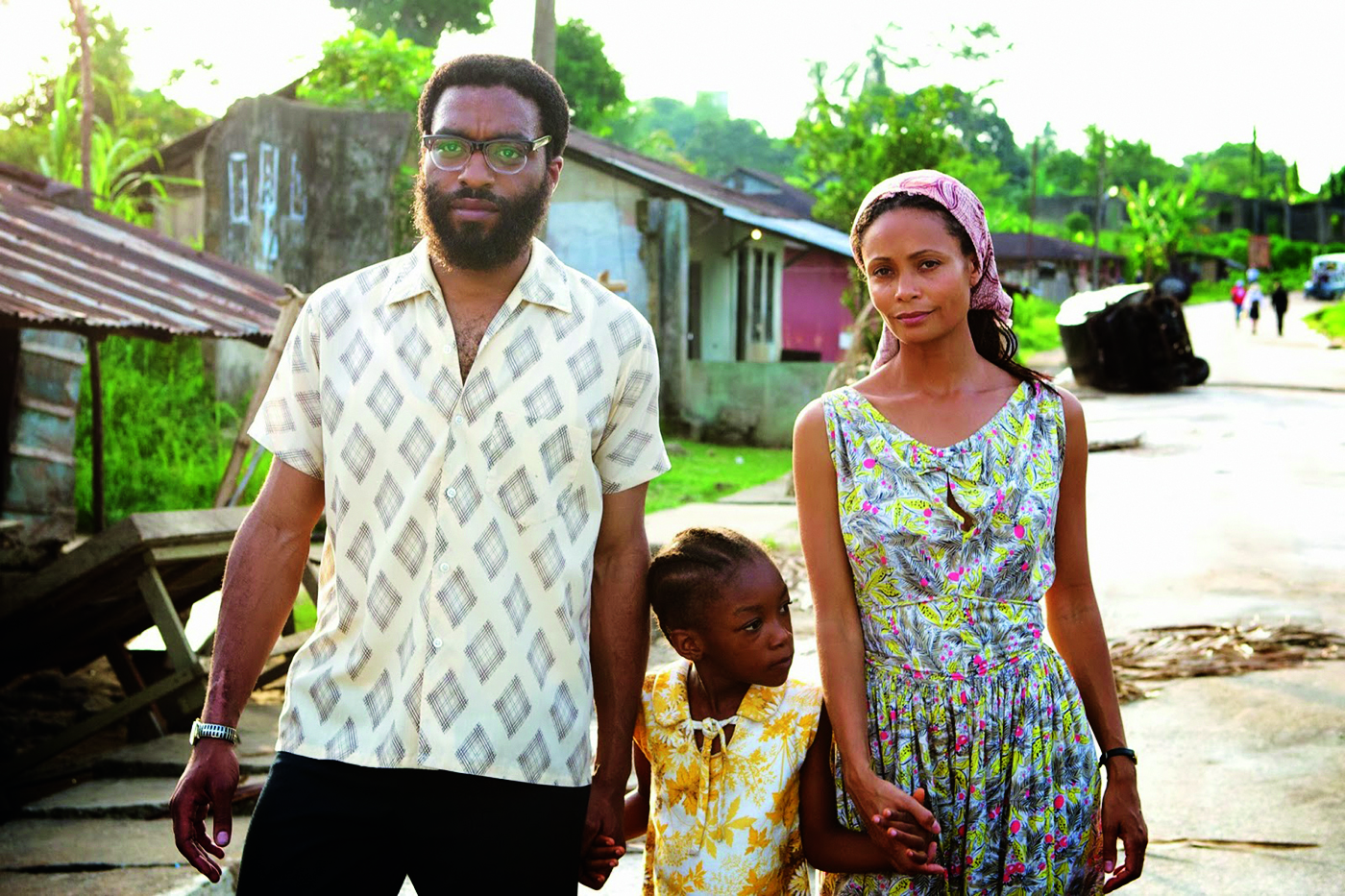
Another film screened in the season was the recently released Half of a Yellow Sun, Biyi Bandale’s sensitive look at Nigeria’s brutal Biafran civil war. Adapted from Chimamanda Ngozi Adichie’s acclaimed novel, the film looks at this terrible conflict through the eyes of two wealthy Nigerian sisters whose lives were devastated by this tragedy.
Somerset states of the season: “For us, that has been the joy of the strand, to be able to programmed older classics like West Indies alongside newer releases such as Half of a Yellow Sun. I think it’s important to show the diversity of the work which is being produced across the diaspora.”
Alongside “African Odysseys” the BFI is also running the Discover Arab Cinema strand, a season of films which focuses on cinema from the Arab world.
A film recently screened as part of that season but which could be featured in African Odysseys was Hold Back, a lovely quirky examination of how the impending marriage between a French Algerian girl and an African boy causes friction throughout both expat communities.
Set in Paris, Hold Back illustrates how these two communities live side by side in Paris and coexist quite happily until the taboo of inter-marriage is raised. Hold Back was made by the talented Sudanese/Algerian director Rachid Djaidani and it cleverly highlights the often fraught relationship between French Algerians and French Africans living in Paris. It is a relationship which seems to switch constantly between one of mutual trust and support to one governed by racist assumptions.
Rachid Djaidani, in an interview to promote the film, stated: “Through a love story, I wanted to relate this hypocrisy that there is sometimes between blacks and second-generation North Africans, in particular when it has to do with relationships with women, one between a woman and a man of different origins. My mother is Sudanese and my father is Algerian. I have always heard them say how they were both hurt, how she was rejected by the Arabs and he had to put up with French people’s comments.” Djaidani goes on to state: “In England, two viewers told me that they looked forward to seeing me come back with a second film on the boundaries between social classes, because finally, that’s what it’s about. Here it’s about an Arab woman and a black man, but between a Jew and a Christian, or simply between two people of different nationalities or social classes anywhere, you can see the same things.”
Both strands will continue throughout the year, screening films of great power and films which are rarely seen in the west. Films which will continue to challenge the perception that cinema is a purely western art form.