Africa is on the move. From politics to business to the arts, things are changing, being driven by innovators and visionaries, both good and bad. To reflect on a busy year for the continent, we profile the most influential Africans of 2014.
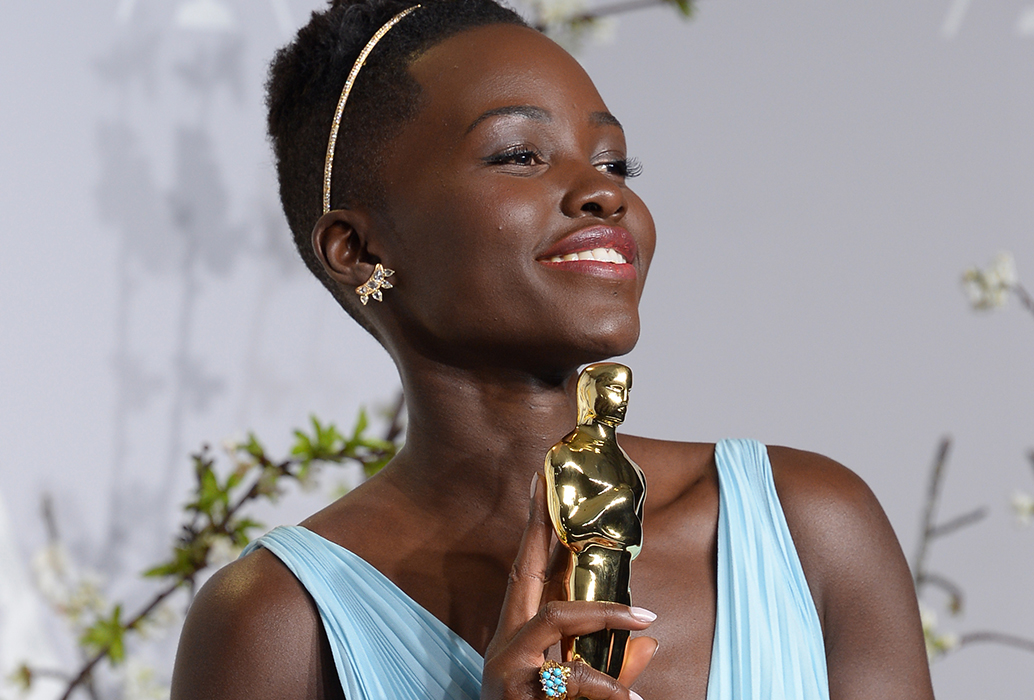
Lupita Nyong’o, The African icon – Kenya

2014 was Lupita’s year. In February her dreams were validated when she won the Academy Award for Best Supporting Actress for her role as Patsy in 12 Years a Slave. An emerging beauty and fashion icon, Lupita was also appointed ambassador for Lancôme cosmetics. She has bagged the film rights for Adichie’s Americanah, and she is set to feature in the upcoming Star Wars film. 2015 may belong to Lupita as well.
Chiwetel Ejiofor, The Hollywood A-lister -Nigeria

The star of 12 Years a Slave didn’t win the Oscar for best actor in the end, but that hasn’t slowed down Chiwetel Ejiofor’s slow but steady conquering of Hollywood. This year saw the international release of Half of a Yellow Sun, directed by Biyi Bandele, while next year he will play a Cold War scientist in the post-apocalyptic Z For Zachariah and an intrepid space traveller in Ridley Scott’s The Martian. Perhaps even more excitingly, the Nigerian actor is also being tipped to play James Bond’s next nemesis.
Trevor Noah, Africa’s favourite funnyman – South Africa

Trevor Noah’s irreverence continues to entertain a global audience, best exemplified by his tour across southern Africa and his appearances on prominent shows such as the Late Show with David Letterman. A 2014 Personality of the Year nominee at the MTV Africa awards, Noah has also sold the most DVDs of any comedian on the continent. What will he do next?
Sophie Okonedo, The actor who dominated Broadway – Nigeria

“What happens to a dream deferred?” Langston Hughes once wrote. Nigerian-British actor Sophie Okonedo would not know, despite taking to the stage as Ruth Younger in the revival of The Raisin in the Sun, whose title comes from the same Hughes poem. Okonedo’s dreams have readily come true. She won the 2014 Tony Award for Best Performance by an Actress, and received a personal backstage visit from the impressed Obamas. Not a bad way to spend 2014.
Abderrahmane Sissako, The master director – Mauritania

Abderrahmane Sissako, the Mauritanian director who grew up in Mali, already had an international reputation for mesmerising filmmaking. But his heartrending, human, and at times humorous 2014 film Timbuktu has elevated him to new levels of admiration. The film, which won the Prize of the Ecumenical Jury and the François Chalais Prize at the Cannes Film Festival, follows the stories of people struggling, rebelling and striving to maintain their humanity under Islamist occupation in northern Mali.
Jim Chuchu, The unique voice – Kenya

As part of the innovatively unconventional band, Just a Band, Jim Chuchu had already marked himself out as a unique creative presence, a reputation he maintained with his fantastical 2013 short film Homecoming and post-apocalyptic photography projects. But this year, he took his non-mainstream creativity in a brave and controversial new direction with the critically-acclaimed Stories of Our Lives, a film made up of five fictional vignettes based on true stories about life as part of the LGBTI community in Kenya.
Chimamanda Adichie, The happy feminist – Nigeria

This year, the cinematic release of Half a Yellow Sun, an adaptation of Adichie’s second novel, garnered solid reviews, while her musings on feminism also drew many a crowd. Not only did she release a short book entitled We Should All Be Feminists, capturing the ideas articulated in her 2012 Ted Talk, but the same talk was sampled by Beyoncé in her 2014 single “Flawless”, launching Adichie’s discourse further into popular culture.
Ngugi wa Thiong’o, The literary giant – Kenya

The Kenyan literary giant remains influential not just for the lasting power of his works, but because his ideas are arguably as relevant today as they’ve ever been. From his debut 1964 novel Weep Not, Child, about dispossession under colonialism, to his latest novel Wizard of the Crow (2006), about a fictitious African dictatorship, Ngñgi wa Thiong’o has continued to call for African unity and a decolonisation of the mind. Does it matter he still hasn’t been awarded the Nobel Prize? What do you think the Gikuyu critic himself would say?
Yvonne Owuor, The novelist sprinkled with stardust – Kenya

Binyavaga Wainaina described an early draft as “crap”, and it may have taken seven years to reach completion, but Yvonne Owuor’s novel Dust was worth every moment invested in it. The lyrical story of the Oganda family in Kenya, spanning from the Mau Mau uprisings to the 2007/8 election violence, has been widely acclaimed by readers and critics alike for its breath-taking imagery and ambition. Let’s hope we don’t have to wait another seven years for Owuor’s follow-up.
Athol Fugard, The final bow – South Africa

During apartheid, the South African playwright fought the system by organising a multiracial theatre, supporting international boycotts, and addressing subversive themes. But this year, as the 82-year-old returned to the stage for what he says is the last time in his new semi-autobiographical play The Shadow of the Hummingbird, he is no longer reckoning with his country but himself. “I allowed the mystery and splendour to slip away through my fingers,” laments his ageing character Oupa. We should be grateful that we haven’t let Fugard slip away through ours just yet.
Binyavanga Wainaina, The imagination catalyst -Kenya

He was perhaps the best-known Kenyan writer already and one of Africa’s most recognisable faces, but this year Binyavanga Wainaina became even more prominent, declaring that he was gay at the start of the year. In one dramatic move, he helped humanise homosexuality and then followed his revelation up a few days later with his fantastically sweeping, manic and impassioned video essay, We Must Free Our Imaginations, calling for a free and deeply African cultural flourishing.
NoViolet Bulawayo, The young author who won’t stop winning awards – Zimbabwe

NoViolet is back on the list after amassing further awards this year for her debut novel We Need New Names, including the Zora Neale Hurston/Richard Wright Legacy Prize for fiction. Through the eyes of Darling, NoViolet paints a jarringly vivid depiction of the immigrant experience, where dreams are shattered by the harsh realities of America, and the clash of cultures causes confusion.
Wole Soyinka, Nigeria’s national conscience – Nigeria

When Wole Soyinka speaks, people listen. And when the 80-year-old writer and Africa’s first Nobel Prize for Literature winner sees injustice, corruption or incompetence at work in his native Nigeria he is not afraid to speak. This year, he has been a fierce critic of the government’s response to Boko Haram and has called for a new generation of Nigerians to step up. Any new leaders would do well to learn from this literary great.
Fatou Diome, The adventurer away from home – Senegal

In her critically acclaimed novels The Belly of the Atlantic and Impossible de Grandir, the Senegalese author made a name writing about what she knows best. But this year Fatou Diome veered out of her comfort zone when she was sent to Nepal where she wrote a touching five-part essay about the injustice and struggles facing refugees from Bhutan.
Teju Cole, The Teju Cole of Teju Cole – Nigeria

It is difficult to pin down exactly what Teju Cole is. He is a writer, of course, a chronicler, tweeter and commentator. But from his critically-acclaimed 2011 novel Open City, to his short story composed of retweets, to his genre-defying novella/collection/memoir Every Day is for the Thief – about a Nigerian man who returns to Lagos after having moved to the US – Cole escapes easy categorisation. In the spirit of his parody of CNN’s Ebola coverage, maybe it is easiest then, and most accurate, to just say he is the Teju Cole of Teju Cole.
Angélique Kidjo, Auntie Africa– Benin

As well as publishing the inspirational memoir Spirit Rising: My Life, My Music, releasing an album dedicated to African women, and taking a prominent role in the ground-breaking People’s Climate Change March this year, Angélique Kidjo also put on a concert in tribute of Miriam Makeba. And if there is one person qualified to inherit the title “Mama Africa” from her late friend – or perhaps be baptised Auntie Africa – it is the celebrated, multi-lingual Grammy-winning singer, activist and UNICEF Goodwill Ambassador, Angélique.
Davido, The new face of African music – Nigeria

Nigerian artist Davido has had a stellar year. Not only did he win the 2014 MTV Africa award for best artist and best male, he was also named BET’s best international act of the year, and is the only African artist to be nominated at the Soul Train Awards 2014, pitted against other international giants such as Shaggy and Ziggy Marley. Davido has truly “skelewu-d” his way to the top, and all before his 22nd birthday.
Spoek Mathambo, The fresh prince of township tech – South Africa

A few years back, the young Johannesburg musician coined the term “township tech” to refer to his inventive brand of grime-dubstep-house-electronica fusion. His first two albums won him critical acclaim and a handful of prestigious awards. But this year, Spoek Mathambo turned the spotlight onto other musicians in his documentary Future Sounds of Mzansi as he searched for the princes and princesses of countless other innovative strains of South African electronic music in townships across the country.
David Adjaye, The starchitect – Ghana

Like many of the grand and mesmerising buildings he designs, there is a depth and diversity in David Adjaye’s work which has to be seen to be believed. Echoing his own globe-trotting upbringing, the architect has been working on diverse projects in countries all across the world. From the Moscow School of Management, to the Smithsonian National Museum of African American History and Culture in Washington DC, to the Cape Coast Slavery Museum in Ghana, Adjaye continues to design structures as impressive as his reputation.
David Tlale, The king – South Africa

The king of fashion David Tlale will not be dethroned anytime soon. His Spring/Summer 2015 collection, opened by Tyson Beckford, was revealed at New York fashion week, and showcased at the Mercedes Fashion Week Africa last month. The collection, a juxtaposition of ethereal silhouettes and more structured pieces, aptly named Feminine Allure, was both powerful and elegant, and demonstrated why Tlale is so deserving of his crown
Flaviana Matata, Beauty queen turned high fashion model – Tanzania

Flaviana Matata stunned the world when she defied traditional beauty norms with her shaved head at the Miss Universe 2007 competition, where she came sixth. The model has consistently knocked down barriers, landing fashion campaigns with both commercial and editorial brands, which is no mean feat. It is rare to be successful in both industries, proving that Matata’s beauty, and the way in which she harnesses it, is appreciated on a universal level.
Diana Opoti, The fashion pan-Africanist – Kenya

Television host and fashion PR strategist Diana Opoti set out on what she called “a personal challenge” this year – to wear African designs from her wardrobe for 100 days straight. The results were mind-blowing. The campaign, well received on social media for showcasing the diverse aesthetics of African designers and for demonstrating to the public how the clothes can be worn by anyone, was also a savvy mix of marketing and market research for various African brands. Diana has launched a second campaign, and with it, she will undoubtedly continue to revolutionise the fashion industry, one Instagram at a time.
Boniface Mwangi, The eye of the people – Kenya

After years of intimidation and risking his life to publicise and fight government corruption and injustice, Kenya’s most prominent photojournalist-cum-activist decided this year that enough is enough. Having led many of Kenya’s most dramatic protests in recent years, from carrying 49 coffins around parliament to drawing graffiti on the streets of Nairobi, Boniface Mwangi says he has decided to get off the streets. This move has left many Kenyans disappointed, but Mwangi has vowed to continue fighting for change, just in less risk.
El Anatsui, The junk sculptor – Ghana

When most people spot a discarded bottle cap, rusty nail or block of driftwood, they see junk. But not El Anatsui. For the celebrated Ghanaian sculptor, these everyday materials are the pieces of the puzzle that make up the grand mosaic of his powerfully mesmerising works. Drawing on the artistic traditions of West Africa, El Anatsui’s ambitious and varied sculptures engage with the region’s rich cultural present and past, drawing the acclaim of admirers all around the world.
Baloji, The Maestro on tour – Democratic Republic of Congo

Baloji takes to stages with the swaggering, strutting style of a sapeur and brings a sound that fuses the stirring sounds of the Congolese rumba and soukous with the sharp edge of modern hip-hop, funk and rap. And this year, accompanied by L’Orchestre de la Katuba, the Congolese musician has been taking to a lot of stages in a lot of countries. His eclectic style and conscious message is spreading and it seems audiences cannot get enough.
Mafikizolo, The duo who get Africa dancing – South Africa

After nearly 15 years in the music industry, the South African duo infiltrated the African market with their 2013/2014 hit, “Khona” and became the biggest group on the continent. Comprised of Theo Kgosinkwe and Nhlanhla Nciza, Mafikizolo, the band has exposed the world to South African house music, influencing emerging artists to incorporate the genre into their work. Their latest single, “Tchelete”, featuring Davido, is another hit, and another reason why the duo had to make our list.
Sindika Dokolo, The gentleman opening a new frontier of African art – Democratic Republic of Congo

He has one of the largest African collections of contemporary art, and served as a keynote speaker at the 1:54 forum this year. Sindika Dokolo is a businessman whose passion for African art is opening a new frontier in the industry. Determined to not only keep contemporary African art on the continent, but to also allow the public to access the works of the most important artists – African or otherwise – Dokolo is fostering a new appreciation for art and painting a bright future for emerging artists.
Hugh Masekela, The old man with young blood – South Africa

He’s still got it. Over 50 years since his first album, 60 years since he first picked up a trumpet, and 75 years since he was born in a township of Witbank, South Africa, the world- famous Afro-Jazz pioneering, protest-song singing, African icon and flugelhornist Hugh Masekela has still got it. With a dry wit, a wide smile and a level of energy befitting of a teenager, Masekela continues to wow and charm crowds across the world with his exuberant performances.