

Embrace risk, learn from failure
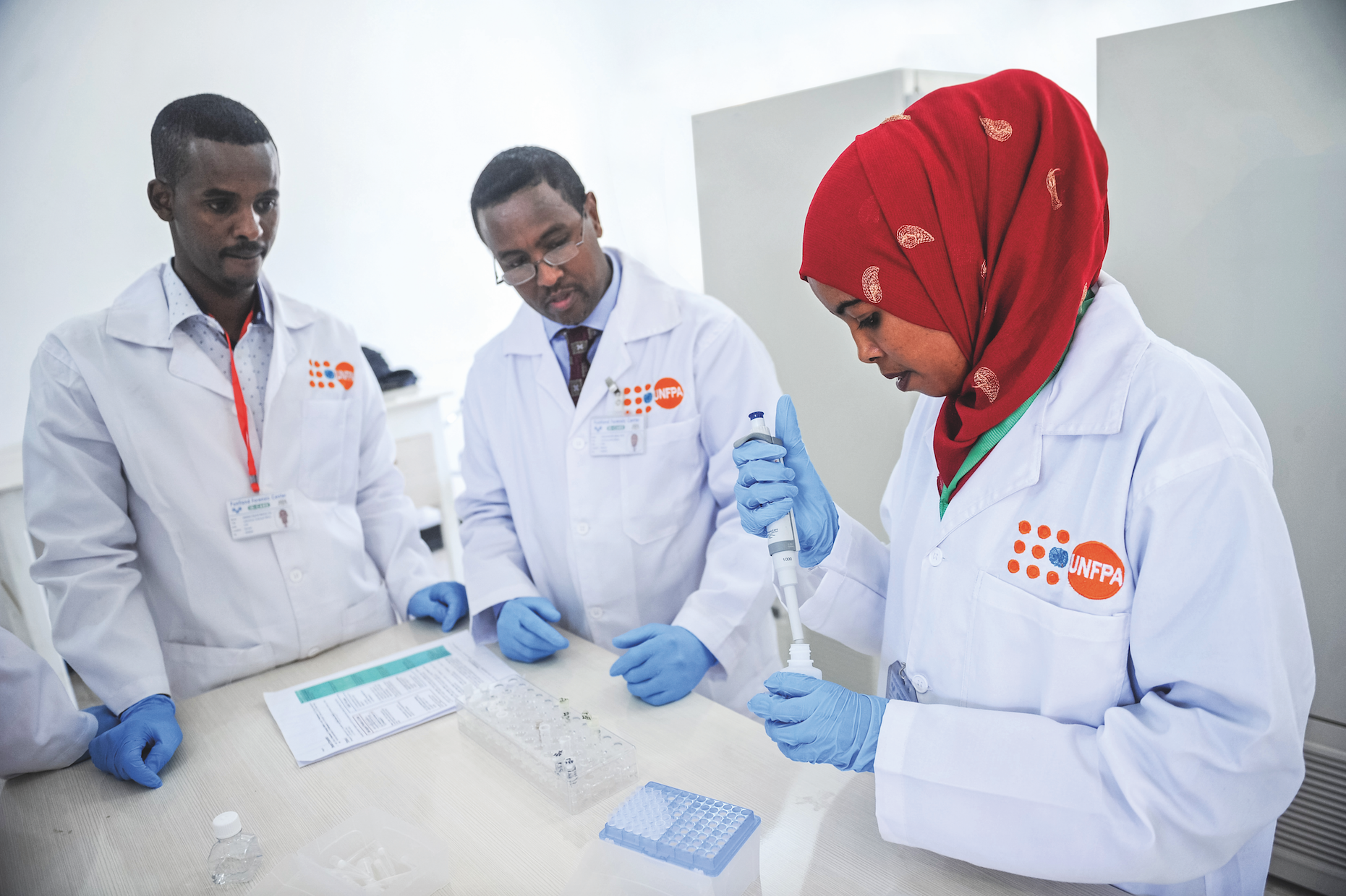
The best way to learn is through trial and error, without having a fear of failure. This creates the kind of innovative culture the continent needs. By Josh Ghaim
As a young boy growing up in East Africa, I wasn’t exposed to many scientists or researchers, let alone those who came from the country of my birth, Eritrea. But with my mom working for the Swiss Red Cross and my dad working with various relief agencies and orphanages, the types of mentors and role models I did have to look up to were my parents and the healthcare workers from different parts of the world who provided medical care during the horrific wars and famines that took place in Eritrea, Ethiopia, and Sudan in the 1980s.
My parents spent most of their time helping to build clinics, schools and shelters at different refugee camps in East Africa, which gave me a great opportunity to learn about the economic challenges, education options and basic healthcare in this region.
I began studying chemistry, biology, physics and maths early in my middle school years in Sudan. It was a UNHCR-sponsored school in Eastern Sudan (Kassala) with a mix of teachers: some were local and some from the UK, there as part of university programmes, assigned to spend one to two years teaching different subjects.
All of the lessons were in English, except for the language classes such as Arabic taught at the school. Obviously, compared to the availability of resources in the Western world, the science labs were very limited, but the depth of science and maths taught was of a very high standard and the best part for me was that it was all about applying it to real-life situations.
I had the best time going there, even for part of my high school years and I did not realise how robust the programme was until we moved to the US. I went to a high school in Indianapolis for about four months prior to starting college; and coming from African schools, it was not a problem taking the SAT for college entrance.
For the four months of high school before my college years, I had already completed organic chemistry, physics and calculus in East Africa, so my first two years of college almost felt as if I was repeating classes. It truly shows that the foundation of African education is strong; however, access to this education is limited to select regions and needs to be broadened.
The teaching methods in many African countries vary widely, ranging from the basics and applications in real-life to approaches that focus on memorisation rather than on the application of knowledge. My experience was much more of real-life application and I believe that created the absolute foundation I needed to succeed in my career.
On the other hand, education curricula focused on memorisation provide a detour from the journey, a way of knowing without learning, of answering without understanding. Without understanding, someone really doesn’t know how they got to where they ended up, and that can be troublesome.
Learning from failure
The best way to learn is through trial and error, and with an appreciation of failure. It is much more valuable to reach an intended goal after several failures than to get it right the first time, because learning what doesn’t work increases understanding of how to do things the right way.

We’ve seen this first-hand in the Johnson & Johnson Africa Innovation Challenge, in which over 12% of our total submissions came from Uganda, a country that represents less than 4% of the participating population – clearly, it is a hotbed for innovation.
One of the reasons for Uganda’s strength in innovation lies in its programmes that go beyond just the teaching of the academic subject, and allow students to apply their knowledge and innovate without a fear of failure.
For example, the School of Public Health at Makerere University based in Kampala, has established an incubator programme in which they actually put the concept of “embrace risk, learn from failure” into action. Students can apply for seed funding to experiment with new ideas and develop them through multiple iterations, creating a local ecosystem in which they can experiment, take risks, learn from those risks and experiment again. The programme is coordinated and funded through the Resilient Africa Network (RAN).
With 200m people aged between 15 and 24, Africa has the youngest population in the world, and Africa’s young people are the driving force for the continent’s scientific and technological revitalisation. What African scientists and engineers need in order to improve innovation at the core, as well as create true breakthrough innovation are opportunities and safe environments where they can experiment with new ideas without the fear of risk, and if they fail or don’t succeed at first, learn from it and then try again.
I knew I wanted to pursue science and research that could potentially help address healthcare challenges in Africa, as well as other places around the globe. There have been countless times, whether during my PhD research or even in my research and product development roles throughout my career, where I was sure what I was doing was the right experiment or the right formula but ended up failing.
At times, it feels like it is the end of the world because it has failed, but one thing I always go back to is that I will get another chance by learning from it. Growing up, I have seen children die due to malnutrition in refugee camps and the suffering people face every day around the world and I always go back to that perspective: ’What is the worst thing that could happen if you fail?’
The sun will rise the next morning and you will get another chance tomorrow. However, that only works if you have the right support system around you, including the right mentorship, people that have your back and if you are determined to fail fast and learn from it. Always keep things in perspective.
I attended the Next Einstein Forum (NEF) Global Gathering last month (March) in Rwanda, with the hopes of connecting with my peers and young scientists to champion science in Africa and help facilitate the transformation of ideas into action. The NEF highlights innovation and scientific advancement that has often been overlooked by the media and global scientific community, in an effort to build an African scientific identity and help make Africa a global hub for science and technology.
I believe in the potential of African scientists, and with the right opportunities, teaching and mentorship, they will be unstoppable. I am also encouraged to see more girls and women in these fields in Africa which is an absolute must-have foundation for the success of the continent. If we challenge them to embrace risk, and learn from failure, their futures will be monumental. Let’s give them this chance. NA
Josh Ghaim, PhD is the Chief Technology Officer, Johnson & Johnson Family of Consumer Companies. In this role, he is responsible for global research and development organisation at the consumer group.


